Karla Homolka: girl next door
She's out in July. She could be your new neighbour. Should she be controlled?
CHARLIE GILLIS | Mar 15, 2005
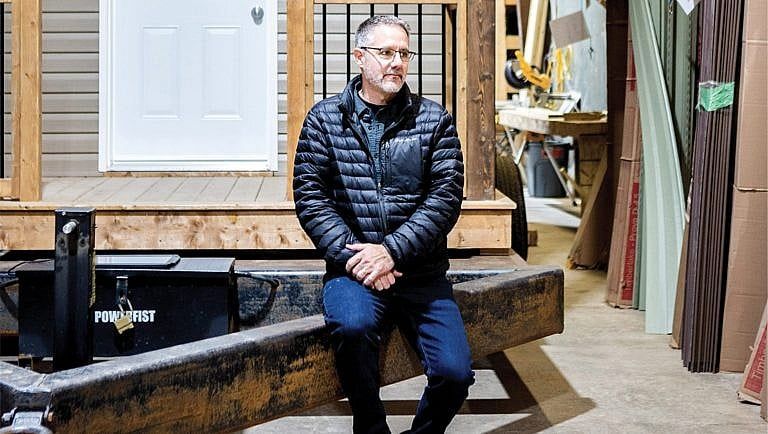
It was a chance encounter, too fleeting for insight, but long enough to imprint itself on Wil Tonowski's memory. The Edmonton police detective was standing in the corridor of Correctional Services' psychiatric facility in Saskatoon when a female offender walked past, accompanied by a guard. Tonowski was struck by the woman's appearance: slender and well turned out, she might have been an advertisement for the success of the country's prison system. As she drew near, however, it became clear that this was no one's poster inmate. "You're Karla, aren't you?" he asked, suddenly placing the face. To which Canada's most notorious woman responded with a coquettish smile. "Yeah," she said, "and don't I know you from somewhere?'"
Continued Below
Tonowski is an expert when it comes to chatting with criminals. As a specialist in the behaviour of high-risk offenders, he routinely visits prisons throughout Canada, interviewing some of the country's worst sex and violent offenders as they near their release dates. He'd never met Karla Homolka before, but with his professional curiosity piqued, he decided to make conversation. Was she completing a program at the centre? Yeah, and it was going well. How did she find the living conditions? "Not too bad." Though clad at the time in standard issue clothes and cast in bland, institutional light, Homolka appeared healthy and happy, he observed. Their conversation lasted only a few moments, and there were no revelations about her future plans -- Tonowski never asked. "But it was interesting," he says. "Like a chat you might have at the water cooler."
He might have known better. A few years later, Tonowski casually mentioned the incident to a Toronto newspaper reporter who had called him about a different case. He thought he made it clear that Homolka had told him nothing about her future intentions. But to his horror, a story appeared a few days later quoting him, and implying that Homolka planned to settle in Alberta after her release. An uproar ensued, and the detective spent days fielding calls from across the country, struggling to convince police colleagues, journalists and concerned citizens that the whole thing had been a misunderstanding. "The reaction was swift and heated," he says, "and the story seemed to take on a life of its own. I can't think of anyone in the country whose name stirs up so much concern and interest."
He's right. Outrage, fear, overreaction and -- let's admit it -- prurient fascination all rise to the surface each time the words "Karla Homolka" surface in the national conversation, each time her face smiles mockingly from our morning paper. The anger, at least, we can justify. The price of convicting Paul Bernardo for the murders of Kristen French and Leslie Mahaffy was Homolka's plea bargain, and we now know that price was sickeningly high. Videos that emerged after Homolka secured her deal in 1993 showed her not just participating but revelling in the torture of the two Ontario teenagers, plus the rape of a third woman.
Those images, along with news that Homolka participated in the fatal drugging and rape of her own 15-year-old sister, Tammy, long ago laid ruin to the theory she'd been Bernardo's compliant victim, forced on pain of death to help him live out his monstrous fantasies. But by then the die was cast: swallowing the victim theory whole, Crown lawyers had offered Homolka 12 years in prison on two counts of manslaughter. Bernardo, by comparison, was convicted of first-degree murder and sentenced to life in prison.
How quickly a dozen years have passed. On July 5, 2005, Homolka will walk free from Joliette Institution north of Montreal, a relatively young woman at 35, having paid the debt society asked and completed almost nothing in the way of rehabilitation. Because she was deemed a risk to reoffend, she was denied statutory release two-thirds of the way through her sentence, meaning she'll be exempt from the parole restrictions meant to ease an offender's integration into mainstream society. As a result, her release poses a daunting set of moral questions. Do we have a right to place extra restrictions on someone we know pulled a fast one on the justice system? Or should we allow her -- even help her -- slip back into society in the hope of helping her rehabilitate? Do we trail her every move? Or keep a respectful distance hoping that 12 years in prison have persuaded her to mend her ways?
The rumour mill is already churning. The most educated speculation has Homolka staying in Quebec, where language and cultural differences supposedly muted the media coverage of her case, and where she'll be less recognizable. Another rumour suggests she will flee overseas, restarting in a country where her case is unknown. Or sneak into the United States, using an illegal identity to cross the border and living out her life under a pseudonym. On some level, all are possible: Homolka hasn't been sharing her plans(she did not respond to interview requests by Maclean's, and her family declined comment), and given enough cash and the right underground contacts, we could probably all reinvent ourselves.
But in varying degrees, the rumours are also based on misconceptions -- about Homolka, about the law, about the ease of disappearing when 32 million people are watching.
Myth 1: Karla Homolka will emerge from prison with no strings attached.
From a corrections point of view, Homolka is a rarity. Less than five per cent of inmates are held back past their statutory release dates. And it's almost unheard of for female offenders to serve their entire term, as she's done. The reasons for this are rooted in Canada's corrections philosophy, which holds that it's better to parole offenders and supervise their reintegration than release them after full sentences, when the state is virtually powerless to impose conditions.
For that reason, provincial justice officials from Ontario will almost certainly spearhead an application under Section 810 of the Criminal Code, which allows the courts to place restrictions on anyone they have reasonable grounds to think will injure another person. "We're going to look at every legal avenue before her release," Michael Bryant, Ontario's attorney general, told reporters in December, "that may be put in place to protect the public." Such orders are applied rarely, typically against violent sexual criminals who have served their entire terms. But if granted by a judge, an order against Homolka would apply wherever in Canada she set down roots, imposing a stringent set of conditions to prevent her from, say, consorting with sex offenders, doing drugs or spending time with youths. If she failed to comply, she would go back to prison for up to two years.
Other provinces -- mindful that Homolka could be headed their way -- are voicing support for the strategy. Justice officials in Quebec say they're willing, if necessary, to lodge the 810 application themselves before she emerges from prison in their jurisdiction; they're merely awaiting word from Ontario, where she committed her crimes, says spokesman Mathieu Richard. Ron Stevens, Bryant's counterpart in Alberta, sees a Section 810 order as the only practical means of keeping track of Homolka should she decide to move between jurisdictions. A Section 810 order would require Homolka to keep police informed of her whereabouts, he notes, and "any justice minister would like to know if this type of offender was coming to their province."
The question is whether they can convince a provincial court judge. Homolka, after all, was never convicted of sexual assault, and whatever province sought to control her movements would be required to show reasonable grounds that she'd do someone harm. Early psychiatric assessments of her seemed to accept the "compliant victim" theory that underlay her plea bargain, treating her as a battered woman rather than a sexual delinquent. Those findings, made public recently in a book by author Stephen Williams, show that at least one doctor determined Homolka not to be a psychopath, as many of her detractors suggest.
Still, it's difficult to imagine the courts siding with the skeptics. In its final assessment of her file in December 2004, the parole board voiced fear that, if released, Homolka would commit a crime involving "death or serious harm" to another person. In its 2003 assessment, the board had noted that she carried on a relationship with a male inmate during a brief stay at Ste-Anne-des-Plaines prison in 2002, which "rapidly became sexual."
Myth 2: With a new name, Homolka could reinvent herself and simply disappear.
It's a popular theory, probably born of Hollywood fantasy but with some solid basis in fact. Evelyn Dick of Hamilton, was our most notorious female killer before Homolka, yet vanished into a much less populous Canada in 1958 after serving 11 years of a life sentence for killing her infant son(page 36). No one ever unmasked Dick, and only a handful of people ever learned her new name. More stunning still was the case of teenagers Pauline Parker and Juliet Hulme, who were convicted in New Zealand of the 1954 killing of Parker's mother. The story was a press sensation, but the two women both disappeared after serving five years. In the 1990s, it was revealed that they were living in Britain. Hulme had become a famous mystery writer, using the pen name Anne Perry; Parker was living quietly in rural southeast England.
Neither of these precedents addresses the reality facing Homolka. If, for example, government wins a Section 810 order against her, it would require her to report her whereabouts and any changes of name or address to police. They, in turn, would be within their rights to issue notices warning the public where Homolka is. Moreover, the order would expire after 12 months, ensuring an annual media uproar as authorities debate whether to go to court to renew it.
More importantly, no one seems inclined to help Homolka. While Evelyn Dick enjoyed the support of a sympathetic parole board member, who used his connections to set her up with an alias, Homolka has no such allies with the power to create for her a new, foolproof identity. John Vandoremalen, spokesman for the current parole board, stressed that it has "no jurisdiction, no role," once Homolka's sentence expires, adding, "I can't think of any reason why anyone would help her, to be frank." The Elizabeth Fry Society will assist any female offender who seeks its help, says Kim Pate, executive director of the organization's national umbrella group, the Canadian Association of Elizabeth Fry Societies. But setting up new identities is not part of the organization's typical mandate. "Our interest is in having people join mainstream society."
So where could Homolka turn? One oft-suggested option is the underworld. In his books and in interviews, Williams cites the surfeit of Internet hucksters peddling driver's licences, or entire identities stolen from real people, as potential suppliers of a new identity for Homolka. But Chris Mathers, a former RCMP undercover agent who lived 20 years under alternate identities, says new electronic safeguards make those methods useless in the long term. "There's so much anti-fraud software in government and business systems that the minute someone tries to pull something like that it gets picked up," says Mathers, who now advises banks and police on how people change identities for money-laundering purposes. "When you're 35 years old and you're applying for a social insurance number, there'll be somebody there saying, 'Hey, what's going on?' "
Myth 3: There's nothing to stop Homolka from leaving the country.
Well, nothing short of Canada's minister of foreign affairs. Or the notable lack of countries willing to take her in. There are few governments, after all, that would knowingly accept a convicted killer -- especially one with a story as appalling as Homolka's. And it's easy to imagine the scandal that would ensue if Ottawa blithely let her slip out without warning her destination country. It's the kind of thing that brings intense discomfort during closed-door meetings at international summits.
Practically speaking, this means Homolka would have to enter the unsuspecting country posing as a tourist, then stay illegally. It's a difficult way to live -- arguably tougher for her than staying in Canada. And even then, her options will be limited to countries lacking the wherewithal to detect illegal immigrants. "She might get into some of the banana republics on a vacation visa or something like that," says Norman Inkster, a former RCMP commissioner who served for two years as head of Interpol. "But she wouldn't get into countries that you and I might visit."
Does Ottawa have the power to stop her? Absolutely. Which is to say, it has virtually absolute power to withhold a passport from her. Crown prerogative allows the federal cabinet to conduct foreign affairs without review by courts or Parliament, and that includes the granting, revocation and denial of travel papers. It's the same justification the government used last year to prevent Abdurahman Khadr, a former detainee at the U.S. prison in Guantánamo Bay, from obtaining a passport and leaving the country.
The better question is whether Ottawa wants to stop her. In the rare cases the government uses prerogative, it's been against those implicated in terrorism or international crime, which Homolka is not. For now, Foreign Affairs officials are treating the topic like a deadly pathogen, refusing to go near it on privacy grounds, or because it remains hypothetical. If they do allow her to leave, they'd best prepare for some bitter recriminations from her adopted homeland, wherever it may be.
Myth 4: Homolka will do everything she can to evade the authorities, the media and public.
"In a few short years, I'm going to be released from prison(regardless of who likes it and who doesn't)," Homolka once wrote in a document intended for the parole board. "Would it not be far more desirable that I have some help and guidance for a few years, rather than simply be put out on the street?" She never submitted that letter, which she'd hoped would help win her release in 2003. But it was later obtained by Williams, and it captures a couple of themes that define Homolka's prison term: her willingness to use opportunities made available to her, and her belief the authorities were making a mistake by keeping her inside. Indeed, much of Homolka's activity in prison suggests she plans to rejoin mainstream society once she emerges. She uses the surname Teale -- which she and Bernardo once adopted on a whim and which is less familiar to the public than her maiden name. She's completed a psychology degree. She's honed her French. She's worked diligently at prison-assigned tasks.
Obviously, cashing in on those efforts will be a lot more difficult with reporters tailing her and police stopping by to check up on her. But would a Section 810 order only be, as one national TV network described the measure, a "tight leash"? Those who have experience working with high-profile offenders say the very measures meant to restrict Homolka may prove her greatest benefit. Tonowski, the detective who met Homolka in Saskatoon, has been the case manager for several publicly reviled offenders, most notably Karl Toft, a serial molester who assaulted dozens of boys at a training school in New Brunswick. Toft was the focus of a public outcry when he arrived at a halfway house in Edmonton three years ago following his statutory release. But he's been working closely with police ever since to help him obey his parole conditions. In Tonowski's view, the strategy has worked: Toft has stayed out of trouble, while the clamour over his presence in the community has died down. "If a recognizance agreement is sold to Karla the right way, it could be a tremendous benefit," Tonowski concludes. "It would give the public some confidence that, hey, she's not fighting this. She's willing to work with police and experts to continue to make sure her risk to the community is reduced."
That may be why Homolka's Montreal-based lawyer, Sylvie Bordelais, does not outright dismiss the idea of a Section 810 order when it comes up in an interview. It can, she acknowledges, be "the right process to use" in some cases. Moreover, Bordelais says, the state is obliged to protect Homolka from those who would do her harm, meaning she may need the police more than they need her. "We live in a country with a Charter of Rights, where as citizens we are supposed to be protected," she says. "As long as no one has proven Karla is not a citizen, I don't see why she should be treated differently." Bordelais won't say whether Homolka's been threatened, or what she'd do to guarantee her client's protection. "But anyone with the kind of ongoing media and public attention that she's received for the last 12 years would be concerned."
It's enough to set off anyone's irony detector. Who, after all, has enjoyed greater benefit from the police and the justice system than Karla Homolka? Who got what critics now snidely refer to as a "sweetheart deal"? To imagine her scurrying into the arms of the law after making a mockery of it a decade ago is justifiably infuriating. Why should authorities lift a finger?
One answer, surprisingly, is for the sake of her victims' families. Tim Danson is the lawyer who represents the French and Mahaffy families. In doing so, he's carved out a reputation as about the least empathetic person to Homolka in the country: even before Bernardo's trial, he agitated for a revocation of Homolka's plea bargain, and he's been lobbying ever since for tougher measures against sex offenders. But lately Danson's been weighing the wisdom of isolating Homolka, of exposing her to harassment that could ultimately make her more dangerous. "If you completely ostracize these people who are already mentally unstable, you're going to create monsters," he says. "The families are very concerned that there may be other families in the future that would become victims."
The middle ground, he says, would be an arrangement where the state keeps tabs on Homolka, and even helps her avoid the public spotlight -- in short, a stringent recognizance order under Section 810. To hawks like Danson, the upside to the arrangement is obvious: if Homolka complies, she'll slowly slide from the spotlight while remaining under the thumb of the authorities. If she breaches her conditions, the police could crack down fast, consigning her to the additional jail time the hawks so firmly believe she deserves.
It's by no means a perfect formula, and Canadians could be forgiven for wishing Homolka would simply disappear. But keeping her close seems the only proper response under the circumstances, a bulwark against her reoffending that might just advance the day when the sound of her name, and the memory of her insolent smile, no longer stir our wrath.
To contact the author, contact charlie.gillis@macleans.rogers.com