The Gary Doer phenomenon
Hot off a third straight election win, is Manitoba's premier the most significant New Democrat since Tommy Douglas?
Jordan Timm, Macleans.ca | May 24, 2007 | 15:15:47
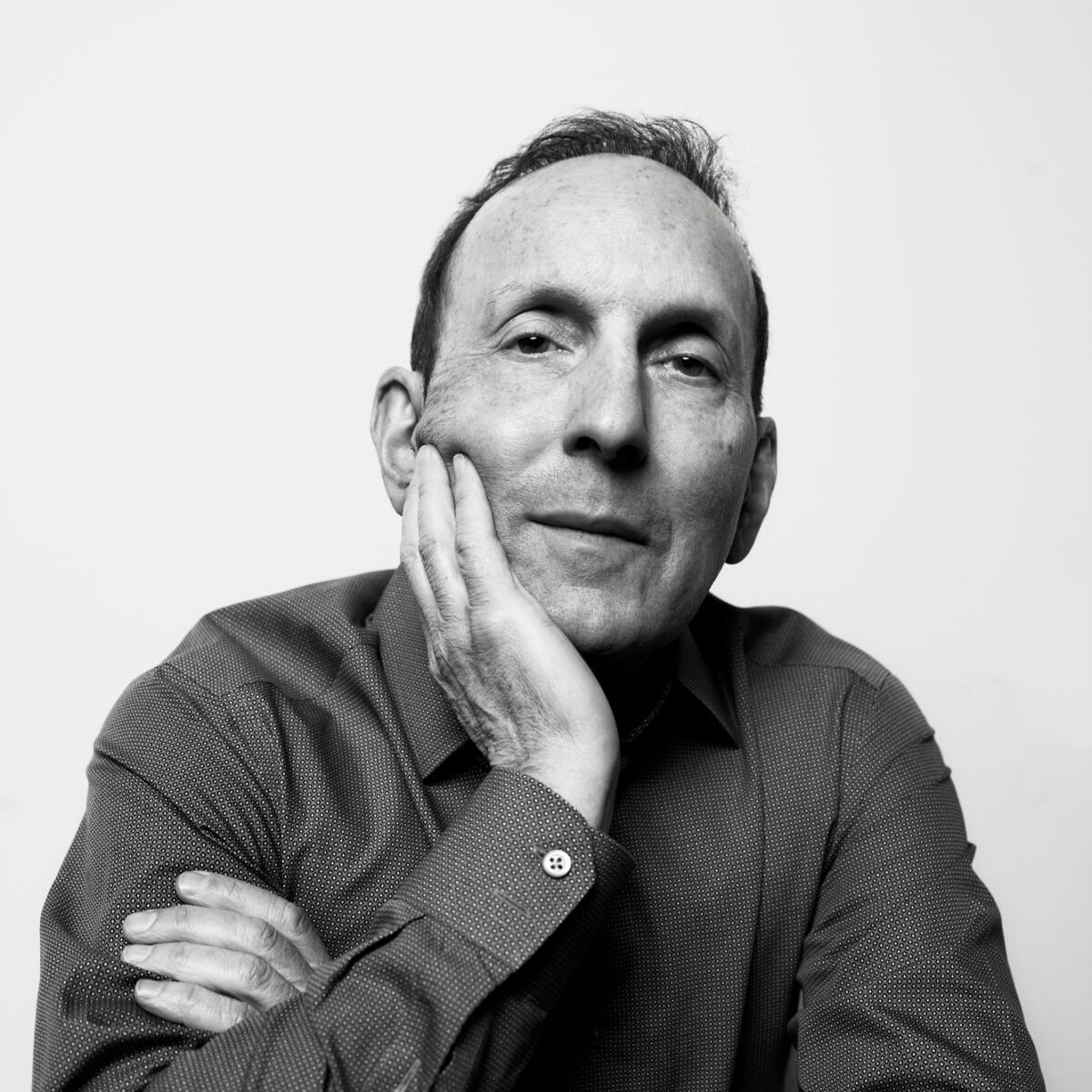
When Gary Doer stepped onto the stage at the Winnipeg Convention Centre on Tuesday night, he walked into history.
Having captured 36 of Manitoba’s 57 ridings in that day's election, he had become the first three-term premier of his province since the 1960s and the first NDP premier to lead three majority governments anywhere in the country.
Now, political observers nationwide are beginning to take stock of the 59-year old former union leader who entered this campaign with an astonishing 71% personal approval rating. And New Democrats in particular are starting to wonder, if they weren't already, whether he has the makings of a national leader.
“There’s sort of a Gary Doer phenomenon, if you will,” says University of Winnipeg political science professor Joan Grace. “He’s never been an NDP leader that’s been wedded to traditional social democratic values and ideas. Gary Doer’s secret is to be a pragmatic politician. Like a lot of successful social democratic leaders, he’s understood that old left-right politics is just not on anymore. Politics is much more complicated than that.”
Former federal NDP leader Audrey McLaughlin, whose leadership bid Doer supported, agrees with that assessment. “I guess if I were to characterize Gary, I would say that he’s a principled pragmatist," McLaughlin says. "Gary came from the union movement and I think he understands negotiation. He understands, of course, as Premier he works for all Manitobans. But he’s never really lost sight of the basic principles about why he got into politics and I think that’s stood him in good stead.”
***
Born and raised in Winnipeg in a middle-class Roman Catholic family, Doer left school after one year of studying political science and sociology at the University of Manitoba - opting instead to work as a counselor at a local juvenile detention centre. He rose quickly through the ranks to deputy superintendent of the Manitoba Youth Centre and in 1979 became president of the Manitoba Government Employees Association.
In his seven years at the head of the union, he rapidly established himself as a power player - taking prominent positions with the Manitoba Federation of Labour and the National Union of Provincial Government Employees, serving as a director of the Winnipeg Blue Bombers and of a local theatre company and winding up as a governor of the university he had dropped out of. His credentials established, when he took the plunge into politics in 1986 he handily won the northeastern Winnipeg riding of Concordia and immediately entered Premier Howard Pawley’s second-term cabinet.
“He was minister responsible for two very challenging areas,” Pawley recalls. “One was Urban Affairs, but even more challenging was the responsibility for Crown Corporations. So he played a very key role and was very effective in the House and very well regarded as a minister throughout the province.”
He quickly developed a reputation as a fixer, with ministry after ministry placed under his charge. And when the NDP government fell in 1988 and Pawley stepped down, Doer was seen as the frontrunner to replace him.
Continued Below
The 39-year old sports car-driving bachelor, with his media polish and taste for tailored suits, faced questions about his loyalty. A member of the NDP from 1972 to 1975, he had let his membership lapse to appear non-partisan while serving the union - only rejoining in 1986. What’s more, he had been courted as a potential candidate by all three parties.
“I think it’s fairly well known that Gary Doer hasn’t always been a committed New Democrat,” provincial Conservative leader Gary Filmon charged at the time, “The reality is there was a question as to which party he might run for in 1986. That’s something he’ll have to explain.”
Evidently, he explained it to the satisfaction of New Democrats. Overcoming concerns from the left wing of the party about his allegiances and his “pretty boy” style, Doer won the leadership on the third ballot by just 21 votes.
He inherited a party $1-million in debt, sitting at 8% in the polls and headed for a drubbing in an election just four weeks away.
Campaigning aggressively – and using a series of much-criticized attack ads – Doer managed to salvage 12 seats and earn 23% of the popular vote as Filmon’s Tories earned a minority mandate.
***
As Filmon won majority governments in 1990 and 1995, Doer pushed the provincial NDP forward, winning 20, then 23 seats and eliminating the party’s financial burden.
Now married with two young children, the '95 campaign was widely predicted to be his last. But Doer remained as leader while dissatisfaction increased with Filmon’s spending cuts and curbs on unions in the late 1990s. The electorate grew even more restless as the economy waned and senior government aides were implicated in a vote-rigging scandal. By the time the next election was called in 1999, Filmon was the longest-serving premier in Canada and voters were ready for change.
On the hustings, Doer distanced himself from the tax-and-spend approach of NDP governments elsewhere in the country. He pledged balanced budgets and a tough stance against crime. He put space between himself and the trade union movement. He criticized Tory tax cuts for being too extreme. And he made few promises.
The electorate rewarded him with a slim majority, though Filmon remained more personally popular in polls.
While Doer was the first union leader to be elected premier of a province, he set a moderate tone in his victory speech. “Manitobans have chosen to move into the next century with business, labour, government and people working together for the benefit of all our citizens,” he said.
***
The moderation and simplicity that served Doer so well in his first successful election campaign became the hallmarks of his governing style. In fact, he has governed from the centre as much as any New Democratic leader ever has.
“He’s maintained some of the legislation and some of the centre-right politics of previous Conservative governments,” says Joan Grace. “Balanced budget legislation, facilitating and encouraging Manitoba’s economic competitiveness … He’s even maintained Filmon’s income security legislation, which is basically workfare. So he’s let people know that he is someone who is going to watch the bottom line.
“But he’s also reached out into his traditional vote base – in other words, people on the left. He’s spent a substantial amount of money on childcare. He’s one of the few premiers in Canada that’s actually eliminated the clawback on the national child benefit. He’s increased the minimum wage. He’s frozen tuition for university and college students. He’s also had election financing legislation put in place. He’s been in tune with the environmental agenda - he can be, having hydro power here. So he’s done all the things that you’d expect of a centre-right government, but also the things you’d expect of a centre-left government.”
Former federal NDP leader Ed Broadbent campaigned with Doer in the 1988 Manitoba election and has worked with him since. He cites Doer’s willingness to listen to ideas from across the political spectrum as a key to his success.
“He meets them where they are, in terms of their headspace,” Broadbent says, “and respects them as individuals. And to me that’s the most respectful kind of democratic politics.
“From the time he became leader, Gary began to demonstrate his capacity to combine change on one hand with respect for those who are on the other side of the political fence. And they know that, so he doesn’t build up animosity. That’s a real skill, because often those who do produce change do so by polarizing.”
Grace agrees. "He’s been basically our Tony Blair, if you take the Iraq war out of the picture, obviously," she says. "He’s been that sort of Third Way politician.”
That approach earned the NDP a much larger majority and 49% of the popular vote when Doer asked Manitobans for a second mandate in 2003. But as with Blair, the broad spectrum from which Doer has drawn his policy has earned him rebukes from his party’s rank and file.
“I think some within the New Democratic Party felt – and this would be true of any New Democratic premier – that he should have gone further insofar as achieving social democratic objectives,” says Pawley, the last NDP premier of Manitoba. "I’m sure there would be some New Democrats who would feel that more could have been achieved.”
Not everyone, though, would equate Doer's pragmatism with stagnation. “Often, if a politician attracts no enemies, it means he’s done nothing,” says Broadbent. “But Gary’s one of these remarkable people who can do something and still have virtually no enemies.”
However he achieved it, that goodwill is perhaps Doer's most striking achievement. After eight years in power and nearly two decades leading his party, few Manitobans seem to have much bad to say about him.
“There are always certain of those conservative taxpayer-association individuals criticizing him for some of his spending,” says Grace. “Perhaps there are a few environmentalists here and there because, although Gary Doer does say that he’s on the environmental bandwagon, and I think he generally is, Lake Winnipeg has needed cleaning up for years. Certainly people in the poverty movement, who want more investment in housing and a provincial poverty strategy. I suppose you could say there are pockets of discontent there. But in terms of large, quote-unquote enemies? None seriously come to mind.”
***
For New Democrats in other provinces and at the federal level, the question is whether they can borrow the Manitoba template.
“It’s very hard to extrapolate lessons [from Manitoba] to the federal NDP,” says James Laxer, a broadcaster, political science professor and former NDP leadership candidate. “You’re talking about a natural governing party, which clearly the Manitoba NDP is. But when you’re at 16% and you’re as far from government as [the federal NDP is], you have to say and do things that are quite different from the things you can do as a natural governing party.
“Doer ran a campaign that was fantastically low-key. It was a frontrunner’s model campaign. But if you’re Jack Layton, you can’t run like that because nobody would notice you.”
Still, Laxer thinks the Doer model could be applied by the NDP in other provinces. “The key to the success of the NDP in both Manitoba and Saskatchewan is progressive social policy and fantastically tight-fisted government,” he says. “In other words, these are fiscally the most small-c conservative people that you’re ever going to find. Tommy Douglas was like that and Allan Blakeney in Saskatchewan. Gary Doer does the same thing."
Pawley contends something more general can be drawn from what’s happened in Manitoba.
“I think the major lesson is that the NDP has got to be populist-oriented," the former premier says. "Not elite, not beholden to particular groups in society, but a populist party of the left. And certainly Doer has been a populist. He likes the public, the public likes him. And I think it is that populism that the NDP should be carefully examining as a lesson that might be borrowed elsewhere.”
Broadbent echoes him. “Party people should learn that when they pick a leader, they should get a man or a woman who has internalized values, social democratic values,” he says. “And at the same time, who is the kind of person who reaches out and shows respect for the community as a whole.
“I think that’s the lesson of Gary Doer.”
***
For Doer, the question is what comes next.
In the wake of his third election victory, he is already at work on the initiatives that will mark what is widely expected to be his final term as premier.
He intends to continue his plan to make Manitoba Hydro a linchpin of the province’s economic development and to make the province a green economy leader. “I believe the future for Manitoba and the future of my children and grandchildren relies on developing renewable energy for all the people of Manitoba,” he has said.
To that end, he has revived the $5-billion Conawapa hydroelectric project in the province’s north - something he appears to envision as a legacy project.
While he has already confirmed that he will serve his full term as premier, speculation about his future is inevitable.
“I wouldn’t be surprised if he goes on to the federal level,” says Grace. “It seems to be the obvious next step. He’s been so successful and he might be able to portray the NDP as a viable alternative, a party that somebody can vote for and that can form a government.
“He’s got the personality, he’s got the networks and he’s also that person within federal-provincial relations and intergovernmental politics who is noticed. So he’s got a measure of national recognition that could be built on."
Laxer is on the same page, but sounds a note of caution.
“A lot of people are going to say he’s a natural," he says. "But in Canadian politics, provincial leaders who’ve become successful federal leaders - that’s a very, very short list. It’s very hard to do. It’s one of the odd features of Canadian politics that so few people have been able to do that.
“The federal party is a naturally more radical party than the party in Manitoba and to make that jump, he’d have to adapt himself to the realities of the political culture of the federal party”
Audrey McLaughlin suggests that Doer’s options will be broader than a choice between provincial and federal politics. “I think as one looks at Stephen Lewis, maybe we’re beginning to redefine our ideas of success," she says. "He’s certainly a successful former NDP leader and highly respected around the world. There are many stages a Gary Doer could move to should he wish to in the future.“
Still, it may be premature to assume that Doer is done with provincial politics. Kim Speers, an adjunct professor in the University of Manitoba’s political studies department, suggests he has already hinted to his closest friends that he sees himself seeking a fourth term as premier.
“He’s very competitive," Speers says. "People have said ‘He’s a good leader, he’s a good manager,’ there’s been a bunch of small-to-medium things that he’s done. But he wants something big for people to remember him by.
“I think in this next term he really wants to build his legacy with renewable energy,” she says. “He wants to be known as the greenest premier. So I wouldn’t be surprised if he does do a fourth term just to see some of his big projects to fruition.
“He is a young 59 and watching him throughout the campaign, he’s still got a lot of fire in his belly.”
***
Perhaps, as Doer and his family stood onstage at the Convention Centre on election night smiling and waving to the party faithful while an anthem by Manitoba native Tom Cochrane blared over the loudspeakers, he was thinking of nothing other than the success at hand and the challenges of his third term.
But with threats from the surging Green party and from the newly environmentally friendly Liberals, the federal NDP could soon be looking for a saviour. And should that scenario come to pass, Doer may have a hard time resisting a “Draft Gary” movement .
“I like [Saskatchewan Premier Lorne] Calvert," says James Laxer, "but he’s so low key. There are very few people nationally who are going to say, ‘He’s the national leader for us.’
“Gary Doer is a very different phenomenon. Roy Romanow was like this a bit. But when you think about people in the federal NDP across the country saying, ‘Who’s a guy we could look at to be a big figure in the federal NDP,’ I think Doer is the most significant guy since Tommy Douglas.”