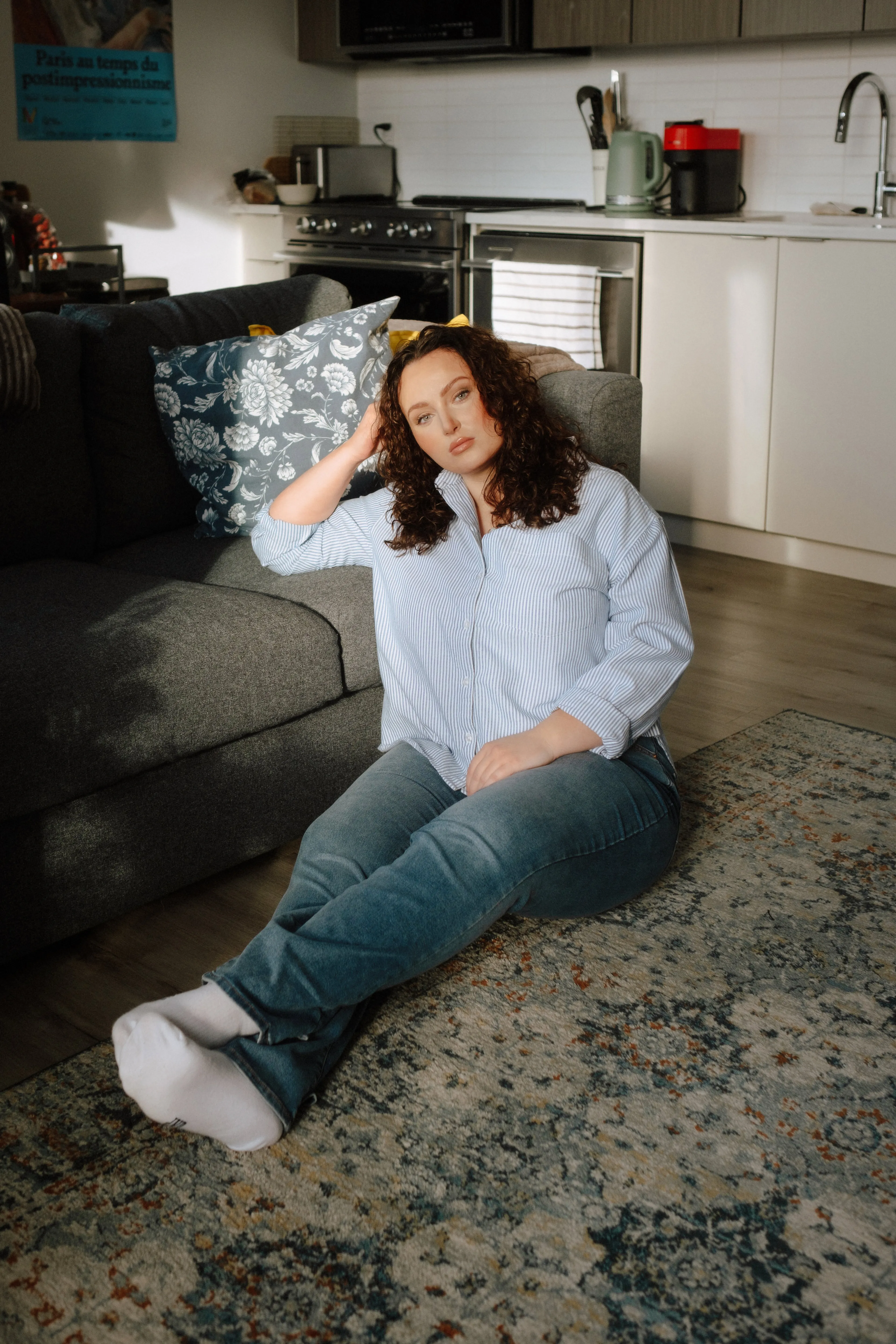
A Renter’s Nightmare
In hindsight, it was definitely a cockroach that woke me up.
Half-asleep in the dark of my room, I felt a skittering sensation on my chest. It didn’t occur to me that a roach had joined me in bed. It was only the next morning, when I spotted first one and then two intruders in the kitchen that I realized with horror: my new apartment was infested.
I had been so excited to move into the place, a two-bedroom apartment in Montreal’s Rosemont neighbourhood. It was 2022, I was 24 years old and I’d arrived in the city 18 months earlier to pursue a master’s degree in public policy. I stayed in town after graduation for my first job, as a program manager at a local nonprofit, overseeing a team of researchers. At $850 a month, the apartment was cheap enough that I could start paying off my student loans. It was also the first place I’d lived in years where my bed occupied a different room than the fridge. I thought I was moving up in the world. There was even a small balcony in the back, which came with my very own spiral staircase—quintessentially Montreal.
It wasn’t perfect, of course. It couldn’t have been, at that price. The previous tenants had trashed the place before they moved out, and the landlord had left me on the hook to clean up their mess: writing on the walls, a few forlorn balloons floating in the air, food residue in the kitchen cabinets, garbage strewn around, as well as a faint oily smell permeating everything. I later learned this odour was caused by the pheromones and fecal matter of the roaches.
I called the landlord. Two things became clear: first, he already knew about the bugs; and, second, he was not going to shell out for an exterminator. Instead, he was going to DIY the job. I paid about $300 out of pocket for an exterminator’s consultation, to stack up some evidence for why more aggressive tactics were needed. The exterminator confirmed that this situation was not something one man with bug spray could handle—it was a severe, pervasive, clearly long-term infestation. The roaches were deep in the walls, generations of them living in the bones of the building. It would take multiple visits, and the whole building would need to be fumigated. The operation would require the other tenants to agree to the disruption, and the landlord to finance the entire thing. Oh, by the way, the exterminator added: did I know about the mice in the walls?
Of course the landlord did not want to pay up; not for a whole-building fumigation, nor even to reimburse me for my inspection. “Let’s give it some time,” he said, the implication being that I could live with midnight roaches and the smell of their dead skin and droppings. I looked into lodging a complaint with the local renters’ tribunal, but it would take weeks, or longer, for anything to come of it.
Related: The Condo Crash
I decided I couldn’t live indefinitely in filth, sleep-deprived, feeling the tickle of phantom (or not phantom) legs on my chest. Unfortunately, I was also broke. The exterminator’s fee, combined with moving costs and all the other bills that came due at the first of the month, had added up. The landlord agreed, begrudgingly, to let me break my lease, but he insisted on keeping the damage deposit. And even though I was employed, I was deeply and profoundly in student debt. Finding another apartment in Montreal was financially untenable. In the aftermath of COVID, rents in the famously affordable city had skyrocketed: the average asking price for a newly listed one-bedroom had risen from $980 in 2019 to $1,370 by 2022. (It’s $1,550 today.)
I called my mother and told her I needed an exit plan. My employer allowed me to work remotely, at least temporarily, while I figured out my next move. My mom graciously bought me a ticket home to Victoria, and I returned to my parents’ basement, leaving what I’d hoped would be my first real adult apartment.
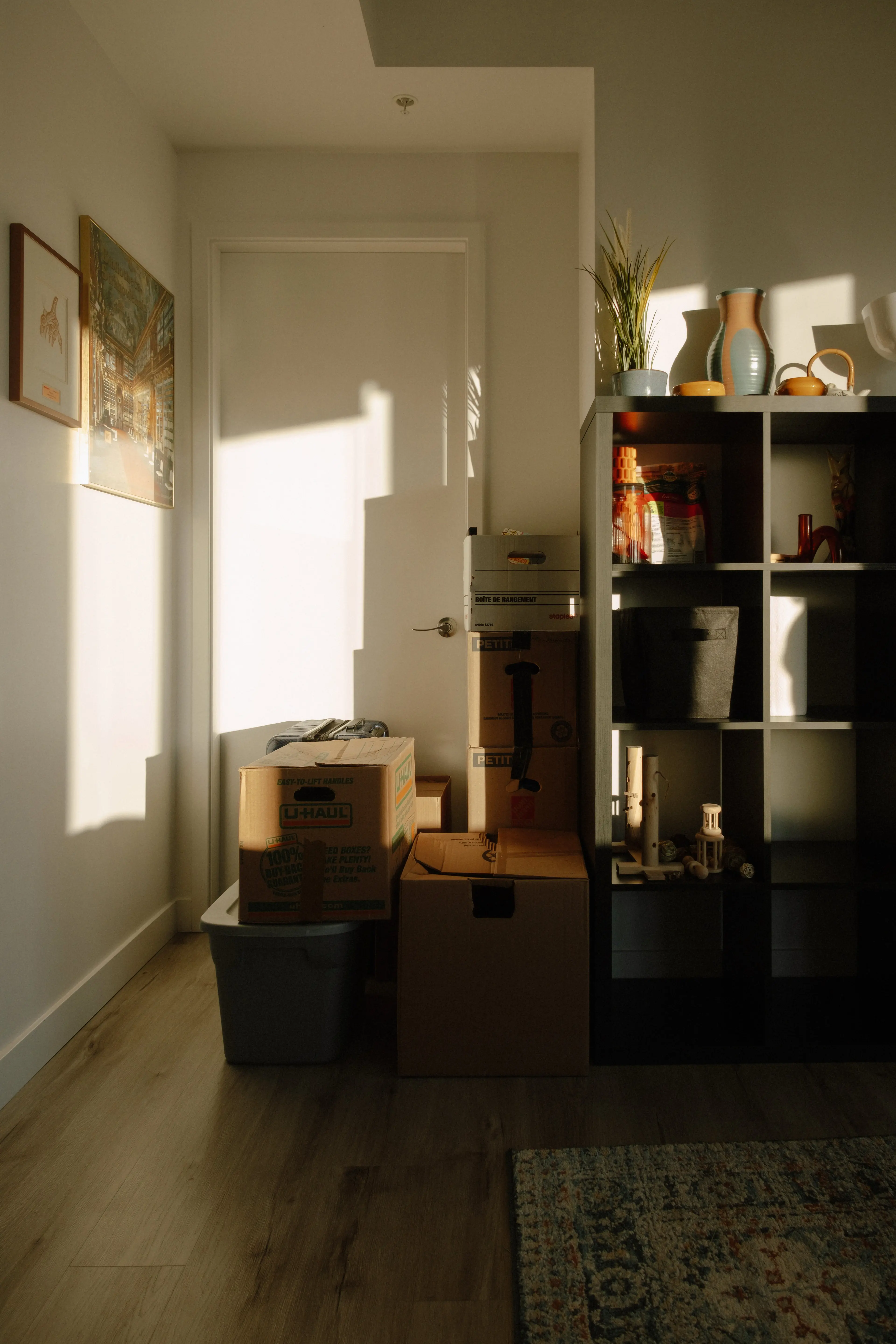
In the past five years, I’ve lived in 10 homes: high-rises, hotel rooms, basement suites, heritage homes, an Airbnb and several interludes in my parents’ basement. I’ve loved some and loathed others. But, like a growing number of young Canadians stymied by Canada’s brutal rental market, I cannot seem to put down roots. My apartment-hopping has been unusually frequent, but almost all young Canadians I know are in a similar state of housing precarity. Recent data from the CMHC proves it: around 18 per cent of Canadians aged 35 to 44 have experienced a forced move, as have 15 per cent of Canadians 25 to 34.
The upshot is more than simple inconvenience. High rents rob us of the ability to save for the future. We have no access to the housing equity that previous generations took for granted. Transience ripples through every facet of our lives, making it harder to stay connected to a community, to develop ties, to feel at home in a place. I avoided joining a church for years, knowing that there was always a good chance I’d be moving, maybe within months.
This rootlessness stalls other life milestones, like child-rearing. Suitable housing—affordable, spacious and, crucially, stable—is correlated with higher fertility rates. In a 2022 survey by Statistics Canada, almost one-third of respondents aged 15 to 49 said they didn’t think they’d have suitable housing for a family in the future. I can relate: at 28, I’m at an age when virtually every other woman in my family was a mother. I had thought I would be too by now. But I’m not just a renter; I’m a precarious renter. I don’t want to drag a child from apartment to apartment indefinitely. Statistically, I’m in good company. In one 2023 study by Abacus Data and the Canadian Real Estate Association, more than half of young respondents who intended to have children said the housing crisis has influenced their timing—some were postponing children, some were having fewer and some were having none.
Related: Ana Bailão vs. the Housing Crisis
Renting is a reality for millions of Canadians, particularly young ones, but policies have not kept up. When politicians talk about improving access to housing, they’re typically looking for ways to support current or aspiring homeowners, who live in the same communities for decades, mobilizing political power. They have more assets and, therefore, usually more wealth than renters, and they’re a larger and more attractive political bloc.
Historically, this focus on homeowners has made sense. Renting in Canada has always been a temporary existence as a waystation en route to ownership. But for many of us it’s become permanent. And there’s a point where constantly moving is no longer a coming-of-age arc but a sad and inescapable cycle that feels more structural than personal. As young adulthood turns to adulthood, it’s frightening to see nothing down the road but another disruption, another neighbourhood, another reluctant relocation, no matter how far into the future you look.
I was born and raised in Victoria, spoiled by green winters and urban beaches, playing in fields of purple camas flowers and yellow daffodils. It was an idyllic place to be a kid. My parents, a bus driver and a legal secretary, bought their home in 1998. My dad worked endlessly on our house, transforming it from a squat bungalow into something beautiful. He renovated the basement and planted Japanese maples throughout the garden. He built me an incredible octagonal monkey bar set in the backyard, the site of some of my favourite childhood memories. Our neighbourhood was full of families like ours, working-class people who could at that time afford to live, and even be homeowners, in Victoria.
In 2019, I graduated with a history degree from the University of Victoria. The job market for new grads was much more robust than it is today, and I quickly got a position as a political aide. That’s also when I found my first apartment, a room I rented for $650 on a month-to-month lease in a house shared with one roommate. That was very affordable by Victoria standards, even for a single room in an attic. It overheated in the summer, froze in the winter and the neighbourhood, Pandora Avenue, was known for the growing encampments of unhoused people up and down the street. But my roommate and I loved the house, an old charmer with hardwood floors, a working fireplace and a yard, nestled between blocks of other historic homes. It was also a crash course in the precariousness of the renting life. My landlord had threatened to sell the house since before I’d moved in, and living there was a compromise: my home was his investment.
I put up with the uncertainty because the house was cheap and charming, but eventually I moved back in with my parents to save money for grad school. In January of 2021, I arrived in Montreal to attend McGill—right at the height of pandemic lockdowns. A nightly curfew was enforced, confining me to my new apartment: a 250-square-foot hotel room converted into a short-term rental due to the lack of tourist traffic. Rent was cheap, $625 a month, and I didn’t need to buy furniture. But I envied people who were self-isolating in grander spaces—like an apartment with a kitchen. I spent most of that time living off ramen noodles, instant oatmeal and granola bars. I lost about 15 pounds while living there.
Related: The Case for Lifelong Renting
That spring, I was on the move again, upgrading to a studio apartment in the Plateau. My rent went up, but only slightly: $650 a month. I loved the neighbourhood, and I loved having a real stove even more. But I soon noticed that the food in my freezer was always half-frozen, and the fridge was making strange noises. Soon it failed completely, costing me hundreds of dollars’ worth of groceries. I spent weeks waiting for a replacement, living off of food-delivery apps.
Then Montreal’s famous crumbling lead pipes joined the act, breaking and requiring immediate attention. Water access to my building was cut off for days at a time during repairs, forcing me to lug jugs of water three storeys up to my unit so I could flush the toilet. This went on and off for the entirety of the summer of 2021. In the fall, I graduated and started working—almost exclusively from home, lest my co-workers be confronted with the realities of me not having access to a shower for days on end in an apartment without air conditioning.

Eventually, the pipes were fixed. But when the first snow came, the studio felt cramped and the cold seeped through the single-pane windows. I saw a listing for a two-bedroom in the Rosemont neighbourhood and jumped at the chance. It seemed like I was finally moving into proper, grown-up accommodations. The roaches had other plans.
My Montreal excursion taught me a hard lesson about the state of rental housing in Canada: a lot of it is simply in shambles. As of 2019, Canada had just over 2.1 million rental properties, according to the CMHC. Nearly three-quarters were built before 1980, and one-quarter before 1960. Our nation relies heavily on mid-century rental stock—and in a city like Montreal, units are often much older than that. A lot of this antiquated housing requires renovation and renewal but, in the hands of uninterested landlords who know there will always be willing tenants, upgrades simply never happen. The situation is even worse when it comes to rentals cheap enough to qualify as affordable by the CMHC. As of 2024, the agency deemed one-quarter of affordable Canadian rental units to be in “poor” condition. The situation is worst in Ontario, where it’s a full third.
In fairness, renovation is expensive, and most of the housing policies implemented in the past few years by all three levels of government have been aimed instead at spurring new construction. Those include removing GST on new rental builds, providing low-interest loans to developers and rewriting municipal zoning to allow for more density. But building new housing is only one side of the coin—ensuring existing housing is fit for purpose is the other. The alternative is that tenants, especially those with limited means, will be pushed from unit to unit, or simply forced to live in substandard housing.
When I returned to Victoria in the early spring of 2022, the city was in bloom. There was something magical about stepping off a plane from the snow and slush of Montreal onto the green grass of my hometown. The air itself smelled like a new start. Hoping against hope, I thought that maybe I could stay.
Reality set in hard. In the few years since I’d graduated, rents had surged, from an average of $1,440 for a one-bedroom to $1,830 in early 2022. (The most recent figure, as of the third quarter of last year, was $2,120.) It was obvious that simply escaping my parents’ basement again would be difficult. Very few of the members of my high school graduating class who still live in Victoria were homeowners. That’s not a surprise in a city where the average single-family home costs nearly $1.2 million. But most weren’t even renters; they were still living with their parents, like I was. One childhood friend describes us as a generation of “basement babies.” The realization that I was simply too poor for the city I’d grown up in was crushing. Victoria was home: where I’d worked teenage shifts in tourist shops and downed countless coffees at local cafés. It was where my family had lived for generations. But the sacrifice to stay was too great. Victoria was increasingly a place reserved for the wealthy.
Related: The End of Home Ownership
I started looking for somewhere new. Like many priced-out British Columbians, I decided it was time to try calling the Prairies home; they were near enough for a short flight back and much cheaper than Ontario. I also liked the idea of wide-open skies. Alberta beat out Winnipeg and Regina, since it was closest to B.C., and one side of my extended family is based around Calgary. I applied for jobs in Edmonton and Calgary, got offers in both and chose the city with the cheapest rents: Edmonton, here I come, I thought.
I had no connection to the city before I moved there. I’d visited only once, when I was eight, to go to the West Edmonton Mall. The city had some appeal, beyond relatively cheap rent. I don’t mind the cold, and the province is officially rat-free, so that’s one less pest to worry about. But it was obvious that, in the end, I needed to choose between my top priorities: family, community and affordability. Affordability won. It almost always does.
Between 2022 and 2025, British Columbia lost, on net, 26,000 people to Alberta alone. In 2024, Angus Reid reported that 36 per cent of British Columbians would consider moving away due to exorbitant housing costs. This is just one example of the post-pandemic self-sorting that has changed the face of communities across the country, as people in high-cost areas flee to cheaper ones. Torontonians self-exiled to Ontario’s secondary and tertiary cities. Many left the province altogether, especially to points east and west. In the past five years, more than 60,000 Ontarians have moved to Alberta and more than 30,000 to Nova Scotia. As they welcome more and more new residents, formerly inexpensive communities have come to look more like the areas people are escaping in the first place, spreading the rental crisis beyond the nation’s largest cities. Since 2020, average one-bedroom asking rents in Calgary have soared from $1,180 to $1,630 per month. Kitchener-Cambridge-Waterloo has gone from $1,370 to $1,820, and Halifax from $1,230 to $1,840. Now, a third tier of cities is drawing cost-of-living refugees. Today, an apartment in Kelowna, B.C., costs as much as one in Vancouver did six years ago, one in Guelph as much as one in Toronto did, one in Moncton as much as one in Halifax did. Increasingly, there’s nowhere left to go.
When I arrived in Edmonton in June of 2022, I lived in an Airbnb for about $2,000 a month. It was especially pricey since it was just a short-term rental that I used while figuring out something permanent. I was told by the host that short-term rentals were banned in the building, so I should be as quiet as possible. After a month of skulking around, I found a downtown condo for rent. It was expensive for one person, at $1,400, but I thought I could make it work. It turned out that I’d overestimated my spending power: my situation had improved by changing provinces, but not by as much as I’d thought.
The next place I lived was a basement suite. The landlords, who lived upstairs, were exceptionally kind, and the apartment itself was cozy and warm. But they were gone for long stretches of the year. In their place was a parade of Airbnb guests—a reminder that when you’re a renter, the things happening in your home are never fully within your control. One evening, a dance troupe rented the space above, performing what felt like endless leaps above my head. They had a spotlight propped up, shining directly into my window. I’m sure the performance was excellent—but I just wanted to sleep.
Something good happened while living there, though: I fell in love with a colleague from work. He was kind and smart, and it was easy to plan a future with him. He started spending more time at my apartment, cooking dinners and watching movies, and soon both the basement suite and the city itself felt a lot more like a home. We discussed moving in together full-time, which would have a financial upside: splitting the rent would halve our individual housing costs, and we could escape the constant noise of the upstairs Airbnb.
So I moved from a little den underground to an apartment above the clouds, on the 59th floor of a downtown highrise I’d set my sights on when I’d first come to town—a potential dream home, high in the sky and worlds away from cockroaches and chaos. Rent was just over $1,500 a month. At 506 square feet, it was larger than many places I’d previously lived, but still cramped for two people. As in many new condo buildings, the unit itself was unremarkable; instead, the building was marketed on amenities, including a big show kitchen, a community space, a gym and an outdoor terrace. Theoretically, this was all fabulous. Practically, we were paying for a sky-high shoebox that occasionally got us access to a shared floor full of other residents avoiding the claustrophobia of their own apartments. Then the elevators broke.
This was a very full, very busy apartment building. Starting in November of 2024, it was frequently down to only one operational elevator. Throngs of residents would assemble in the halls, waiting for up to 30 minutes to shove themselves into the single elevator in service. Occasionally, it broke down too. The building’s group chat had regular updates about how long people had been trapped in the elevator on any given day.
Ultimately, even this place, marketed as luxury, proved a disappointment. Just as my Montreal apartments embodied the problem with much of Canada’s under-maintained existing rental housing, this one represented the shortcomings of so much new construction. New developments have become a warren of studios and one-bedrooms. And it wasn’t always this way; in previous generations, condos and apartments were built for living, and for different household sizes. According to the Municipal Property Assessment Corporation, the average condominium in Ontario peaked at approximately 1,100 square feet in the 1990s. The most recent data shows the average unit today is about 700 square feet. It’s hard to imagine starting a family in such tight quarters, which are cramped even for singles and couples.
Eventually, the walls felt like they were closing in. It could take 30 minutes to get a pizza delivery guy from the lobby to the apartment. We lived in constant anxiety about being trapped in a broken elevator for hours. I couldn’t believe it; we were in one of the city’s most desirable buildings, still dealing with these indignities.
It was around move six or seven that I stopped fully unpacking in a new apartment. My eagerness for new connections, to engage with my community, lessened a little with each move. I’m now afraid to feel at home, with the knowledge that another move may be right around the corner. But moving itself has become easier—many of my boxes now remain packed and waiting.
As I write this, a combination of new housing supply and slower population growth is finally helping to lower asking rents in some of Canada’s most expensive cities. Toronto one-bedrooms have eased a little, from a peak above $2,300 in 2023 to under $2,200. In Vancouver, prices have ebbed from above $2,600 to around $2,400. But they’re still elevated far above their pre-pandemic levels, and some cities are still notching up new records. In both Victoria and Edmonton, the most recent data shows rents at or near all-time highs.
Yet there’s little attention being paid to the policy changes that could not only produce more rental housing, but better rental housing. Some of the pro-owner policies are even poised to make life worse for renters. For example, Ontario’s Fighting Delays, Building Faster Act, introduced last year, threatens to make evictions easier, reducing the amount of time a tenant has to pay back rent from 14 days to seven. Like many other people, I’ve scrambled occasionally to make rent on time. It’s easy to imagine being a few days behind.
There are plenty of other examples of housing policy that explicitly overlooks renters: assistance for first-time homebuyers, without corresponding supports for renters. Or the lack of a capital gains tax on primary residences, no matter how much the asset has appreciated, while renters receive no parallel wealth-building subsidy. Public spending and effort flow primarily toward making life easier for owners, and making more people owners, but not making life easier, more affordable or more stable for renters. Policies that could make tangible differences for renters include permanent, nationwide caps on annual rent increases, subsidized legal counsel for tenants facing eviction and, of course, a lot more funding for non-market housing.
Related: How To Fix Canada’s Housing Crisis
This inertia isn’t for lack of options—there are ways for governments to tackle some of the problems facing renters. Rental registries, for example, could provide publicly accessible information on prospective landlords: do they make repairs in a timely fashion? Will they hire a real exterminator if there are pests? Do they have a history of extreme rental increases? Anywhere I’ve lived, I’ve provided a landlord with an in-depth overview of my finances—where I work, how much I make, my credit score and rental references—so they’ll allow me to pay to live in their building. This feels sensible, but there is no reason this exchange of information should not go both ways. Montreal is moving in that direction. Since 2022, landlords with eight or more units are required to enrol in a rental registry and submit information about building conditions, how much rent they charge, whether units are vacant and other information. (Landlords with fewer than eight units, like the one who owned my cockroach-infested hovel, are exempt.)
Canada could also model itself after some European jurisdictions, such as Vienna and the Netherlands, where municipalities are active players in the rental housing market—in the best case, this supports affordable renting and investment in older housing stock. But little of this kind of energy is found in Canada. Instead, the unofficial strategy seems to be to let Canadians keep moving to where it’s cheaper until, inevitably, there is nowhere cheap left. Even Edmonton is not a utopia for renters. Rental increases are unregulated in Alberta, so if a landlord wants to double your rent, there’s nothing to stop them from doing so. The city is relatively affordable today, thanks to abundant construction and housing supply, but the combination of extremely landlord-friendly policy and a growing population means there’s no guarantee it will be affordable next year, or the year after.
Last June, after eight months of broken-elevator anxiety, my partner and I moved yet again. We live today in a two-bedroom, pet-friendly apartment in a walkable Edmonton neighbourhood. It feels better. I’ve joined a local church, and we volunteer there regularly. We adopted a rabbit, Snuffleupagus. For the first time in years, life feels routine—and after so many peripatetic years, routine is radical. On Sundays in the summer, I walk to the farmer’s market. Vendors ask about Snuffleupagus, who is an avid fan of locally grown lettuce. On weekdays, I recognize familiar faces at the grocery store.
We will probably move again. But I hope that, perhaps next time, it will be because we are buying, not fleeing. My housing dreams aren’t grand: a modest bungalow, a garden for the rabbit. Surely that’s not too much.
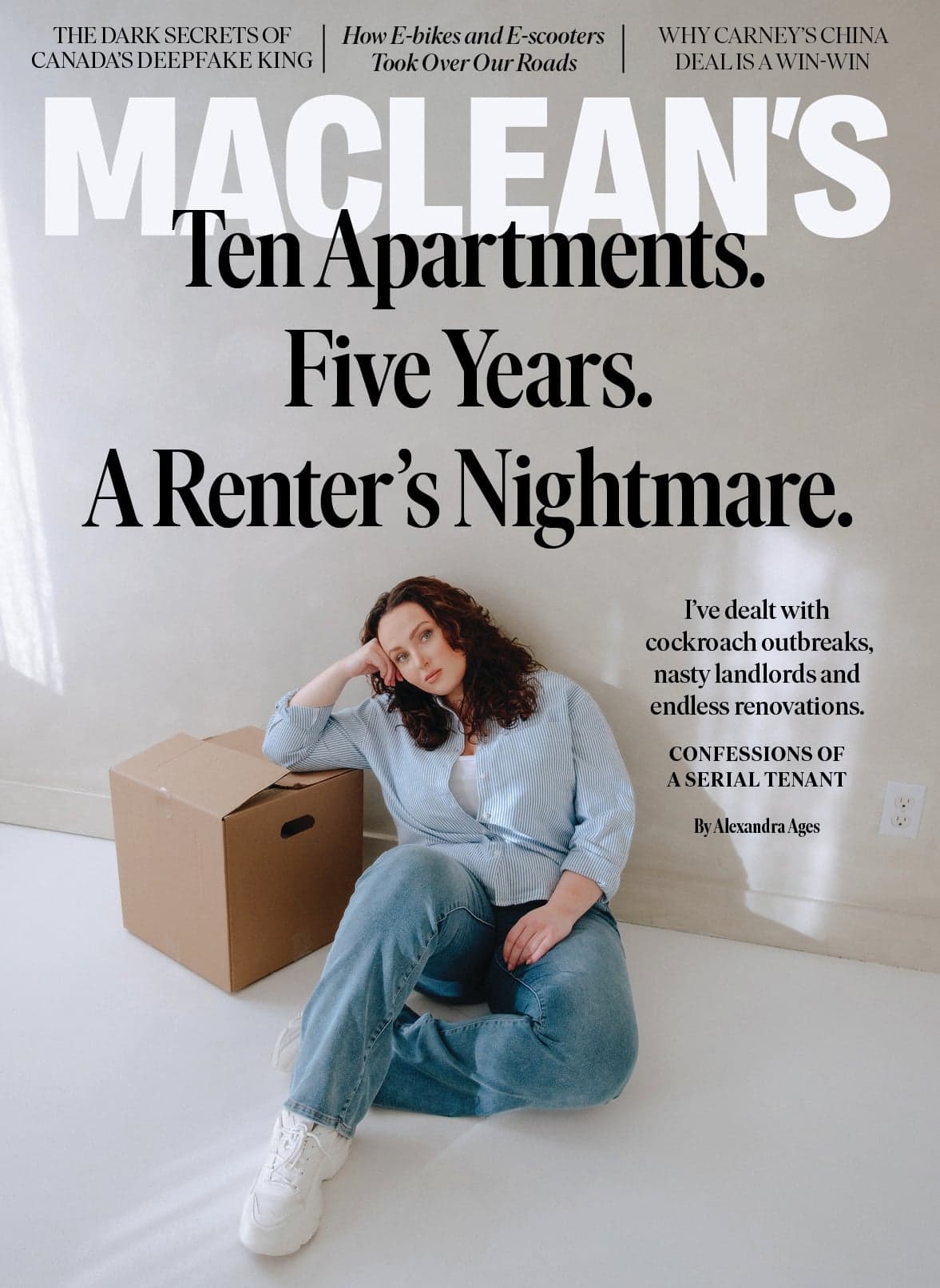
This story appears in the April 2026 issue of Maclean’s. You can subscribe to the magazine here or send a gift subscription here.
Get the Best of Maclean’s straight to your inbox.
Sign up for news, commentary, analysis and promotions. Join 80,000+ Canadian readers.