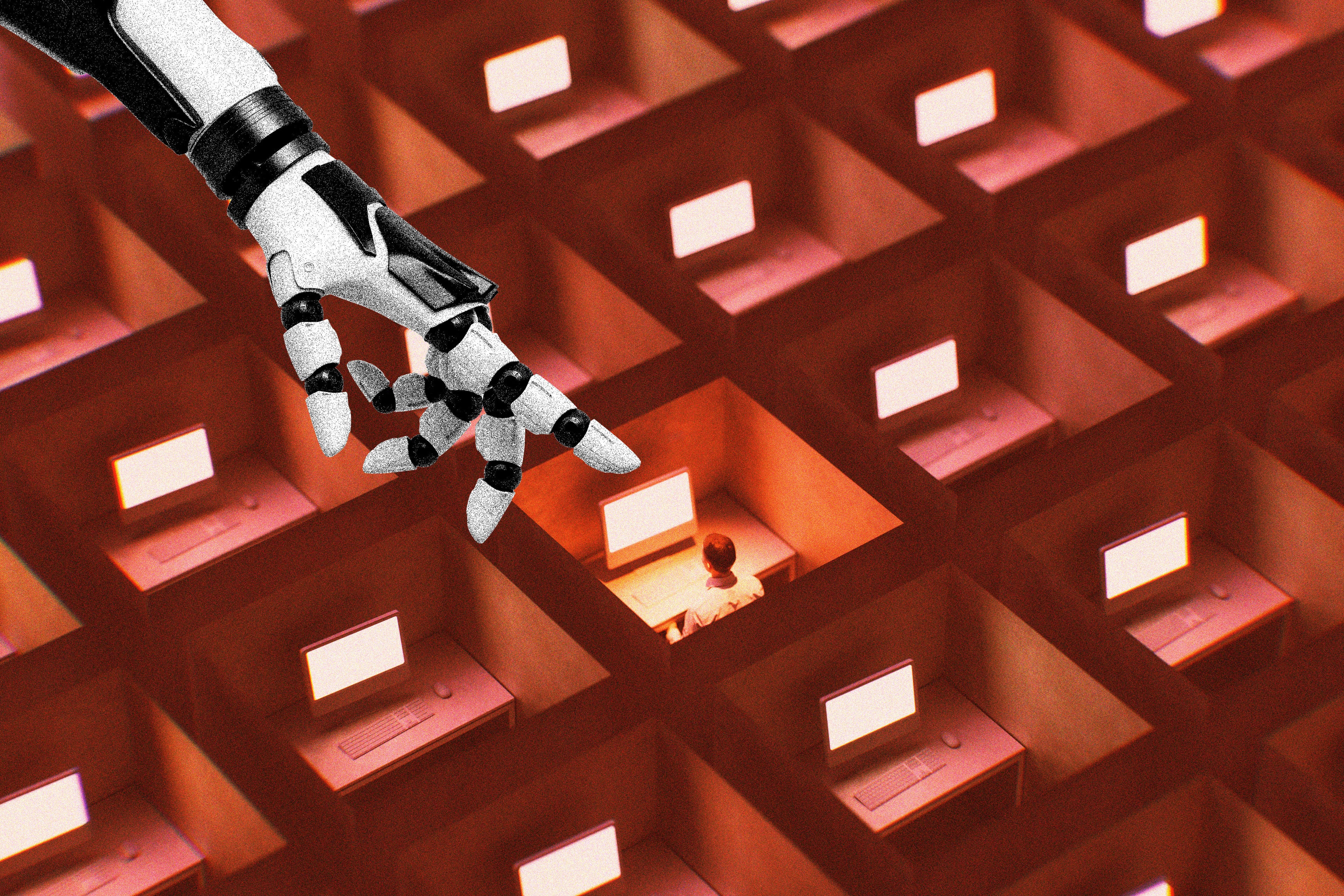
AI Has Entered the Cubicle

“Bosses want staff to use AI for everything. It’s not there yet.”
Sarah Stockdale, marketing professional, Toronto
I run an online education business that teaches growth marketing. Since ChatGPT came out in November of 2022, we’ve been teaching marketers how to incorporate AI in their campaigns and how to use it day-to-day in their businesses. We constantly have to keep up, because there are new AI tools every day. We’ve even added an entire new class devoted to AI adoption.
I keep hearing the same thing from my students: “My boss is telling me I have to use this AI tool every day, but I’ve received no training.” They’re being asked to integrate AI into everything they do. But that’s not practical.
AI tools can be powerful, but only when used with training, strategy and a clear sense of purpose. The biggest challenge isn’t the tech; it’s the lack of leadership. Managers don’t always understand the tools, but they’re asking teams to use them to save time and cut corners. Deployed smartly, AI can lift people out of the most boring and administrative parts of their jobs. More often, people are forced to use it in ridiculous ways.
For example, people are using AI tools to scrape thousands of email addresses and send cold B2B emails; my inbox is full of them. It’s a numbers game. That’s made all of our jobs grosser and more annoying. Sure, you could generate 15 blog posts using ChatGPT in 10 minutes, but it’s just flooding the internet with noise. When things get noisier, all of our jobs get harder.
Leaders are forcing marketers to cut resources, let go of team members and somehow expect a chatbot to replace strategy, creativity and experience. But these tools can hallucinate. They’re not going to speak in the company’s voice, unless it builds custom tools. In December, for example, McDonald’s Netherlands released a 45-second ad that was completely AI-generated. It was titled “The Most Terrible Time of the Year” and it was a slop video that made Christmas look hectic, chaotic and upsetting. It was pretty creepy to watch. They had to take it down because it got criticized so horribly on socials and received international media backlash. This is what happens when you try to replace human creativity and thought.
Related: AI Is Ruining My Education
These mistakes can also be expensive. In 2024, a company used agentic AI to publish thousands of blog posts without a human reviewer. At first, site traffic and click-throughs went up, but then Google dropped their site off a cliff. It stopped indexing every page of their website except the homepage. This kind of mistake is going to ruin a company’s website, its credibility and its authority.
Marketers have to clean up the mess. They have to defend the brand, manage customer backlash and explain why AI-generated campaigns don’t land. One of our instructors is an SEO expert and consultant. A client tried to replace her with an AI SEO tool and, in the process, it knocked their business off the first page of Google and tanked their sales for a few months—until they brought her back to fix it.
At Growclass, we built a custom AI tool based on our IP, our data and our brand voice. It can produce content that sounds very close to what we would make, but it’s because we trained it on a ton of our own human-generated content over the years. Even then, it requires lots of editing.
There’s a huge opportunity for good marketers. We can make our campaigns stand out against the slop. We just have to get more creative.

“AI is infiltrating the courts—and introducing a lot more errors”
Darren Frank, lawyer, Brampton, Ontario
As a founding partner at Boardwalk Law LLP, my practice includes civil litigation. I’m not against AI—I’ve even used it to create marketing plans. But lately, it’s been causing trouble in the courts, and I’ve seen it firsthand.
In June of 2025, I represented a client involved in a construction lien dispute. Our opponent was representing himself and came prepared with six cases he said supported his position. When we examined them, we found something odd: four were completely fabricated, and one of those referenced a corporation that didn’t exist either. The other two were real but completely irrelevant. I stood in court and told the judge, “Your Honour, this is a case about divorce and family law.”
Embarrassed, the other party admitted he’d used ChatGPT to do his research. The judge was not impressed: she threw out the case, awarded us full costs and issued a rebuke to our opponent. Unfortunately for that judge, it’s probably not the last time she’ll have to go through this. Lay people and lawyers alike are turning to AI to do their legal research for them—and it’s making things up.
In May of 2025, shortly before my construction lien case, the Ontario Superior Court of Justice had its first run-in with AI-hallucinated case law. It was part of an estate dispute, where the applicant was represented by Jisuh Lee, a lawyer practising in Toronto. The judge was Justice Frederick Myers, who’s known for his thorough and well-written decisions. This would be one of them.
According to the record, Lee submitted a factum outlining her arguments prior to a hearing in early May of 2025. But when the judge reviewed it, several things were off. There were no paragraph or page numbers, and the web links for several cases didn’t work. When Justice Myers tried to find each case himself, several didn’t exist and those that did argued against Lee’s points.
Related: Why the Internet Is Worse Than Ever
Justice Myers asked Lee directly if those cases were AI hallucinations, but she claimed she didn’t know. In a later hearing, Lee claimed that she had delegated the research to a student, who had used ChatGPT to prepare the factum. It was only after being questioned by the Law Society of Ontario in September that Lee admitted she’d lied: she alone had used AI to generate the factum, but she’d been afraid to admit it.
Thanks to Lee’s case, all lawyers in Ontario now have to sign a new form when submitting factums to court and swear to the following: “I certify that I am satisfied as to the authenticity of every authority.” That’s no great burden, but the effect on research is another matter. Before ChatGPT, I could trust that the other party was doing their job when they referenced prior cases in their submissions to court. Not anymore. Now we have to check every one, which takes time and money. Rather than helping my practice, ChatGPT has increased our research costs measurably—even though we don’t use AI for casework ourselves.
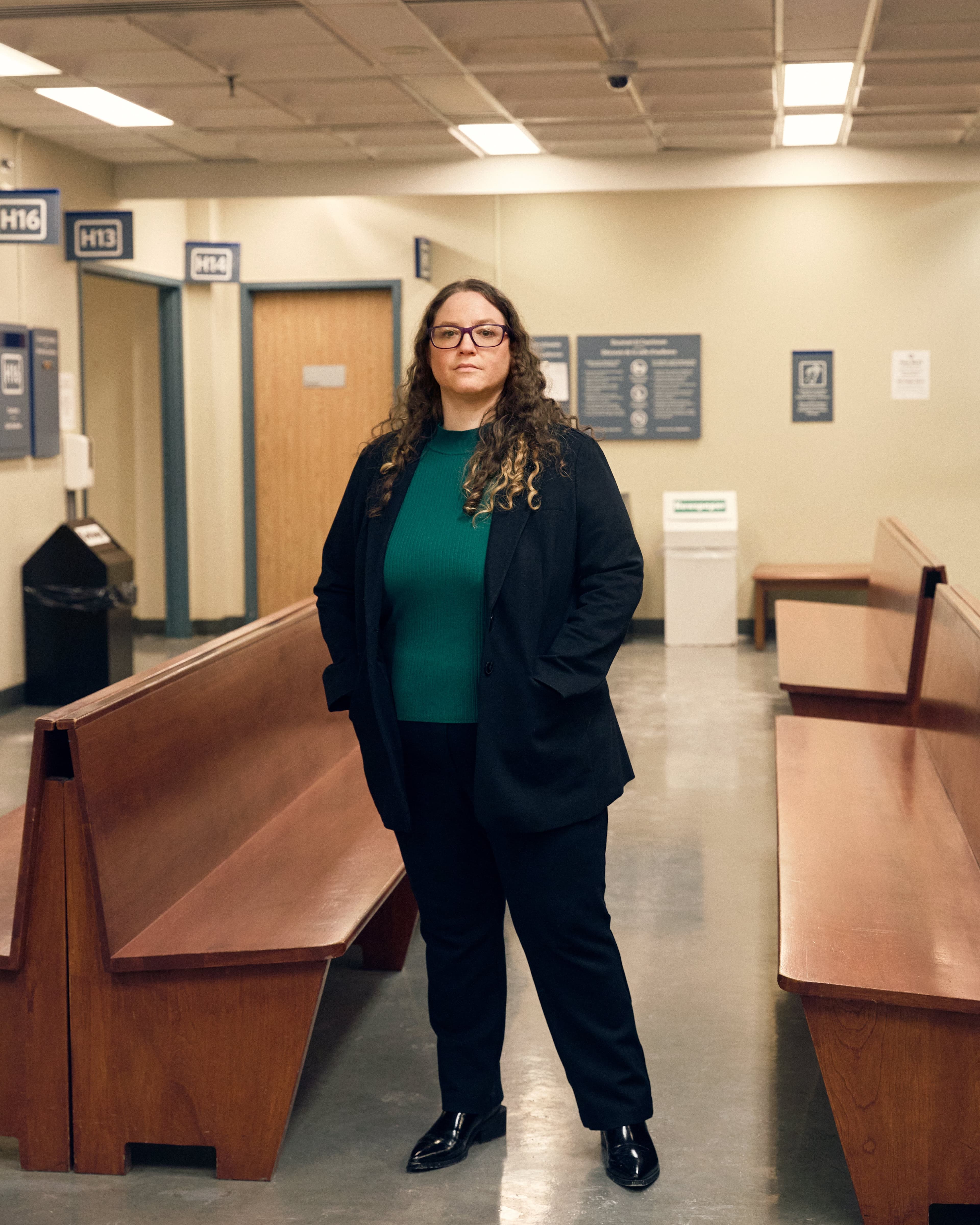
“My legal clients are doing their own AI research. It’s costing them—and me.”
Samantha Glass, paralegal, Toronto
I’m a paralegal doing civil litigation work in Toronto, mainly for small claims, landlord-tenant issues and human rights cases. It’s my job to advocate for people and help solve their legal problems. But AI has made that harder, both for me and my clients.
One client had recently financed a new vehicle. Three months after she got the car, it broke down. She asked ChatGPT if she could stop paying the finance instalments and sue the dealership. ChatGPT said yes—so she did. The app was wrong, of course, and both the dealership and finance company came after her. Only then did she come to me. By that point, the best I could do was mitigate her losses. I negotiated with the finance company and got them to work out a repayment plan with her. Otherwise, she’d have gone bankrupt. Now they’re off her back—but she’s still worse off, thanks to the missed payments.
That client was willing to use my services. Some are much less open to it. They figure they can just get ChatGPT to answer for free. I take no-charge consult calls with prospective clients. In the pre-AI world, these would last for about 15 minutes. Now they’re lasting twice as long, as I explain why my services are necessary and provide the essential legal context to correct the misinformation ChatGPT has provided.
In one call, a woman came to me wanting to sue someone for defamation because they’d hurt her feelings. I explained to her that defamation means something very specific in the law and that her case probably wouldn’t be successful. But she didn’t care: ChatGPT had already told her she could sue, and she was going to do it. Worse, since she had done her own research using AI, she figured we had as well. “Why should I pay you to tell me what AI is telling you?” she asked.
Related: My Classroom Will Be AI Free This Fall
The other big problem is that, since AI makes it look like legal research is easy, people are trying to drive down our (already reasonable) prices. The other day, I spoke to a prospective client with a complicated issue. When I told her what it would cost for me to do the legal research and determine her options, she balked, asking why I couldn’t just do it for free. I’ve heard the same thing from my colleagues across the board: we’re all finding it harder to convince the public that we hold value.
AI is also making the work seem less meaningful. Over the last two years, my firm has represented a landlord in a tenancy matter. Their tenant had refused to pay rent, and yet ChatGPT had convinced her she could get tens of thousands of dollars out of her landlord by raising certain issues at the Landlord and Tenant Board. We tried to mediate, but the tenant refused—and submitted hundreds of pages of documents as evidence and 25 pieces of case law. All the cases submitted were hallucinations.The tribunal meticulously fulfilled its duty to review all submitted evidence, but the volume of AI-generated hallucinations created a significant and unnecessary procedural delay that lasted two years. In the end, it took five hearings and hundreds of hours of our time to determine that the tenant’s claims lacked legal merit. We were paid for that work, so it was good business. I didn’t become a legal professional to deal with AI all day, but it’s the new reality.
It’s frustrating. Paralegals are always at risk of burnout, but this year it’s different. It’s no longer just about the law; it’s about constantly re-educating a public that’s received a false sense of security from an algorithm. I’m working harder than ever to advocate for human oversight in a system that AI simply cannot navigate.
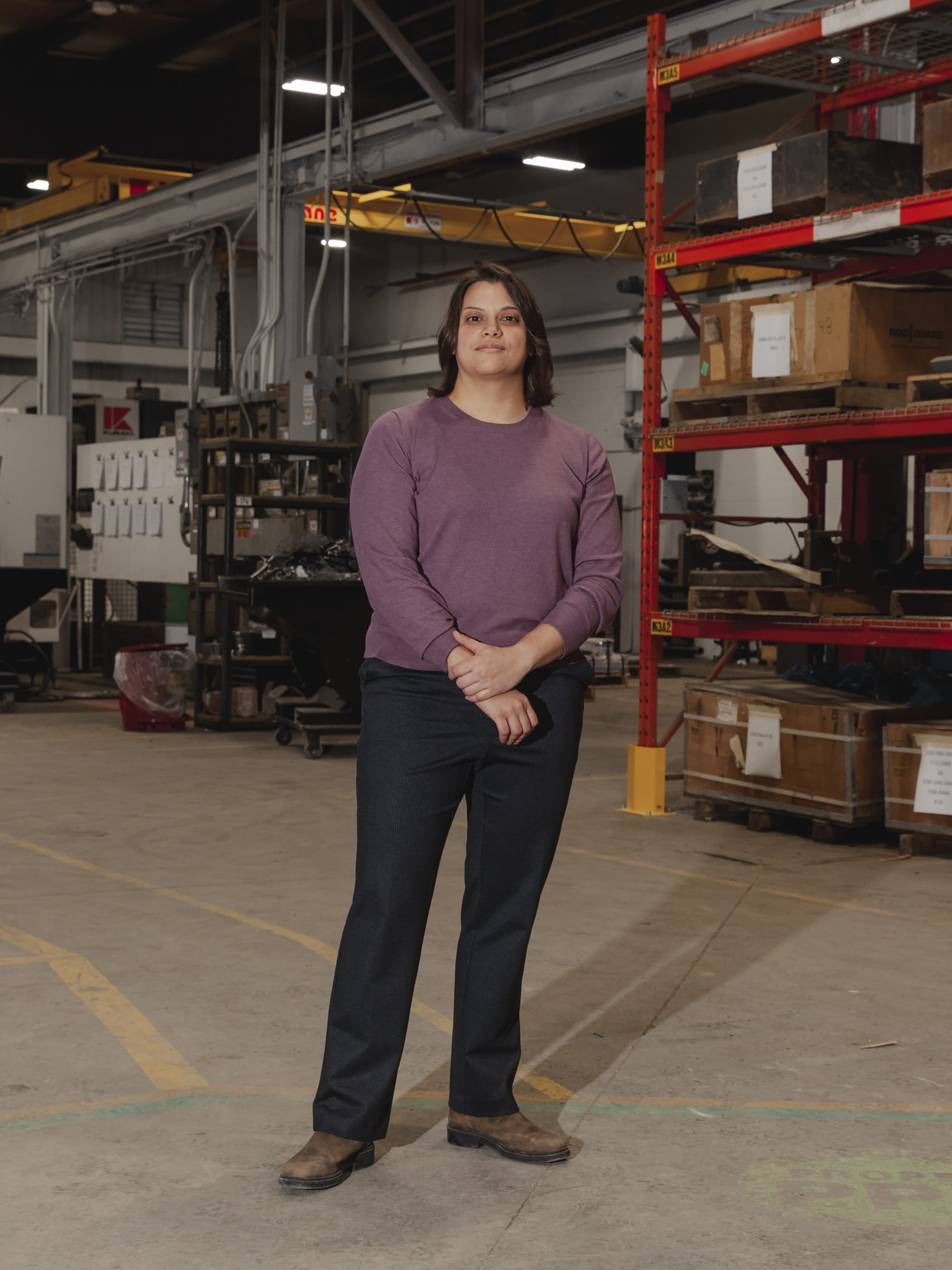
“ChatGPT-written applications make hiring slower, harder and less human”
Anasuya Maraj, HR manager, Barrie, Ontario
Toward the end of 2022, while working as a manager at a Sobeys just south of Barrie, Ontario, I started noticing job hunters using ChatGPT. We received a flood of applications after the pandemic, but many of them felt off. I kept seeing the same quirks over and over again: full sentences instead of bullet points, clinical writing styles, punctuation that most people never use. The applications were filled with recruitment buzzwords like “cross-functional,” “alignment” and “collaboration.” Around one in 10 applications I received during this time sounded the same. Retail always attracts a wide range of personalities, so the uniformity set off alarm bells.
It made me question these candidates’ abilities. If they were enhancing their words, couldn’t they embellish their skills as well? As it turned out, yes, they could. I went on to work in HR for a distribution company. One time, I was hiring for a machine operator. I’d vetted and interviewed an applicant who seemed to know their stuff. On the phone, they hit all the buzzwords and knew all the correct terminology. But when they stepped onto the floor for the skills test, it was obvious they’d never laid eyes on the machines they’d need to operate. They confessed to having googled all the terminology and know-how beforehand, so we sent them home. Because they’d regurgitated phrases directly from the machine-licensing manuals, I suspect they’d used AI.
Today, I’m an HR business partner for a Canadian steel company. Once, I was conducting a phone interview with an applicant who I suspected was using AI in real time. I would ask a question, then they would repeat my inquiry back to me, word for word. Applicants will sometimes repeat parts of questions to give themselves time to craft their answers, but this person would then answer almost immediately and with the unmistakable lilt of someone who was reading off a screen. To test my suspicion that they were feeding my queries into AI, I pasted the next interview question into Copilot, then listened as the applicant gave a response that was nearly identical to the one being generated on my screen.
In the past, an office clerk or welder could have sent me a resumé and been hired the next day. Now, I take extra measures to ensure we’re bringing in qualified talent. The resumé and cover-letter screening used to be the most important step. Now, the interview performance and skills testing hold more weight. Most applicants will undergo three rounds of screening, including multi-panel interviews, and we’ve made in-person interviews mandatory for all applicants before being hired. Skills testing has also been expanded to all roles, including salespeople, office staff and technicians.
Related: AI Has Broken the Hiring Process
So far, the added checks and balances have been fruitful. The more sophisticated the recruitment processes, the longer those hires have stayed on with us. Plus, I sleep better knowing we’ve covered all our bases. Still, this robust process adds to my workload, uses more resources and draws out the interview process for all applicants. In a world devoid of AI, I wouldn’t have to double as an investigator, and qualified applicants wouldn’t have to endure such a demanding process.
We’re also investing heavily in developing our own talent via apprenticeship and mentorship programs, job fairs and networking with high schools and trade schools. The goal is to eliminate the guesswork that AI creates and train future employees ourselves. And now, as hiring managers increasingly lean on referrals and existing networks to avoid AI-generated applications, these programs like ours are more vital than ever in helping young workers get their foot in the door.
I’m no Luddite. I understand the appeal of AI. But my fear outweighs my excitement. I worry that we’re losing the human element that’s essential to the recruiting process. I also worry that AI is teaching us not to think for ourselves . If an applicant lacks the confidence to pull off a phone interview without the help of AI, how can I know they’ll be an engaged, driven and growth-oriented employee? It’s wearing down our ability to trust. When one job application is called into question, they all are.
This story appears in the March 2026 issue of Maclean’s. You can buy a copy here, subscribe to the magazine here or send a gift subscription here.
Get the Best of Maclean’s straight to your inbox.
Sign up for news, commentary, analysis and promotions. Join 80,000+ Canadian readers.