My Secret Addiction
The first time I saw a psychic was in the late 1990s. I was in my early thirties, living in Vancouver and newly married. When a friend invited me to get a reading with Carole, a visiting psychic medium from Ontario, I went along on a whim.
Before we arrived, I was skeptical that psychic abilities were real. I took my wedding ring off on the way to the appointment so Carole wouldn’t have any clues about my life. But without knowing anything about me but my first name, she picked up that I was married, albeit unhappily. Somehow, she knew I was a writer. What really impressed me was when she channelled my deceased grandmother, telling me about her emphysema, a song she loved to sing, the name of her best friend and an unusual nickname she called her sister. By the end of the reading, I was blown away.
That visit opened my mind to the possibility that some people can access information most of us can’t. Soon, I was visiting psychics and tarot readers two or three times a year, often with friends. I especially liked card readings. They were light, fun. But I was also fascinated by psychics’ abilities. It was thrilling when they pulled a small detail about me out of thin air, or when a prediction came true. I didn’t take it too seriously; it became a hobby of sorts.
A few years after my first psychic reading, my marriage ended (just as Carole had predicted), and I moved to Victoria to start over. There, I met another type of psychic: an intuitive counsellor who used her abilities to help people on a deeper, more spiritual level. I saw her regularly, and she helped me heal from my divorce and process the baggage I had around relationships. This is when I realized that psychic readings could be more than fun—with the right reader, they could be healing.
Related: Living With My Ex
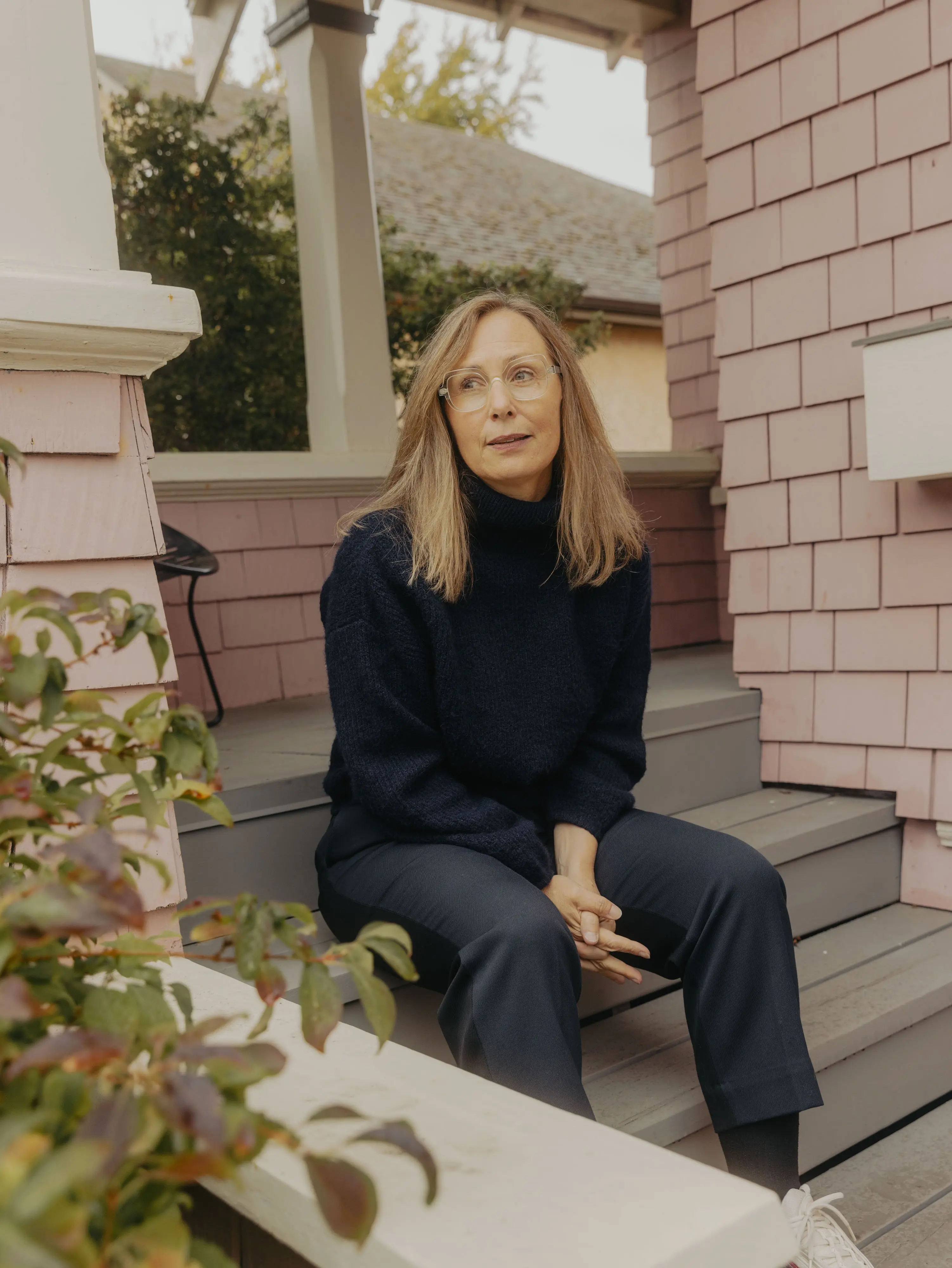
In my late thirties and throughout my forties, I visited spiritual and intuitive counsellors when I needed to, like after a breakup or when a relationship was going poorly (which was a lot of the time). In other areas of my life, I was thriving. I built a communications consultancy that supported causes I was passionate about, like justice and human rights. I had close friendships, travelled a lot and owned my home in Victoria, a century-old bungalow I painted pink. But while a relationship was something I desperately wanted, I could never get one to work. My love affairs were always off-balance; either I was all in and they were distant, or vice versa. The advice most intuitives gave me was pretty consistent: learn to love yourself. This felt like an unsolvable riddle. How could I love myself if I didn’t know what receiving love felt like?
I’d tried conventional therapies in the past, but they never worked for me. Whereas traditional counsellors let me do all the talking and draw my own conclusions, intuitives shared relevant insights and guidance.
During those years, seeing psychics wasn’t something I felt embarrassed about. These experiences enhanced my life by making me think more deeply about how to be a better person and how to be happier. At most, I did a few readings each month and I never spent more than about $120 for an hour-long session. And while I consulted psychics more than other people I know, I had it under control. But that all changed when I had a life crisis—and discovered online psychic platforms.
In the fall of 2014, a few months before I turned 50, I found myself at a crossroads. I was burned out from work and, aside from a few disappointing dates, had been single for a couple of years. I put love on the backburner to focus on another dream: living on a Gulf Island and writing a book. I borrowed some money against my Victoria home to purchase a little mid-century cottage on Salt Spring Island, then rented out my pink house and moved across the water. But after a few dark and dreary winter months, boredom and loneliness crept in. I wasn’t writing as much as I’d planned, and I began to feel depressed.
One day, I received a text from a friend of a friend, a recently divorced man living in Vancouver. He invited me on a blind date and, desperate for some reprieve from months of solitude, I arranged a trip to the city to meet him. We clicked right away. He was handsome, charming and funny. And he seemed smitten. We crammed three dates into a single week. I thought it was going well but, when I went back to the city for a fourth date a few months later, he told me he was only interested in being friends, that he didn’t do long-distance romance.
Back on my small island, I obsessed over those four dates. The rejection sent me spiralling into a well of doubt and anxiety about my entire dating history. I wondered whether I’d made bad choices all along, or if there was something fundamentally wrong with me. I imagined myself dying on that small island, alone and forgotten.
Related: How Astrology Became the New Therapy
Normally, this type of emotional turmoil would send me to meet with an intuitive counsellor. But I didn’t know anyone on the island. So late one night I opened a web browser on my computer and typed “psychic readings—available now” into the search bar. I’m not sure what I was hoping for. Perhaps some kind of divine guidance, or perhaps just someone to talk to. Maybe I wanted some insight into what had gone wrong with my budding romance.
The search yielded dozens of websites—clearing houses that hosted scores of psychic advisers. One site featured as many as 2,000. On these platforms, profiles were stacked in rows, each with a name, image, short biographical description and list of intuitive talents. There were astrologers, numerologists, tarot readers, shamans, fortune tellers, empaths and mediums. The profiles included customer reviews, star ratings and a button that indicated whether the adviser was available, as well as options for ways to connect (e.g. by phone, chat or, in some cases, video). Then came the rates, which ranged widely—from about US$4 to as much as $50 per minute.
I chose a site called Best Psychic Directory, navigated to the “online now” section and scanned the reviews of the available advisers. Eventually, I decided on a psychic in New York City who cost US$5.99 per minute. His reviews claimed he had a high accuracy rate. I purchased US$40 in credit—enough for just six minutes. Then I clicked “connect,” and the phone rang instantly.
I doubted I could make a real connection with someone over the phone, but within minutes the adviser seemed to tune in to me psychically. He asked if I’d recently met a man who’d run hot then cold. I took the bait and divulged that I had. He said the mixed messages came from a powerful soulmate connection—one so strong it scared the guy off. The good news, he assured me, was that the connection was far too strong to resist forever. We’d come together again; we were like magnets. “Don’t contact him,” he told me. “He needs to reach out to you.”
When the six minutes were nearly up, an automated voice came on the line, offering me the chance to add more money—which I did, another $20, just to catch the end of what the adviser had to say. After hanging up, I felt a wave of relief and euphoria. I wasn’t entirely sure I believed his predictions, but I felt so much better, like the walls weren’t closing in on me as I’d imagined.
The relief was short-lived. I didn’t hear from the friend of a friend, and doubts and anxieties quickly crept back in. A few days later, I logged on to the platform again and spoke with another adviser, who provided similarly reassuring messages. Before long I was getting a reading every couple of weeks—then weekly, then several times a day. Each time, I was chasing that sense of reassurance and relief. Some advisers could tune in quickly and say something relevant right away. Others needed prompting and fed off of what I said. If I called the same adviser twice, they often repeated what they’d told me before. So I bounced from one psychic to the next in an endless quest to find someone exceptional, someone who would say something new or assuage my anxieties.
I joined several other platforms and binged on readings, speaking with people who used pseudonyms like “Princess Petie,” “KNOW4SURE” and “Angelic Visions,” as well as psychics with regular names. I tried to stick with advisers who had the lowest rates—US$4 or $5 per minute—but often broke this rule and paid as much as US$6, $7 or even $10 per minute. The most talented advisers were usually busy, so I joined queues and waited for callbacks, sometimes for days. Often, I was in several queues at once—and still speaking with available advisers while I waited.
I was hooked. Within a span of eight years, I went through all of my savings and available credit. When I factor in lost wages, as well as interest and penalty payments from overdue bills, I probably lost nearly half a million dollars.
At first, my readings focused on love and relationships. But soon I was having so many that I started asking other questions to break up the monotony: whether the book I was barely working on would ever get published, if there was any money coming my way, if I would be happier living in Victoria or Vancouver. I even asked about mundane things, like if the cat I’d adopted would come in at night or what colour rug would look best in my living room.
Invariably, I woke up each morning with a resolve not to make any calls. And some days, I didn’t. But more often than not, by late afternoon, I was bouncing off the four walls of the cottage and needed something to take the edge off. I’ve never been a big drinker, but by 5 p.m. I would pour myself a generous glass of wine, then open one of the websites and scan through adviser profiles and reviews. When I came across a brilliant review—“She’s never been wrong for me!! Amazingly accurate!”—I’d convince myself that it was okay to make just one short call. One call almost always led to a second and often a third. This was especially true when the adviser didn’t say anything to alleviate my anxiety. Before I knew it, I’d find myself in a full-on binge, calling as many as 10 or 12 advisers in a row. At up to US$10 per minute, I could sometimes go through a thousand dollars or more in a single evening.
Pay-per-minute readings had a frantic, desperate quality that was entirely unlike sitting down with a psychic. In person, we agreed on the fee up front, and there was enough time for a relatively meaningful session. By contrast, online readings were about getting information as quickly as possible while each minute drained my funds. I’d blurt out questions and wait on the edge of my seat for an answer. If the adviser took too long or asked too many questions or said the wrong thing, I’d end the call and be on to the next.
Afterwards, I’d hold off for a few days—but then my resolve would weaken and I’d start the cycle again. I only checked my bank accounts to move money around or pay enough on my credit card to avoid a hold. I didn’t tally my spending. Nor did I tell friends or family members about what I was doing. I was ashamed of my behaviour and didn’t think they’d understand. Instead, I retreated inward, spending more time alone, on the phone with psychics.
In early 2016, I discovered an online forum where more than 8,000 people met to discuss online psychic readers. Most of the conversations focused on which psychics were real and which were fake. That’s where I learned about cold readings, when an adviser makes broad statements or guesses that are highly probable and then feeds off a caller’s verbal cues to provide false information. I realized that I’d had many cold readings over the years—perhaps even with the first online adviser I spoke with. Often, a call began with some variation of, “I see two men coming into your life, one from your past and one you haven’t met yet.” At first, I believed this might be true; after all, I heard it over and over. But after learning about cold readings, I realized that advisers who said this were likely hedging their bets. Most callers—especially women—want to know one of two things: if a certain someone will come back to them, or if they will ever meet “the one.” Knowing how to spot a cold reading didn’t stop me from calling, but it made me more discerning about who I spoke to.
A lot of people on the forum also talked about how calling psychics had become a compulsive habit. They referred to themselves as “addicts” or “junkies” and used language like “cold turkey” and “withdrawal.” Many, like me, had gone through tens of thousands of dollars. Most desperately wanted to quit.
Only one behavioural addiction is officially recognized by the latest edition of the Diagnostic and Statistical Manual of Mental Disorders, or DSM: gambling. Experts use a number of classification systems to diagnose behavioural addictions, but they all hinge on a person’s inability to resist an activity that negatively affects their life. Today, researchers are studying other compulsive behaviours, such as porn consumption, shopping and internet use, to see if they warrant inclusion in the DSM.
I felt pretty certain that psychic dependency should qualify as an addictive disorder, and it turned out some scientists agreed with me. In 2009, a researcher from New Zealand named Robin Shepherd studied the behaviours of 56 self-described “psychic junkies.” Drawing on the work of psychologist Iain Brown—whose research on behavioural addiction helped shape the field—she concluded that “a segment of the population may be addicted to ringing psychic hotlines.”
Another equally convincing study came out of France in 2015. A woman known only as Helen sought out psychologist Marie Grall-Bronnec for help with what she described as an addiction to clairvoyance. Helen and I shared uncanny similarities: at 45, she was close to my age. Like me, she was divorced with no children and had found fulfillment in her career. We both had trouble making decisions, and we’d both experienced a couple of major depressive episodes, both preceded by romantic breakups. Finally, we’d both had positive experiences with in-person psychics but had more recently become hooked on calling telephone or online psychics, to the point of financial precarity. (In Helen’s case, she was speaking to online psychics for up to eight hours a day and spending as much as €200 per session.)
When Grall-Bronnec and her team measured Helen’s behaviour against three models used to diagnose gambling addiction, Helen met all the criteria for two of them and nearly all of the DSM criteria. The research team concluded that Helen’s excessive use of online psychics was “an addictive-like phenomenon.”
Shepherd and Grall-Bronnec’s findings made sense to me. I already suspected that I, and people I’d encountered on the forum, might’ve been addicted. And I’ve often thought that having a psychic dependency is a lot like having a gambling problem. You’re in it for the escape. Speaking to a psychic, like gambling, is about chasing a fantasy: the dream of a picture-perfect future.
Gamblers often descend into addiction after a loss. In my experience, and based on what I read on the forum, this also happens to the vast majority of psychic junkies. Most of us are calling about a failed relationship or to reconnect with someone who’s died. Psychic dependency is about being stuck in the denial stage of grief. It’s a refusal to accept reality; an avoidance of the overwhelming emotions that come in subsequent stages, like anger and depression.
And when a psychic user has immediate access, 24/7, from the privacy of their own home, it’s that much easier for their habit to get out of control. For vulnerable users of online psychic platforms, the danger of tumbling into dependency is as quick as the click of a mouse. It’s not surprising, then, that businesses would be inclined to exploit those addictive tendencies.
Estimates of the global online psychic market vary wildly, from as little as US$800 million to as much as US$3.7 billion, with some predicting it to double by 2035. User numbers aren’t publicly disclosed, but the customer base is almost certainly in the millions: for example, a massive platform called Oranum says it has upwards of 3,000 advisers operating on five continents and in five languages. Keen, another platform with more than 2,000 advisers, says it has facilitated more than 45 million conversations with customers around the world since launching in 1999. (Keen is just one of 30 similar sites and apps owned by Ingenio, a tech-based spiritual services company.) The psychics are typically freelancers, paid per booking, and the sites get a cut from each session.
These platforms, like online gambling apps, have made it incredibly easy to connect with advisers. You set up an account once, and subsequent calls happen at the click of a button. It’s easy to lose track of your spending when the money is virtual, and that’s by design. On one site, for example, users are offered something called “seamless pay”: if their money runs out mid-conversation, the site keeps them on the line and charges their credit card every 10 minutes, with no additional interruptions to let them know how much they’re spending.
Many platforms offer apps, live chatrooms and supplemental content, like newsletters. Some even allow advisers to reach out to previous customers via DM. (I’ve received messages from advisers who are “thinking about” me or have “new information” to share.)
The bigger players, in particular, have sophisticated marketing and retention strategies. They brand themselves as spiritual communities, where customers can find connection and support. During the pandemic, one of the sites I used launched an ad campaign with the tagline “Find clarity in uncertain times.” It had a 52 per cent increase in new customers in the first quarter of 2020, compared to the same time the previous year. Another sends me a daily horoscope by email. It’s always left hanging mid-sentence, with a teaser like “Be careful not to…” followed by links to read more and to advisers handpicked just for me.
There are virtually no safeguards in place for vulnerable users. Reviews aren’t reliable. Each platform contains a fine-print disclaimer at the bottom of its pages: “18+ for entertainment purposes only,” or some variation thereof. But I was never required to demonstrate any proof of age to set up an account. And only one platform capped my spending, ostensibly to protect me from financial risk. I didn’t know my limits until recently, when I inquired and was told that my cap was set to eight purchases per day and $100,000 per month.
Robin Shepherd conducted a second study about psychic dependency in 2016. This time, she explored a possible pathway to recovery for those who use online psychics excessively. In her findings, she wrote, “The individuals truly suffering from this excessive behaviour need the health policies’ attention for when the psychic hotline industries are making a lucrative business from vulnerable people.” Shepherd suggested that, rather than a “for entertainment purposes” disclaimer, psychic platforms could be required to share information about how at-risk users can get help, such as crisis phone lines.
By mid-2016, I was broke. While I battled depression and psychic dependency, I’d neglected my business to the point that I was bringing in just a few thousand dollars a year from a couple of longstanding clients. I was about $40,000 in debt and I couldn’t cover the expenses for my cottage anymore. I had to put it up for sale. Although I was devastated to give up on my dream of living and writing there, I knew I needed to get off the island to find some work and pull myself out of my downward spiral.
The cottage sold quickly, for just over $100,000 more than what I’d paid for it two years earlier. It was enough, once I’d covered the realty fees, to pay down my debts and bank a few dollars. I rented an apartment in Vancouver, where I expected it would be easiest to find work. I also reconnected with the friend of a friend, in the feeble hope that our stemmed romance might pick back up once we were living in the same city. (It didn’t.)
I’d like to say that the move was a turning point for the better, but it wasn’t. By then, using online psychics had become a near-daily compulsion. I called more than ever throughout 2017 and into early 2018, quickly accumulating debt again.
Speaking with so many psychics had taken more from me than money. I no longer trusted myself to make even small decisions. And interacting with other people was excruciating; I felt that my energy was “off” somehow. I think today of Sarah Lassez, a Canadian-born actor who wrote about her journey with telephone psychic dependency. At the height of her usage, a psychic told Sarah they couldn’t read for her because her aura had too many holes in it. This was exactly how I felt, as if the etheric field around my body had thousands of tiny punctures—one for each time I’d opened it up to let a psychic in.
I hit my rock bottom in the summer of 2018. I was in a forced reprieve from calling—not because I’d found the willpower to stop, but because I had no funds to pay for it. Once again I was living on credit, which was all but used up. One day, I went through a stack of mail I’d been avoiding for months. Sitting on the floor of my apartment, I opened an envelope from the city of Victoria and pulled out a document titled “Statement of Outstanding Taxes,” which told me I had an outstanding property tax balance of $10,002.86. Below the number was an all-caps, yellow-highlighted paragraph that read, “Delinquent taxes, plus interest, must be paid before 10:00 a.m. Sept 24, 2018 to avoid the tax sale [of].” My heart dropped into my stomach.
The letter sobered me instantly. After four years of complete disregard for what was at stake, I cared. Losing my little pink house in Victoria felt like something from which I might never recover, emotionally or financially. I called the city that day and arranged a payment plan for the unpaid taxes. Next, I contacted my bank and, after a humiliating conversation with the accounts department, put in motion a process to consolidate my debt. I sent a prayer out to the universe to help me find a steady job or contract, and ramped up my search for work. Miraculously, a few weeks later I landed a lucrative, long-term communications contract at a large university.
For the next few years, I threw myself into work. Not only did it keep me too busy to slip back into psychic dependency, it was also meaningful, filling me with the self-worth that I’d all but lost. I liked being part of a team and the wider sense of community the campus offered. I realized just how much I’d missed being around people. With renewed connection and purpose, my depression lifted, and I didn’t need to call psychics regularly. For the first time in years, I felt grounded in the present and the future seemed replete with possibility.
With each paycheque, I paid down some of my debt. Eventually, I confessed my financial situation to my parents—though not the reason behind it—in a conversation even more humiliating than the one I’d had with my bank. They were gracious enough to loan me $20,000, interest-free, much of which they later forgave. Still, it would be several years before I would emerge from the hole I’d dug myself into. Each time I thought I was in the clear, I’d be hit with a big expense—a year-end tax bill, say, or a new roof for my house in Victoria. But I was lucky, too. The first contract with the university led to several more, then a term position with a good salary and benefits.
I didn’t quit my habit entirely, but I called a lot less frequently. And the money, which was coming in steadily, allowed me to get the occasional reading without the stress of falling back into debt. When the pandemic hit in 2020 and the familiar feelings of social isolation, boredom and loneliness crept back in, I had a temporary relapse. I quickly realized I needed community and connection to avoid a major one. So in 2021, I moved back to my pink house in Victoria, where I had family—a brother and sister-in-law, a niece, her partner and two children. Leaving Vancouver meant losing my job, but it was the right decision.
Being back in Victoria has been wonderful. I’ve reconnected with old friends and made some new ones. I joined a co-working space and started a writers’ group and a book club. I take my niece’s kids on weekend outings and carve out time most days to write my book or some of the journalistic stories I’d put on the back burner. In summers, I swim daily in a little ocean inlet a few blocks from my house, where the water feels like silk and, when the tide is just right, is as warm as the air.
Retirement is no longer in sight for me, even though I’m now 60. I try not to linger on what I’ve lost and focus on what I still have, like my Victoria home. I’m doing work that I love. I’ve also let relationships and situations that drained me fall away. These actions feel like tiny gestures of self-love.
I no longer speak to psychics every day, or even every week. But I still reach out to a handful of advisers who help me when I want a bit of guidance or someone in my corner. Most of them are online—I like the immediacy and prefer to keep my calls short. I avoid potentially loaded topics like love and don’t rely on them to tell me what will happen in the future. My spending has dropped dramatically: what I pay in a month now is less than what I sometimes went through in a single day when my calling was at its worst.
It’s hard to imagine stopping altogether. Over the years I’ve had a few remarkable readings that I can honestly say benefited me—an adviser warned me of an impending conflict at work that unfolded exactly as she’d described. Another told me to investigate a water leak in my roof; when I did, I found the damage just in time to avoid a repair bill in the thousands.
My perspective has shifted, dramatically, about the value of speaking with psychics and other intuitives. I still believe that some people have genuine gifts—clairvoyance, mediumship, empathy and others—but even the most gifted and ethical ones get things wrong. I also know that the online platforms are filled with advisers who give seductive cold readings to keep callers on the line. And I don’t believe anyone can truly predict the future. Although I’ve had some random—and pretty impressive—predictions come true, for the most part I believe we’re constantly creating our futures with every small decision we make. Over the years, I’ve often been asked about how to find a good psychic, or the best way to approach a psychic reading. These days, if someone asks for my advice, I temper it with a cautionary tale.

This story appears in the December 2025 issue of Maclean’s. You can buy the issue here, subscribe to the magazine here or send a gift subscription here.
Get the Best of Maclean’s straight to your inbox.
Sign up for news, commentary, analysis and promotions. Join 80,000+ Canadian readers.