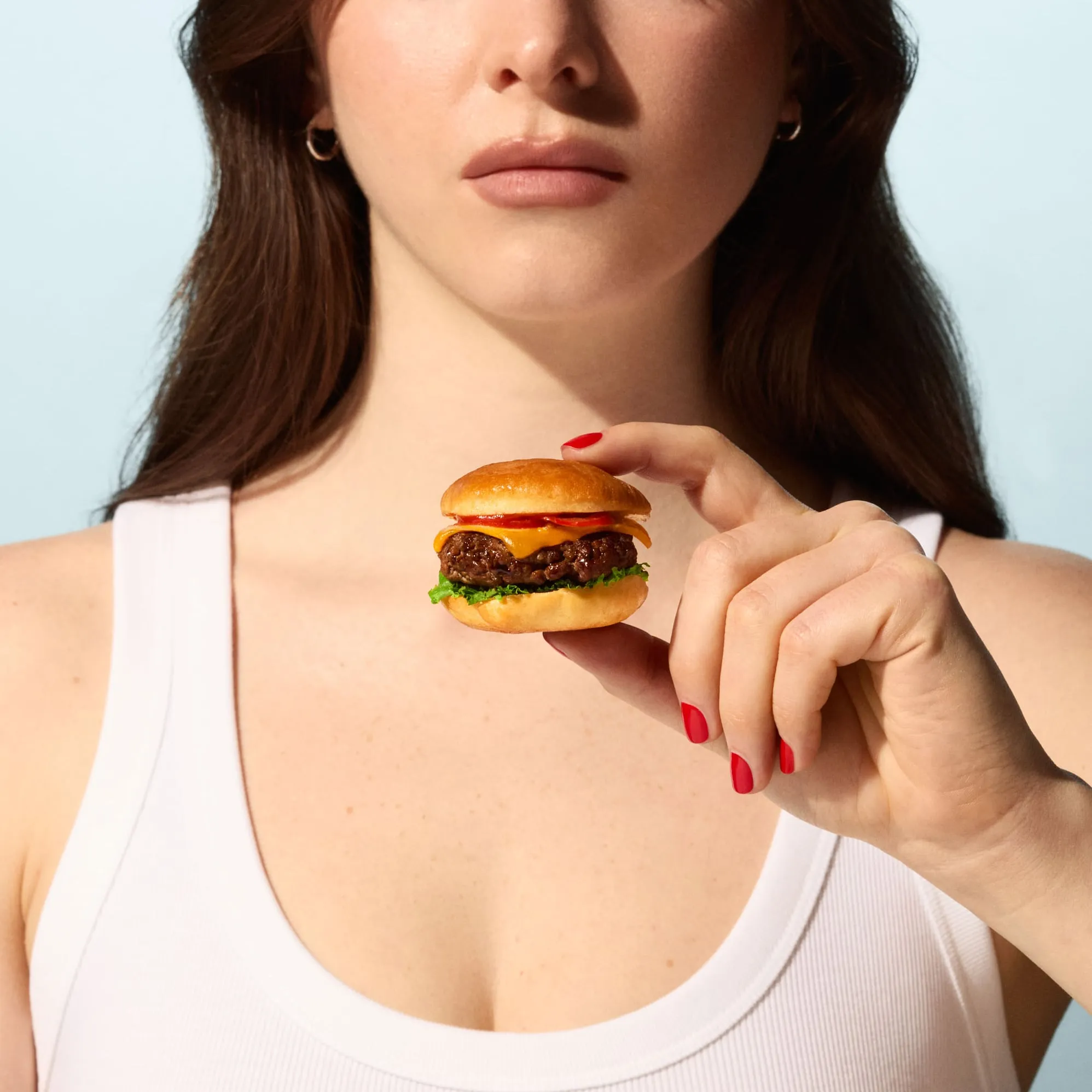
The End of Fat
A year ago, I was at a bar in Toronto catching up with a friend—a pumps-and-power-suit type who works in entertainment. We were discussing professional opportunities over wine, something we’d done semi-regularly over the years. In the past, our shop talk would give way to more casual conversation, copious drinks and, eventually, a midweek hangover. But when I went to order another round, she demurred: “Ever since I started on Ozempic, I just can’t do more than a glass.”
I strained to maintain composure even while my internal reaction was Kevin trying aftershave in Home Alone—mouth agape, palms on cheeks. Started on Ozempic for what? I’ve known this person for more than a decade. Her body had always been on the lean side of normal, by which I mean neither overweight nor waifish. She was middle-aged. She was, more or less, me. Maybe that’s why it chafed.
Her weight, she explained, had crept up over the last few years. She’d held on to 10 pounds after her first pregnancy and 10 more after her second. Suddenly, there she was, on the precipice of menopause, and the old weight-loss methods weren’t cutting it. She was eating right and killing herself five days a week at the gym—time she’d much rather devote to her demanding job or young family. She’d noticed people in her industry showing up to events looking suspiciously sculpted and heard the rumblings about the celebrity slim-down hack. She signed up for Wellness Haus, a private preventative-medicine subscription service in Toronto. After a consultation, she walked away with a low-dose prescription for Ozempic. It wasn’t covered by insurance but, at $400 a month, it was less than a fancy gym membership.
Related: My Ozempic Nightmare
Like everyone else with eyes, ears and Instagram, I was aware of GLP-1s: the drug category for Ozempic and its various competitors and spin-offs. I rode transit and watched sports events. The ads were plastered everywhere. The jingle—“Oh-oh-oh, O-zempic”—had been stuck in my head. I’d seen Oprah speaking her truth in People magazine:“I’m absolutely done with the shaming from other people and particularly myself.” Elon Musk significantly slimmed down for the holidays, calling himself “Ozempic Santa.” In fact, Musk was taking Mounjaro, Ozempic’s main competitor, by the pharma giant Eli Lilly. Ozempic, produced by Denmark’s Novo Nordisk, was the first drug of its kind and remains by far the top seller in Canada, but the name is used as a category catchall—like Kleenex—to cover other weight-loss drugs, including Mounjaro, Wegovy and Zepbound.
I’d laughed when Jimmy Kimmel opened the 2023 Oscars by surveying the crowd of painted-on gowns and skeletal sternums: “When I look across this room,” he deadpanned, “I can’t help but wonder: is Ozempic right for me?” It was the kind of punchline that lands because someone is saying the quiet part out loud: this miracle pharmaceutical, introduced in 2018 to treat obesity and Type 2 diabetes, had become a preferred method for celebrities looking to drop a dress size. The same formula revolutionizing the treatment of a serious health condition was perpetuating the pursuit of thinness. Over drink (singular) at a bar in Toronto, my friend was doing the same. She wasn’t defiant, more like nonchalant. And I was—shocked? Disappointed? Concerned about what this meant for already oppressive body ideals, but also kind of impressed? So often we hear from celebrities who credit their ageless skin to drinking water, their lithe figures to pilates. Her candour was admirable but also, in hindsight, a sign of what lay ahead.

As I researched this story, a pattern emerged. Someone would ask what I was working on, and I would start prattling on about the growing popularity of GLP-1 medications only to realize, mid-prattle, that the person I was talking to did not need the crash course. “I’m on it,” said a woman seated next to me at an event. “I just booked an appointment with my doctor,” said a friend at a holiday lunch. “I started a few weeks ago, but a super-mild dose,” said a colleague at a recent film screening, explaining how she’d watched a YouTube tutorial on how to separate one single dose into multiple less potent ones. I texted a PR rep I know who generally has a good read on the habits of high society. “Do you know anyone taking GLP-1s off label?” Her response—“All of Rosedale”—confirmed that Hollywood’s little helper had taken hold amongst the Real Housewives of Toronto.
Jennifer Lake is a pharmacist and assistant professor at the University of Toronto. Like anyone with a prescription pad, she has seen a huge uptick in the demand for Ozempic and its siblings, for both on- and off-label use. Price tag has so far been a significant barrier to access—most drug plans don’t cover GLP-1s for obesity, and anyone using them to fit into their pre-pandemic jeans is paying out of pocket. Even still, the cultural phenomenon is undeniable. “I’ve seen it with Viagra and I’ve seen it with botox,” Lake says. She’s talking about the astounding popularity of GLP-1 medications, but more specifically what happens when a pharmaceutical becomes a lifestyle product.
The recent Olympic broadcast on CBC was sponsored by Novo Nordisk and included ads that positioned Wegovy and Ozempic less as obesity treatments and more as part of an athletic lifestyle. Novo Nordisk is also hyping a new daily weight-loss pill that’s awaiting Health Canada approval and is already widening the tent in the U.S. This year’s Super Bowl felt like football to fill the space between weight-loss promos. Serena Williams stumped for the direct-to-consumer provider Ro, describing how she is happier, healthier and down 34 pounds since starting on GLP-1s. I’m not here to throw shade on the personal health choices of an international icon. But if the greatest athlete of my generation is a good candidate for medical weight loss, what does that mean for the sub-GOATs among us?
A massive social experiment is underway in this country. Novo Nordisk’s patent on semaglutide—the active ingredient in Ozempic and Wegovy—expired in January, clearing the way for Canada to become a testing ground for generic versions. (In the U.S., the same patents won’t be up until 2032.) There are six drug manufacturers waiting on Health Canada’s approval, and at least some of them are expected to get it by summer or early fall. In December the American telehealth company Hims & Hers purchased the Montreal startup Livewell to get a foothold in the coming gold rush. Shoppers Drug Mart recently launched a virtual-care service to prescribe and dispense GLP-1s. “Our prediction would be, even though it’s going to be significantly cheaper, that we will sell more,” said Loblaw CEO Per Bank. It’s a safe bet.
At the end of 2025, some 1.5 million Canadians were on a GLP-1 medication. By the end of March it was three million—that’s about nine per cent of Canadian adults. And this is before the generics boom. Before pills and social acceptance and ever-expanding digital distribution that makes access only slightly more cumbersome than calling an Uber. GLP-1s are a health innovation on track to win a Nobel Prize. But in 2026, they’re also a passport to the land of conventional hotness. And who doesn’t want to live there?
The pending Ozempa-palooza means, first and foremost, that millions of Canadians will gain access to a drug that may be life-changing and even lifesaving. GLP-1 medications mimic glucagon-like peptide-1, a natural gut hormone that releases after you eat and raises blood sugar. That hormone nudges the pancreas to release insulin, slows the rate at which food leaves the stomach and signals fullness to the brain. For many people who gain weight easily, these signals are muted—and injecting GLP-1 drugs cranks up the volume. They also tune out food noise: the relentless, sometimes obsessive thought patterns that drive eating habits. After Oprah went on Ozempic, she had a revelation. She’d always assumed people who maintained a thin physique fought midnight chip cravings with willpower, better choices. “And then I realized, the very first time I took the GLP-1 that, oh, they’re not even thinking about it,” she says.
And yet common thinking has long held that obesity is a personal failing and slimness a hard-won show of moral fortitude. Ten years ago, the Canadian Medical Association took steps to shift the narrative, recognizing obesity as a chronic health condition. What was missing were effective, accessible treatment options. Then along came GLP-1 drugs. All of the doctors I spoke to for this piece see the potential of GLP-1s as transformative, both for Canadians with obesity and for a public health-care system where the cost of treating it is about $27 billion annually.
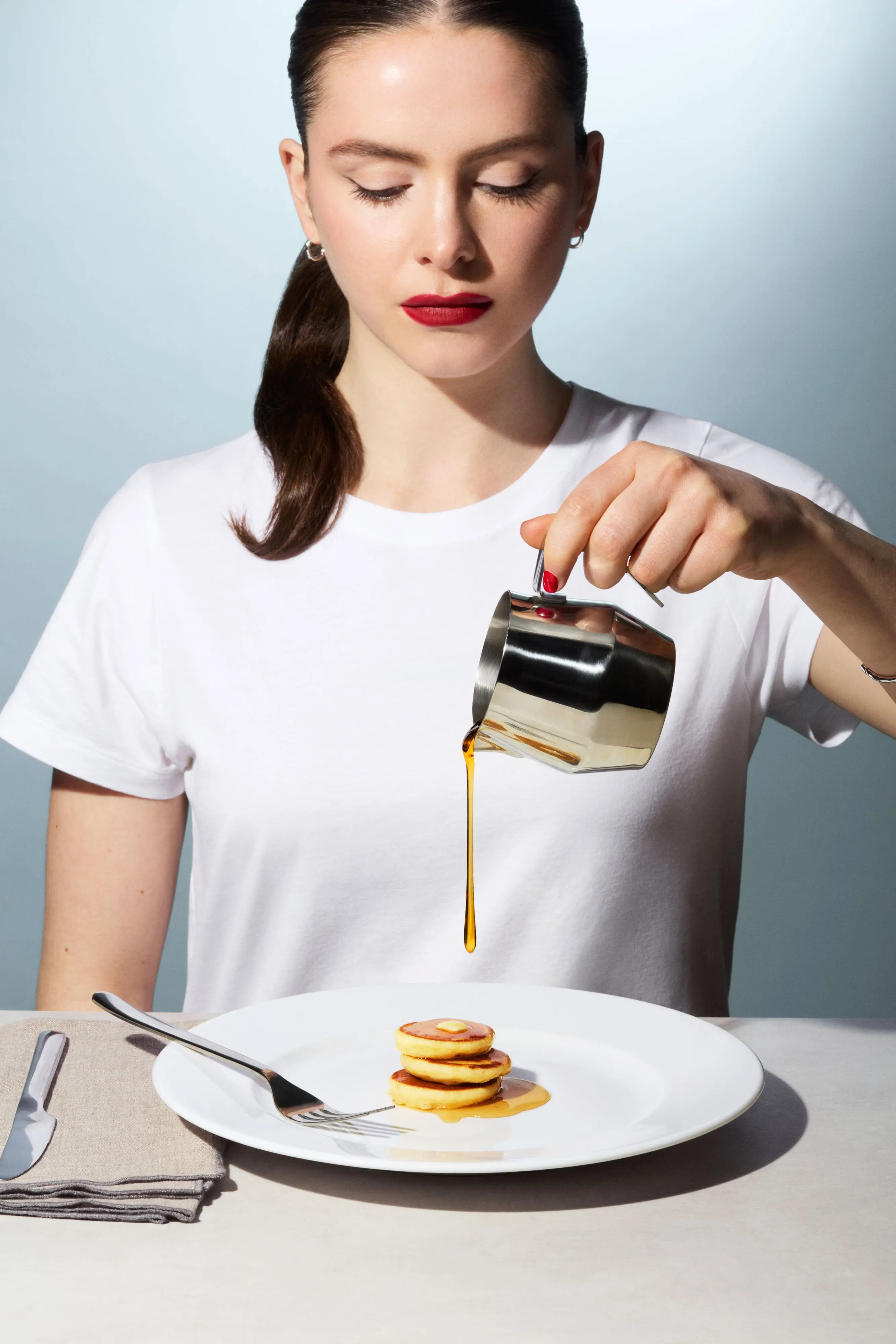
GLP-1s are not a silver bullet: they don’t work on everyone, and there are risks of serious side effects. But for millions of Canadians, they’re water in the desert. A way to even out the weight-loss playing field. At a population level, this means fewer heart attacks, hip and knee replacements, emergency room visits and diabetes diagnoses. At an individual level, the impact can be hard to quantify. A friend of mine started on Wegovy a few months ago, after a lifetime of not just fighting her weight but fighting against the social discrimination that’s par for the course when living in a larger body. For a long time, she’d avoided business travel. The anxiety of having to request the seatbelt extension in front of her boss or—worse—not fit into her seat had caused enough anxiety to rule out such opportunities. I teared up when she recently texted me from the plane on a work trip—she says the word to best describe her experience is “freeing.”
I grew up in the 1990s, when the ideal body type was heroin chic. A sexy sickliness embodied by Kate Moss took already slim ideals to a troubling extreme. The body-positivity movement emerged as meaningful backlash. Soon magazine covers featured larger bodies, and cool brands like Rihanna’s Fenty debuted collections sized XS to 3XL. With the rise of the Kardashians, everyone wanted a butt like a Thanksgiving turkey. On social media, influencers built followings based on being healthy and sexy at any size—self-serving, sure, but an important message for the millions of Canadians who dealt with the physical and psychological implications of living in a world where large bodies had long been condemned.
It was clear something had shifted when the Kardashians started showing up on red carpets with smaller asses and smaller everything elses. Once (imperfect) bastions of body positivity, they are now harbingers of a renewed and unapologetic pursuit of slimness that has only gained momentum as GLP-1s go mainstream. “Shrinking Girl Summer” is an actual term that was popular on social media last year. Many former body-positivity influencers appear to have abandoned their cause, posting before-and-after photos and hyping GLP-1s as a new frontier of weight-loss democracy. Meanwhile, a lot of mid-sized celebrities—the ones who built their brands on repping regular women and rejecting diet culture—suddenly look like Maxim models. I don’t blame them; they also live in a world that bows to thinness. It’s just that, as larger bodies become less visible in public spaces, it becomes that much less acceptable to exist outside of an increasingly narrow standard.
The mystery of how Canada became one of the first markets for GLP-1s goes back to 2019, when Novo Nordisk failed to pay a routine patent-renewal fee. (Some in the industry believe this was an error, but Novo Nordisk says it was part of a carefully considered intellectual property decision.) The upshot is that cheap, generic GLP-1 drugs are about to flood the Canadian market. Typically, the price of generics shakes out to between 25 and 35 per cent of the brand-name price, which means a month’s supply of GLP-1s could cost as little as $100. The goal is to become the default generic—but given the demand, there’s room for more than one winner. Current estimates put the current Canadian GLP-1 market at around $2.7 billion. It’s expected to triple by 2033, based on greater availability as well as growing normalization.
For GLP-1s, the indicated population are people with Type 2 diabetes or obesity. It’s also approved for patients who are clinically overweight with at least one comorbidity, like hypertension or sleep apnea. But prescription for everyday weight loss is becoming common practice as clinicians observe additional potential benefits: things like reduced risk of stroke and heart attack, even in non-obese populations. Potential mental-health benefits associated with weight loss may also factor in, although it’s easy to see how the slope gets incredibly slippery—particularly as experts highlight risks linked to body dysmorphia and eating disorders, and more ads and celebrities sell the idea of medical weight loss to live your best life.

We are living in the grey, and the landscape is wildly inconsistent. “If a patient has a friend whose doctor is prescribing for moderate weight loss, but they get turned down based on a similar patient profile, that’s going to be frustrating,” says pharmacist Jennifer Lake. The Ozempic tagline is “just ask your doctor,” but in some instances, there is no question—just demand. Usually, a patient describes their symptoms, and the provider suggests a treatment. “With GLP-1s, people have done their homework. They come in knowing what they want,” Lake says. “If they don’t get it, they’re just going to go somewhere else.”
I’m a 47-year-old Canadian woman, which means my social media feed is evenly split between Heated Rivalry memes and telehealth ads promoting GLP-1 medications. “We give you the boost. You do the rest,” says a promo for the Canadian women’s health platform Raven, where a curvy woman is doing yoga in the park. “No More FUPA,” promises My Rocky (and if you’re unfamiliar with that acronym, consider yourself lucky). The rise of virtual prescription services—the for-profit, direct-to-consumer offshoot of the health-care system—is a meaningful step toward increased accessibility. What started as a way to address pandemic-era contact concerns has persisted and proliferated because public health care remains massively overburdened and the demand for lifestyle drugs has exploded. It’s unclear whether telehealth is the chicken or the egg. But many users seeking out GLP-1 medications for moderate weight loss are bypassing the traditional channels in favour of discretion and convenience.
Allison is a 42-year-old arts professional who gained 15 pounds in 2025. She started working with a personal trainer at her gym, which was great for reducing stress and anxiety, but she still had a closet full of clothing that didn’t fit. She didn’t want to talk to her doctor, partly because she was overweight and Allison thought that might be an uncomfortable conversation. So she turned to telehealth. When she entered her real weight, she was rejected. So she tried again on a different app, this time adding a few extra pounds, and from there it was smooth sailing: no medical consult, no blood testing.
Allison—who asked me to use a pseudonym because lying about your weight on a drug application is technically medical fraud—has had slow but steady results with Ozempic over the past three months. She’s still at the gym several times a week, focusing on strength training, since muscle atrophy is one of the key concerns around GLP-1 weight loss.
Related: The Canadian Doctor Who Helped Invent Ozempic
Mark Broussenko, a physician and Raven’s medical director, says companies like his give people the chance to proactively take charge of their own health. “You can identify if something is becoming an issue, or take control of things before it becomes a serious problem,” he says. Broussenko sees a lot of potential for off-label prescribing, but for now he says telehealth is a blunt object. “Our goal is to make sure we’re providing this to the everyday Canadian who’s interested in accessing them, who very obviously qualifies,” he says. When I ask about an ad for Raven that features a middle-aged, middle-sized woman bidding a tearful goodbye to her bikini bod, Broussenko calls it “playful.” He doesn’t see a conflict between appearance and health objectives. “Our goal is to help people look and feel better,” he says.“That is partly why people pursue weight loss. And it would be dishonest to say that there isn’t an emotional component.”
Marina, a 50-something media executive in Toronto, has spent most of her life being what she calls “reasonably fit.” She was never that person who could eat whatever she wanted, spend weekends on the couch and still keep the pounds off. “My weight was always something I struggled with, and my relationship to my body has been toxic,” she says. During the pandemic, her fitness routines fell away, work stress was through the roof and a close family member was ill. Before she knew it, she had gained 25 pounds, and her doctor told her that her cholesterol was creeping up. “Hearing that from my doctor was a big relief. Like, okay, great. Now I can finally justify starting Ozempic.”
Marina completed a medical assessment on the telehealth platform Felix and took her first Ozempic shot in early January. When we spoke in March, she was 15 pounds down, but the more significant changes were psychological. “It’s incredible to be free of all of those negative emotions and constant policing of my eating habits. I can’t even tell you how much more space there is in my brain to focus on things I care about,” she says.

I agreed to give her a pseudonym because she hasn’t been public about her GLP-1 use. She had planned to tell her friends at the office, but changed her mind after a colleague went on an anti-Ozempic rant about a public figure who was getting a lot slimmer. “I’m not embarrassed. I’m just not interested in having a debate about a personal choice.”
Choice is the whole point, says Danielle, a 37-year-old doctor who specializes in internal medicine and biochemistry. She had her second child six months ago and got a GLP-1 prescription through a telehealth provider to lose the baby weight. She didn’t mention on her application that she was still breastfeeding, which would have instantly disqualified her (for this reason, she asked me to use a pseudonym, though she’s happy to counsel strangers anonymously on Reddit). “I feel entirely comfortable with my decision. I have done the appropriate research,” she says. She is informed about the myriad benefits of GLP-1s and sees them as an added bonus. “But it’s not about health for me. It’s about how I make my way in the world, how I feel best.”
In a recent study of telehealth for GLP-1s, 93 per cent of ads emphasized a skinny body. The fine print says “recommended to treat obesity and Type 2 diabetes,” but the vibes say “click here for a new and better you.” Joel Lexchin, a retired pharmaceutical policy expert at York University in Toronto, has spent much of his career on research to dispel the notion that large bodies are inherently less healthy. He believes the GLP-1 industry is pushing this inaccurate conflation to sell more product. These services may claim that they’re not selling skinny, says Lexchin, “but they are for-profit companies answering to investors and they benefit from the idea that large bodies are something we need to eradicate.”
Nicki Laborie is the owner of Bar Reyna, a Mediterranean-inspired restaurant with locations in Toronto and New York City. She first started hearing GLP-1 chatter in the U.S. and, as with most trends that hit the Big Apple, Toronto wasn’t far behind. In the last year, her per-guest cheque average has sunk from about $85 to $50. “I don’t know how much of it is GLP-1s versus a challenging economy, but we’re definitely dealing with both.” Weekly staff meetings have become brainstorming sessions for serving the GLP-1 consumer. Bar Reyna recently introduced cocktail flights—sample portions of different drinks for the price of a normal cocktail—on the supposition that customers who are spending a lot less on alcohol may be interested in a tapas-style approach to drinks.
The same survey reporting that three million Canadians are on GLP-1 medications also showed that a third of them are dining out less and ordering less when they do. Thirty-six per cent are drinking less alcohol, and those numbers are likely to increase with GLP-1s being investigated as a possible treatment for alcohol use disorder: the same active ingredient that moderates food cravings may have the same effect on excessive drinking. This could be a tough road for an industry where profit models hinge on excesses. You may not have an appetizer and a cocktail on an average night in, but that’s where restaurants make their margins. There’s a lot less money in meat and potatoes. Or salmon and leafy greens, for that matter.
Sylvain Charlebois, a food distribution researcher at Dalhousie University in Halifax, says GLP-1s were a hot topic at the recent Canadian Restaurants Conference. “The industry will have to adjust or it won’t survive,” he says. Charlebois has also conducted research on the grocery sector, where sales are down an estimated $3.3 billion annually, even as some categories (fresh fruit and vegetables, lean proteins and probiotics) have spiked considerably. Like restaurants, modern grocery stores—the layout, the lighting, that intoxicating bread smell—are designed to leverage a lack of impulse control. Think of that old dieting advice: never go to the grocery store hungry. “That’s essentially what we’re seeing with GLP-1 consumers,” Charlebois says. “They’re never hungry.”
He’s met with executives at many multinational food manufacturers, all of whom have reported significant slumps based on GLP-1 market conditions and want to know what to do. “These food executives feel like they’ve been wronged. I try to find a diplomatic way to tell them, ‘Well, you’re the reason we ended up in this health crisis.’ ”
The spike in obesity rates that kicked off 50 years ago correlates fairly neatly to the introduction of processed food and convenience-based eating culture. North Americans are a population hooked on fat, salt and sugar, and Big Snack has been our reliable drug dealer. GLP-1s could provide a course correction. Chipotle and Shake Shack have recently introduced GLP-1-friendly menu options. At Starbucks, the new “protein-forward” options target the same group. Even McDonald’s recently announced plans to adapt its menu: a symbolic moment for the brand that taught us how to supersize.
The growth of the meal-delivery company Factor has been driven by health-conscious consumers who don’t have time to cook at home. Last year they introduced a line of GLP-Balance meals that are low-cal (600 or less) and high-protein (25 grams). At the moment, GLP-1 meals make up about 10 per cent of their orders. These distinctions will go away in a few years, but not because we turn away from them. “If you’re talking a decade from now, it won’t be called ‘GLP-1 food,’ ” Charlebois says. “It will just be food.”

At Fitzroy Boutique, a formalwear-rental service in Toronto, there’s a notable demand for returnables over the last two years among customers whose dress sizes are constantly dropping. The store’s sales manager, Cameryn Lang, has also observed how some customers are gaining confidence and a spirit of adventure. “When you’re struggling with self-acceptance, you’re probably looking to blend in,” she says. People who are newly embracing their bodies, on the other hand, are excited about standing out: “It’s a bright colour or a bold print. Something that says, ‘Look at me!’ ”
If GLP-1 food is just food, will GLP-1 bodies be just bodies? These are assumptions baked into a recent report from Jefferies, an American financial firm, which recently predicted that the airline industry could save $580 million in annual fuel costs as the average passenger weight goes down. In the urban-planning field, a thinner population could influence placement of hospitals (lower need for acute-care centres) and outdoor recreation space (if you think pickleball is big now...). Still, these breathless narratives fail to account for the flip side: low-income populations who are already overrepresented in obesity statistics still won’t have the same access, further widening wealth and health disparities. And embracing GLP-1s as a solution for obesity may subvert the effort to address its root causes, says McGill University obesity researcher Kaberi Dasgupta.“We didn’t say, ‘We have effective methods for tobacco cessation, so everyone just go ahead and smoke,’ ” she says. “We banned smoking in public spaces, we put warnings on packages. And we made a huge difference.”
No pain no gain. There are no shortcuts. It’s worth the burn. These long-held mantras of the fitness industry don’t have the same resonance in a post-GLP-1 world. Chris Smith, who runs the B.C.-based chain Fitness World, saw panic across the fitness industry when GLP-1s entered the conversation. A sector that barely made it through the pandemic was suddenly dealing with a population who didn’t need to hit the gym to lose weight. But for Smith, the protein shake is half-full: “These are people with a discipline they never had before,” he says. But with weight loss, exercise to avoid muscle atrophy is essential.
To meet this new market, Fitness World has launched new programming to emphasize strength and resistance training. Smith believes that successful weight loss can be motivating, and the research bears this out: a recent study showed that the number of people who exercise twice a week more than doubled—from 31 per cent to 71 per cent—after they started on GLP-1s. The research also shows people who go off GLP-1s regain the weight, which is in keeping with the treatment of chronic illness writ large. (You don’t go on blood thinners or anti-psychotics with the hope of getting off them.) There’s no consensus yet supporting sustained results after temporary and casual use. And the risk profile that arguably makes these drugs a no-brainer for people with diabetes or obesity becomes quite different for people looking to lose love handles. But the gazelle is out of the barn: tips for microdosing, kick-starting diets and tune-ups before beach vacations are already trending on social media.
Linda Nguyen is a GP who runs 1Clinic, a clinical spa in downtown Toronto that offers aesthetic and medical treatments. About five years ago, she was out in L.A. and heard about how Ozempic and its ilk were being used off-label. In 2020 she launched a GLP-1 pilot for clients with polycystic ovary syndrome, a hormonal imbalance that affects weight and fertility. Pretty soon the buzz was spreading, and so was her client base. “A lot of my patients were already coming to me for injectables,” Nguyen says, meaning botox and other fillers. “These are people who care about themselves aesthetically and are interested in losing those last 10 or 15 pounds.” She recently prescribed a microdose to a client going on vacation: “You’re going to Italy, you want to be able to have the pizza—just not the whole pie.” Another growing market is middle-aged women encountering hormonal weight gain. “You know, the meno-pot,” she says, and my eyes flick instinctively at my stomach.
Nguyen’s Instagram bio reads, “Prevention is my passion.” She’d like to see a medical system that focuses more on helping people before they become ill. This is where GLP-1s may hold a lot of potential: clinical trials show a significant reduction in cardiovascular events, kidney disease, stroke and inflammation, which contributes to cancer risk, arthritis, autoimmune diseases and depression. But it’s also the prevention of obesity itself. Nguyen has clients who are not overweight or anywhere close: just adding a few pounds a year in a way that is unalarming and incremental. “And then 20 years from now they’re in a doctor’s office getting diagnosed with a cardiac condition or having their knee replaced.” She believes that in previous generations, it was presumed that getting older meant saying goodbye to your six-pack. “That thinking has changed as people live longer and want to live better.”

She’s not the only one pitching Ozempic for longevity and optimization: a new wave of gym bros are using GLP-1s as part of a peptide regimen. For them, it’s less about weight loss than fat loss and biceps that look more defined. With the gym bros come the biohackers, a subculture of testosterone- and tech-embracing turbo-chargers who track their insulin output on glucose graphs and see biological hunger as a bug in the system. And if that sounds intense, meet the looksmaxxers—mostly young men who aren’t above elective bone-breaking to achieve the optimal jawline. (The use of GLP-1s for leanness feels almost tame by comparison.)
I recently checked in with my friend—the one who turned down the second drink. She’s lost the weight she wanted to and continues on a low dose for maintenance with zero qualms. “My mental health is better. I’m better at my job. I’m a better parent,” she says. Her position comes down to personal agency. People should do whatever works for them—no pressure, no judgment, no problem. She believes that cheaper options available to more people will bring more good than harm. I ask her about evolving body ideals, and she jokes that the ’90s are back. “You think Carolyn Bessette ever ate a sandwich?” I am, again, in awe of her relaxed moral clarity. And maybe she has a point—I dye my hair. Is this really so different? Maybe GLP-1s will just be another element of self-care.
There were no Ozempic jokes at this year’s Oscars. Just a lot of extremely gaunt faces and chests so sunken you could serve dip out of their clavicles. This year’s Demi Moore makes last year’s (already extremely slim) Demi Moore look like a Rubens painting, and she’s just one example in what feels like a literal arms race for who can have the lankiest arms. Maybe you get rid of the meno-pot, but there will always be something else to upgrade. There is no endpoint. Just escalation and new normals and never-enoughs.
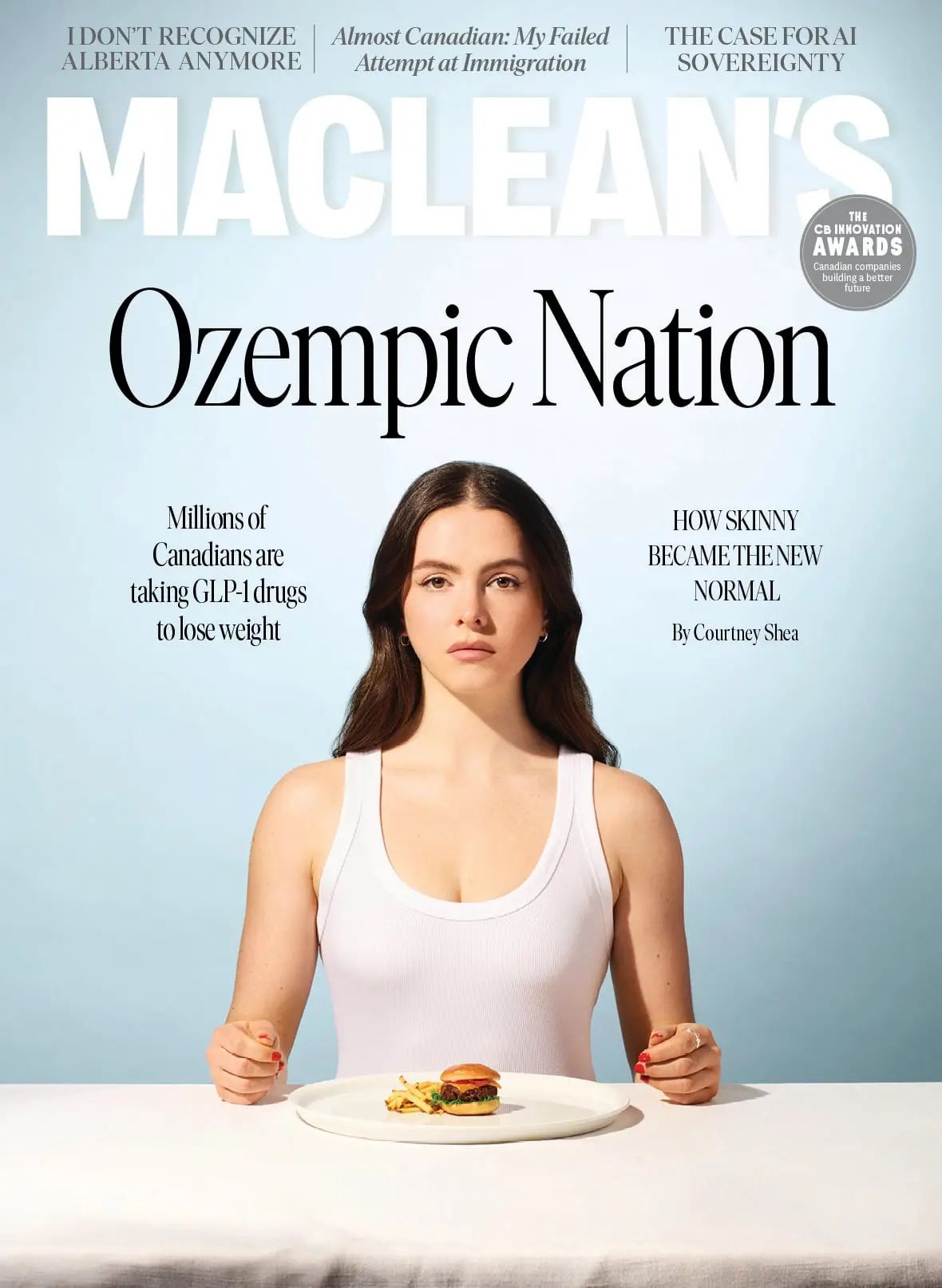
This story appears in the May 2026 issue of Maclean’s. You can subscribe to the magazine here or send a gift subscription here.
What did you think of this story? Send a comment for publication to letters@macleans.ca, and supply your name and address. Comments should be fewer than 200 words, and may be edited for length and clarity.
Get the Best of Maclean’s straight to your inbox.
Sign up for news, commentary, analysis and promotions. Join 80,000+ Canadian readers.