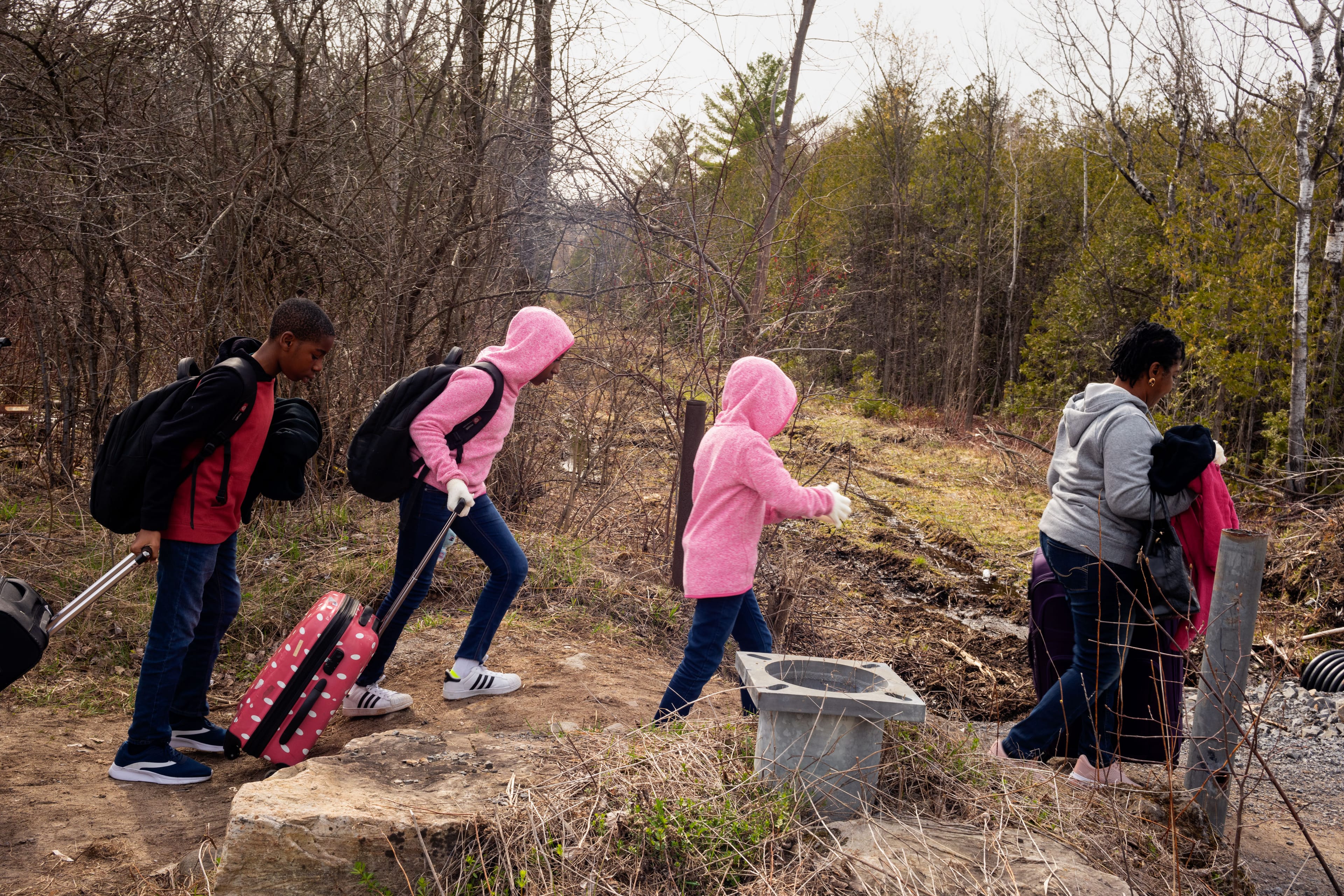
The Legacy of Roxham Road
Roxham Road resembles most other thoroughfares in agricultural lowlands. In the summer, wildflowers flood the farmers’ fields surrounding its thick tree line; come winter, snow mutes the landscape, save for the crunch of tramping boots. Yet there’s drama buried in this rural two-lane blacktop: it’s a line where one country ends and another begins. A gravel ditch and a small obelisk mark the international boundary between Saint-Bernard-de-Lacolle, Quebec, and Champlain, New York. For a few years, some 100,000 people tried to start new lives at that crossing. But, save for some scattered signage and the odd RCMP drone flying overhead, little evidence of their journeys remains.
As a documentary photographer in Toronto, I’ve always been drawn to migration stories. My parents both fled Lithuania around the Second World War, later meeting in Philadelphia before settling together in Canada. Growing up, relatives and family friends from the old country would visit our duplex in Montreal, chattering away in Yiddish and a mix of other languages my sister and I rarely heard outside of our community. They were a bridge to a different place and time. It felt like everyone around me had crossed borders to save their lives.
Related: How Migrants Cross Trump’s U.S.-Mexico Wall
My own border-hopping experience was less dramatic. For a long time, the line between Quebec and New York was porous. When I was younger, my friends and I would drive to the U.S. late at night just to hear some music, then head back around 2 a.m. We never brought our passports. Aside from one short-lived customs station in the early 20th century, crossing at Roxham was similarly fluid.
After 9/11, no one could hop the border with just a driver’s licence anymore. The newly formed Canada Border Services Agency closely monitored the movement of people and goods. And, in 2002, Canada and the U.S. signed the Safe Third Country Agreement, requiring asylum seekers arriving at official land-border ports of entry to make their claim in the first country they arrived in, partly to limit the administrative load on federal agencies and immigration courts. There was one chasmic exception: the rule didn’t apply to migrants who walked into Canada “irregularly,” or somewhere other than formal border checkpoints. They’d be arrested by authorities after crossing, but could nonetheless try to make a claim to stay.
In the wake of Donald Trump’s first election, the number of asylum seekers travelling north surged, as did traffic at Canada’s irregular crossings. They included the city of Emerson (at the Manitoba-Minnesota border) and Peace Arch Park (at the British Columbia–Washington border), but none were as popular as Roxham Road’s well-paved path. In 2017, it accounted for 90 per cent of all irregular crossings.
Around that time, I’d been photographing refugee shelters in border towns like Detroit, Buffalo and Fort Erie, chronicling asylum seekers’ routines and lives while in temporary housing and the uncertainty they faced. The uptick in traffic at Roxham was so large that, by 2017, the RCMP had set up makeshift tents on the borderline to process attempted crossers. I was curious whether the site embodied the idea I’d been pursuing in my work: the threshold between two kinds of existence. In 2018, close to Christmas, I made the first of what would become a dozen visits.
My sister and brother-in-law drove with me to the Canadian side. We searched for hours for tiny Roxham Road before spotting the RCMP stronghold. Locals were tight-lipped with directions, reluctant to point even more outside traffic through their quiet farm town. By the time we finally arrived, a police car was obstructing my view of the site.
The next day, I visited the American side with Guy Lafontaine, a fellow photographer. We stumbled upon a Mountain Mart in Plattsburgh, New York, complete with a gas station, a Dunkin’ Donuts and a Greyhound stop. There, I discovered a group of cab drivers who earned some of their income transporting asylum seekers 30 minutes north to Roxham. Buses pulled in at all hours of the day, and fares hovered between US$60 and US$90, displayed on cards in the cab windows—mostly handwritten and subject to change. They’d typically secure one or two fares per bus. I also learned there were a bunch of rival cab factions: one group was an American family whose fleet of vehicles once included a school bus. Another group was mostly made up of immigrants who spoke a mix of Spanish, Arabic and French, which was particularly handy at the Canadian border.
These cabbies played a crucial role in the crossings. Migrants put all their trust in them, hoping they knew where they were going. Drivers with special state authorization were allowed within a short distance of the border—roughly a one-minute walk from the line—without getting fined. Everyone else had to disembark further back. Upon arrival, RCMP officers greeted crossers with similar versions of the same script: “This is not an official port of entry. The nearest one is five kilometres east. You cross here, we arrest you. It’s your decision. What’s your decision?” The exchange could be disorienting, especially for non-native English-speakers. The drivers sometimes stepped in as translators—middlemen at the crossroads.
Related: Fear and Loathing in Canada’s Most American City
I started photographing Roxham Road a few months after that first visit, in April of 2019. I often stayed at an Airbnb in Plattsburgh, owned by two men who, as a show of support for my project, let me choose my own nightly rate. I got to know a few of the cab drivers as well. We’d wait for the buses together and, if asylum seekers consented, I’d join their rides. I never asked for their names—that anonymity was a small morsel of protection. If they declined to have their faces photographed, I focused on their edges, like their hands clutching bags (or toys), tense with anticipation.
The first group I travelled with was a multigenerational Venezuelan family—a grandmother, two parents and one wide-eyed little boy. When children were present, the rides always felt more hopeful. I didn’t ask what brought them to Plattsburgh, but it didn’t seem like they had been in the U.S. for long. They tried to tip me and overpay the driver, which happened on occasion. Some asylum seekers believed their cash might be taken when they crossed; others seemed eager to be rid of any American currency.
Most people I rode with came from Haiti, Nigeria and the Democratic Republic of the Congo, first entering the U.S. on travel visas before heading north. One personal-care worker from Nigeria told me she no longer felt safe under Trump. She’d been working in New York and likely had partial documentation, but it’s possible she feared deportation anyway.
I interviewed another woman from Africa after she’d already made it to Canada. She was a health-care worker with a young daughter who told me her husband’s family planned to perform female genital mutilation on their child against her wishes; this is a cultural practice where young women are circumcised, ostensibly to preserve their purity and marriage value. For her daughter’s birthday, she surprised her with a trip to New York. She didn’t tell any family members or friends—not even her daughter—that they were actually headed to Roxham, or that she had no plans to return home, until they were safely over the line.
When interprovincial and international borders closed in 2020 due to COVID lockdowns, my visits to Roxham stopped. I was allowed to return to the Canadian side the following year. The area looked peaceful, the foliage overgrown. The crossing was nowhere near as busy as I remembered. Because the Canada-U.S. border was still shut, asylum seekers hoping to try their luck at Roxham were instead taken to the nearest official border, given a date when they could return and sent back toward America. I also noticed the slow addition of cameras and a dedicated frisking tent around the RCMP building. I put in a couple of requests to get inside but was refused.
By 2022, that temporary peace was over. Political tensions around irregular crossings—and immigration in general—had hit a fever pitch. Far-right groups alleged that members of ISIS were entering Canada through Roxham. Quebec Premier François Legault publicly urged the Trudeau government to amend the policy and send the migrants to other provinces, citing unprecedented pressures on Quebec’s homeless shelters, schools and health-care system. The Trudeau government offered more than $400,000 to be split between the 45 closest residents to Roxham—compensation for the excess traffic and noise.
The possibility that the crossing would soon close was on everyone’s lips. COVID had created an unofficial backlog of asylum seekers, and Roxham was busier than I’d ever seen it. More than 39,000 people crossed into Quebec in 2022 alone—an all-time annual high. The Plattsburgh cab drivers worked long hours in anticipation of a shutdown. It always felt to me that every trip to Roxham could be my last. That December, it actually was.
The following March, Justin Trudeau announced that anyone crossing into Canada irregularly would be returned to the first country they arrived in—whether they had an open refugee claim there or not—unless they managed to arrive undetected. In that case, they could still claim refugee status, provided they could prove they’d been in the country for at least 14 days. The change went into effect just eight hours after it was made public. As I watched news footage of bulldozers dismantling the RCMP outpost, it felt vaguely unreal.
Related: When Asylum Seekers Have Nowhere To Go
Roxham was never a perfect passage, just a band-aid solution that drove thousands of displaced people into a bottleneck in Montreal. But shuttering it won’t stop them from migrating. As more and more individuals and families seek refuge from the violent, anti-immigrant actions taken by the Trump government, Roxham’s absence will only guarantee less safety for those attempting to flee. They’ll take their chances with dense woods, rivers and impenetrable darkness—anything to find home.
One story from a few months before the Roxham closure is an omen of what could come: Fritznel Richard, originally from Haiti, struggled to make a living in Montreal due to a delayed work permit and rising living costs. He decided to head back to New York on foot to reunite with his wife. A bomb cyclone set in, and he started to freeze while on the phone with her. He lost his way, dying before help could reach him.
I’ve only been back to Roxham Road twice—once on each side—since it closed. But the region and its people seeped into my being. I’ve heard about how much it’s changed. My generous Airbnb hosts have moved elsewhere, and the cabbies have left the Mountain Mart. Even if the border’s rules are different now, the forces that push and pull people across it are not. The following photos capture the in-between.
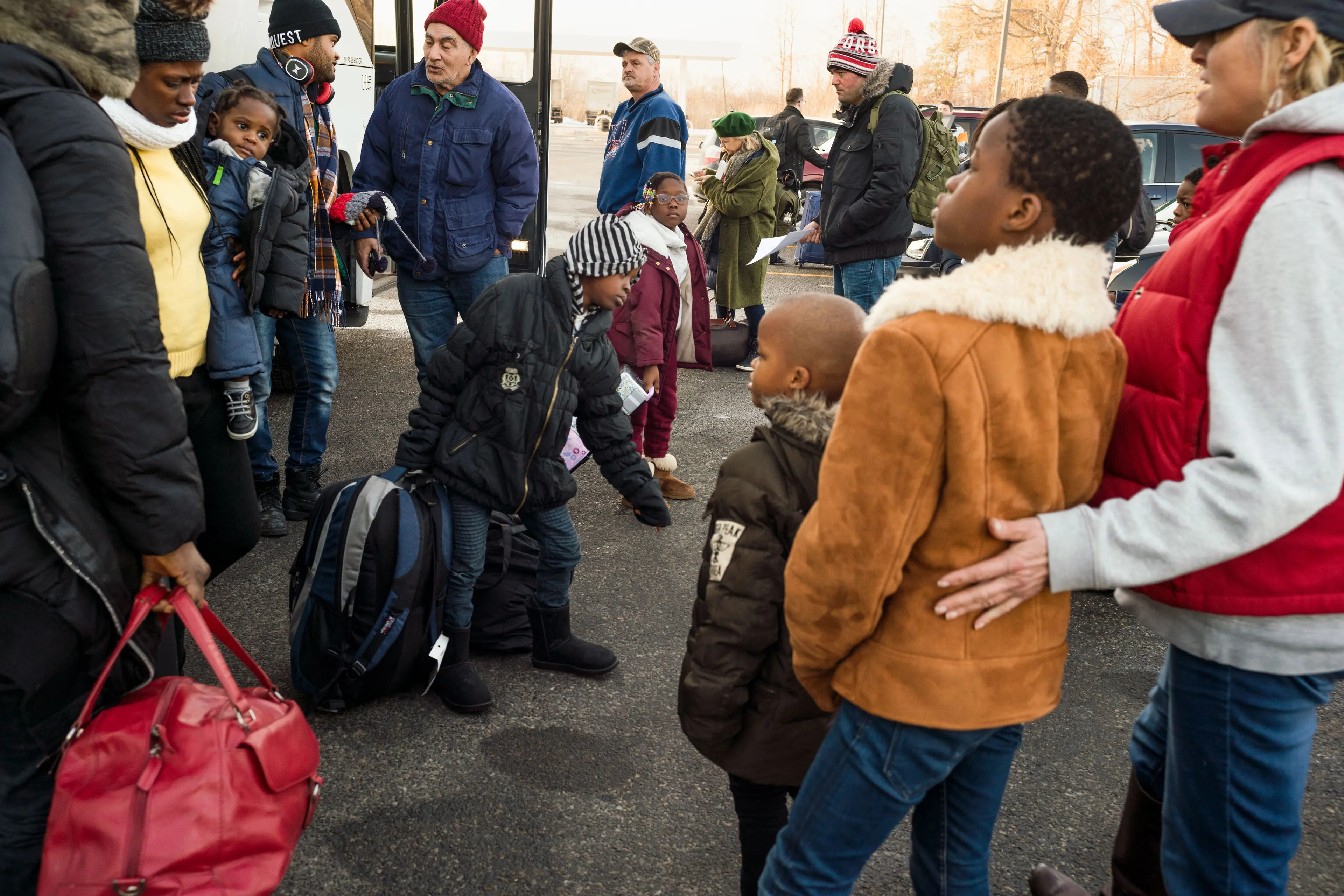
↑ Plattsburgh bus stop, 2021: “I took this photo after the international border reopened during the pandemic. This was a typical scene at the station: drivers would walk up to solo travellers and families coming off the buses and ask—extremely discreetly—if they were headed to Roxham. Fares often fluctuated, and competition was fierce. Bidding wars happened occasionally, and I was told one driver once put sand in another’s gas tank.”
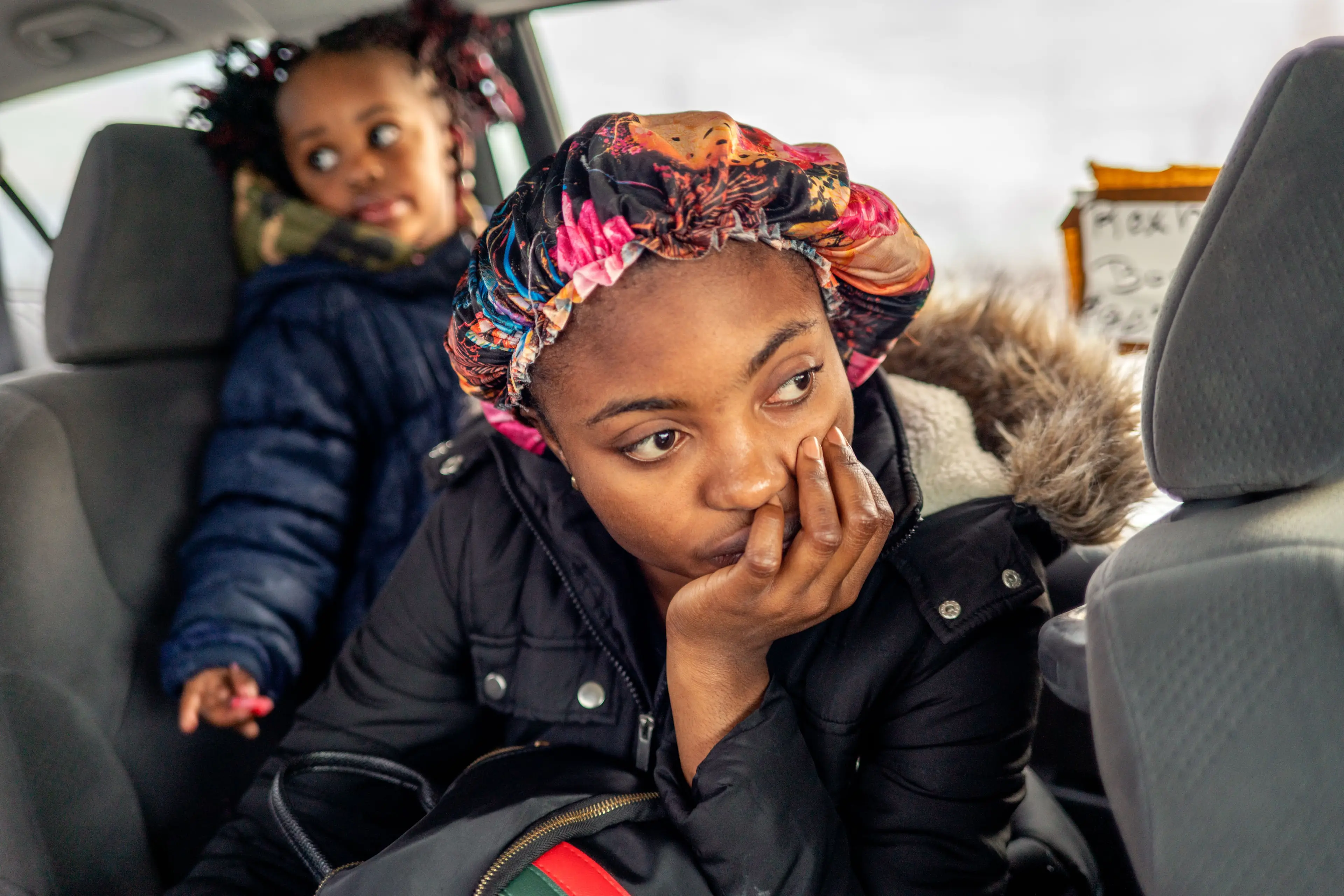
↑ Roxham Road, U.S. side, 2019: “This mother and daughter (and father, who’s just out of frame) escaped from the Democratic Republic of the Congo. They’d been on the road for a few years, and they were exhausted.”

↑ Interstate 87, 2019: “I drove to Roxham with this driver a few times. Toward the middle of the rides, he carefully explained to asylum seekers what to expect, protocol-wise, once they got to the border; he was the only driver I saw do that. In this shot, he’s showing me a photo of a family walking to Roxham.”
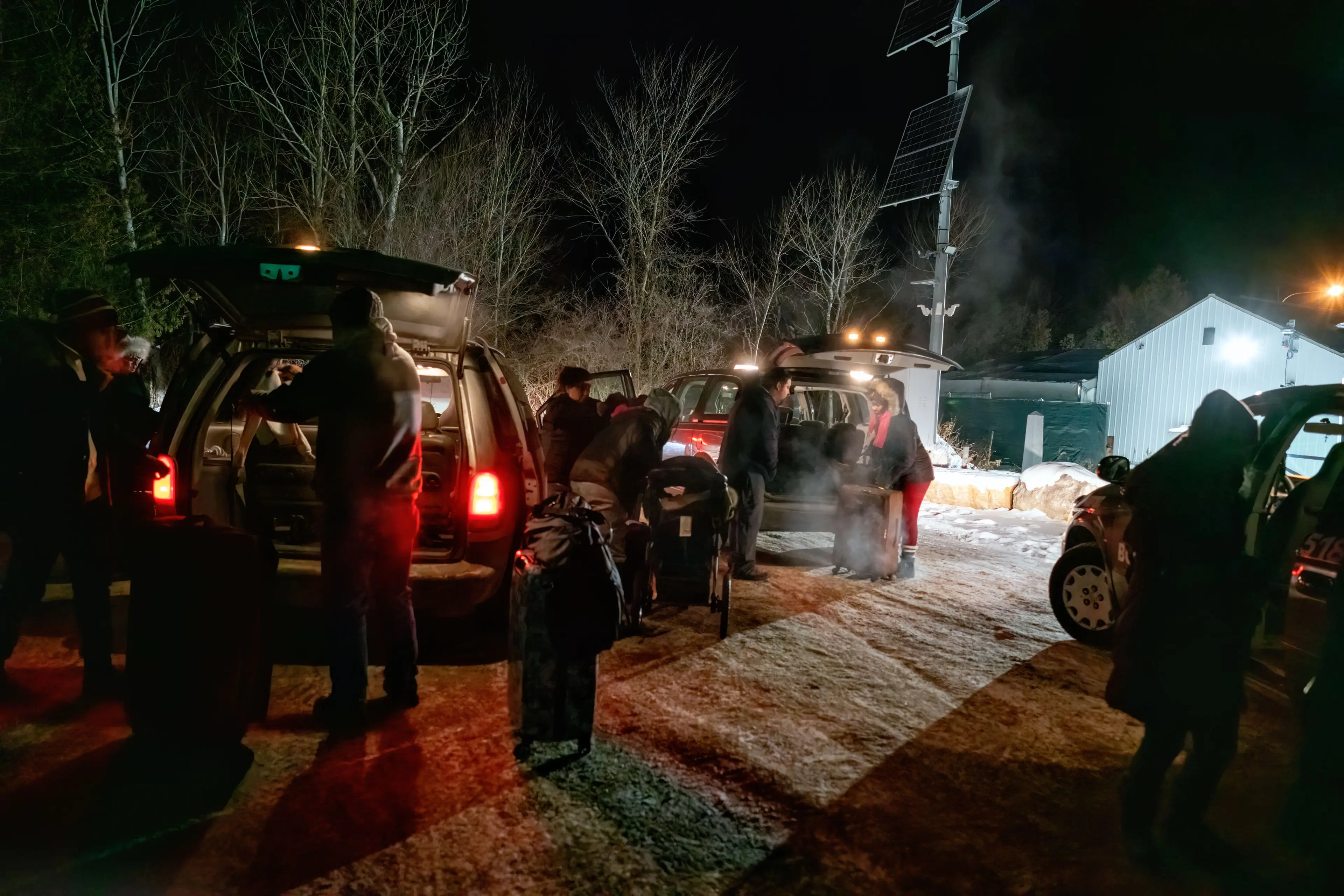
↑ Roxham Road, U.S. side, 2019: “The drivers here are helping asylum seekers unload their belongings. Usually, they carried their bags a short distance. Other drivers were less generous: reports emerged of some cabbies who demanded additional fare money mid-ride and threatened to turn passengers in to the authorities if they refused to pay up.”
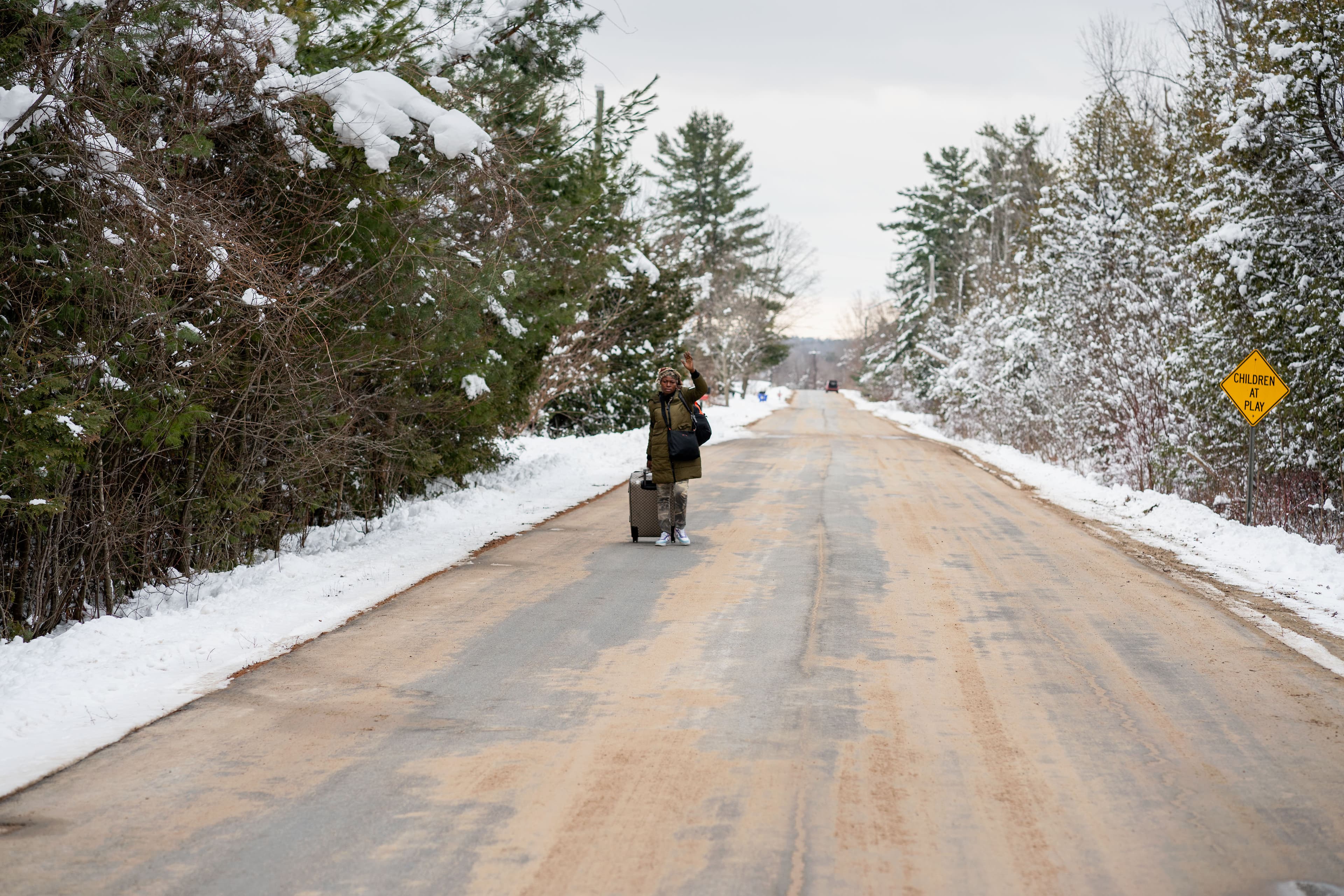
↑ Roxham Road, U.S. side, 2022: “This woman is making her way toward the crossing. Only state-authorized cabs could drop off asylum seekers close to the border—in the far distance, you can see the car that brought her there. Volunteers from the aid organization Plattsburgh Cares sometimes accompanied solo travellers on their walks so they felt less alone.”
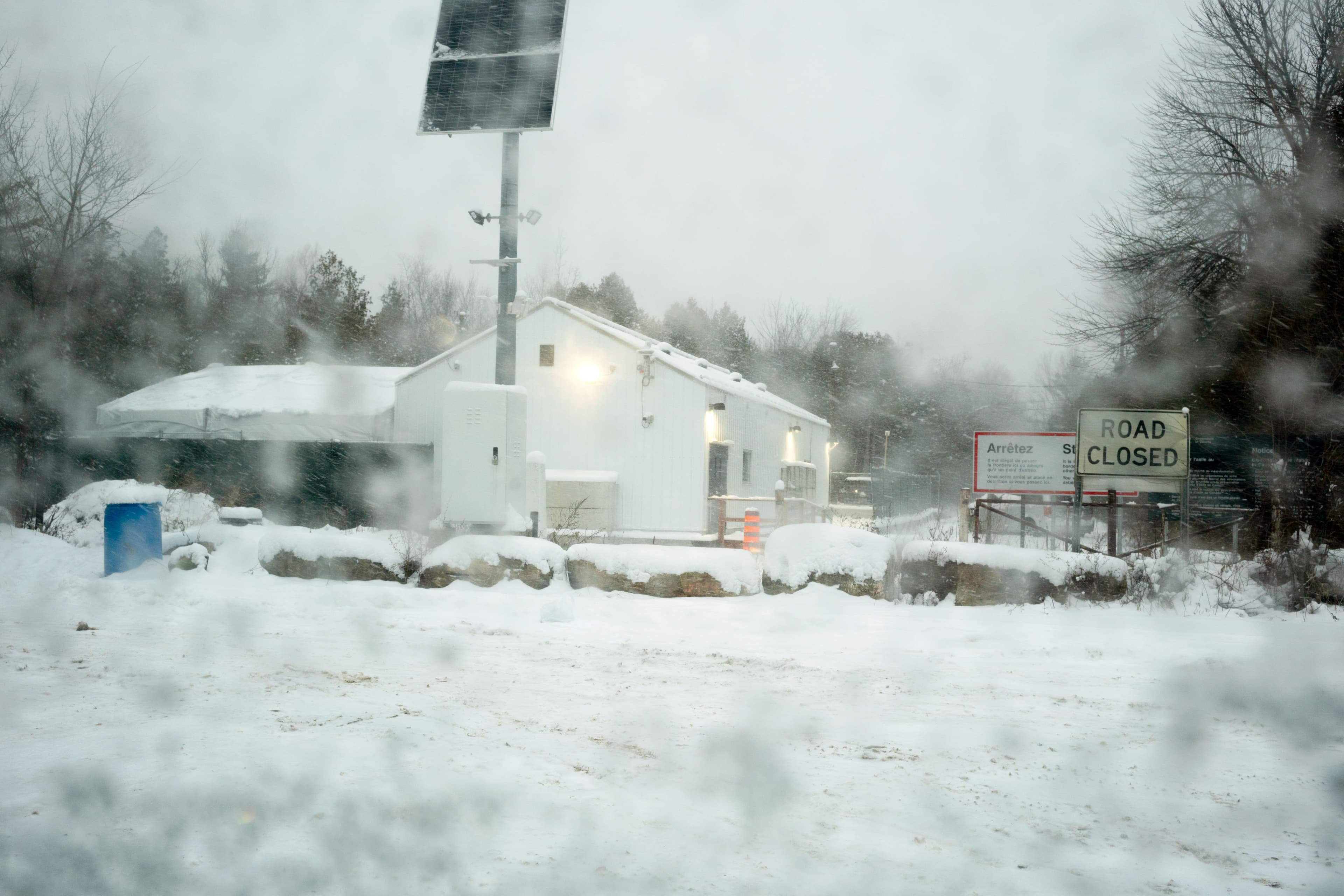
↑ Border office, U.S. side, 2019: “Here, I’m sitting in a cab, watching snow fall on the RCMP building. I witnessed a few busy Christmases at Roxham—it seemed like asylum seekers wanted to start the new year in a new country. But, for many coming from warmer countries, it was a cold shock. Another aid group, Bridges Not Borders, handed out hats and gloves on Sundays.”
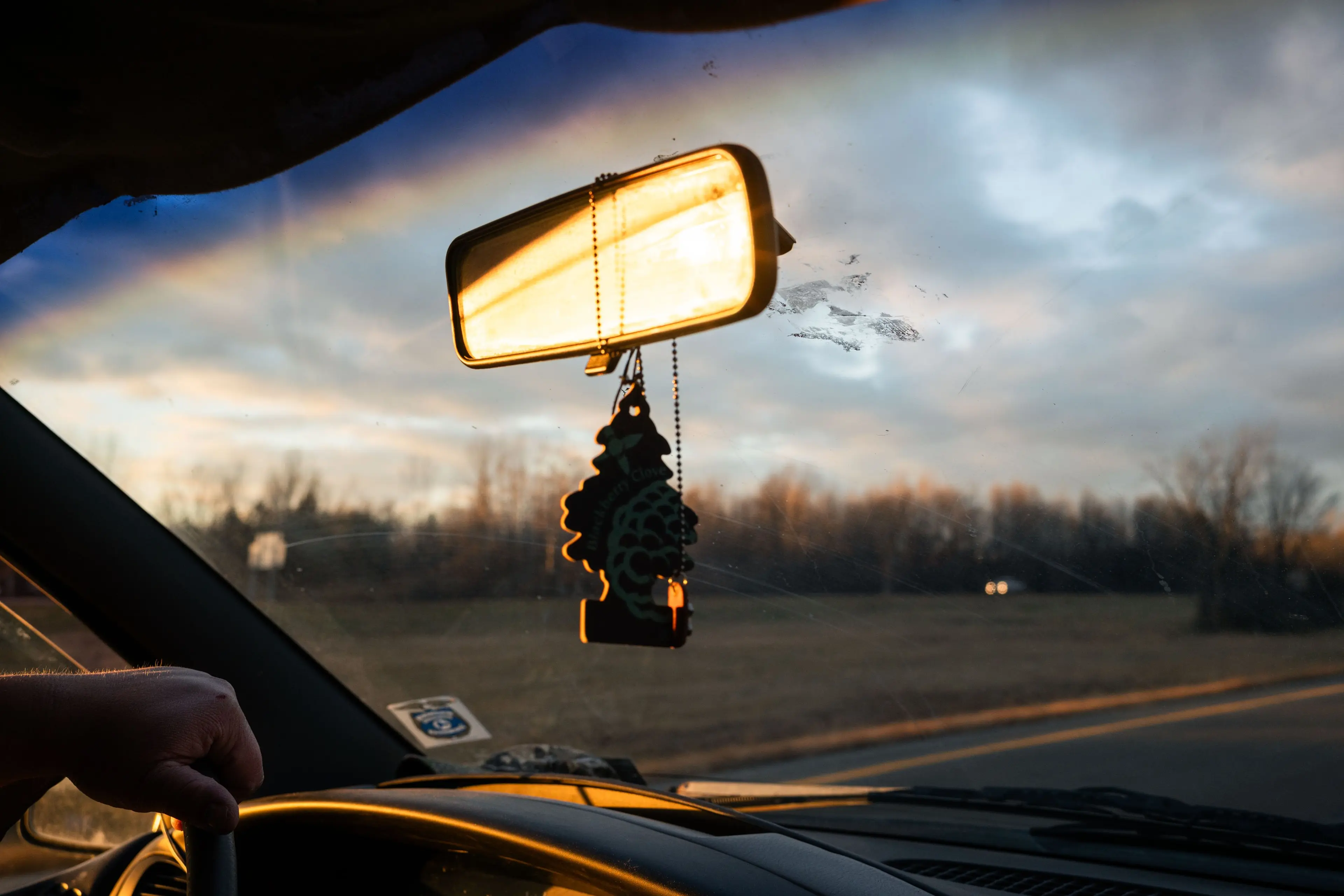
↑ Interstate 87, 2021: “Not everyone wanted to be photographed directly, but I tried to include small traces of them where I could. This driver shared stories about the Plattsburgh cab contingent and the poor economic prospects of the folks who lived in the region around Roxham. A lot of the local factories had shuttered.”
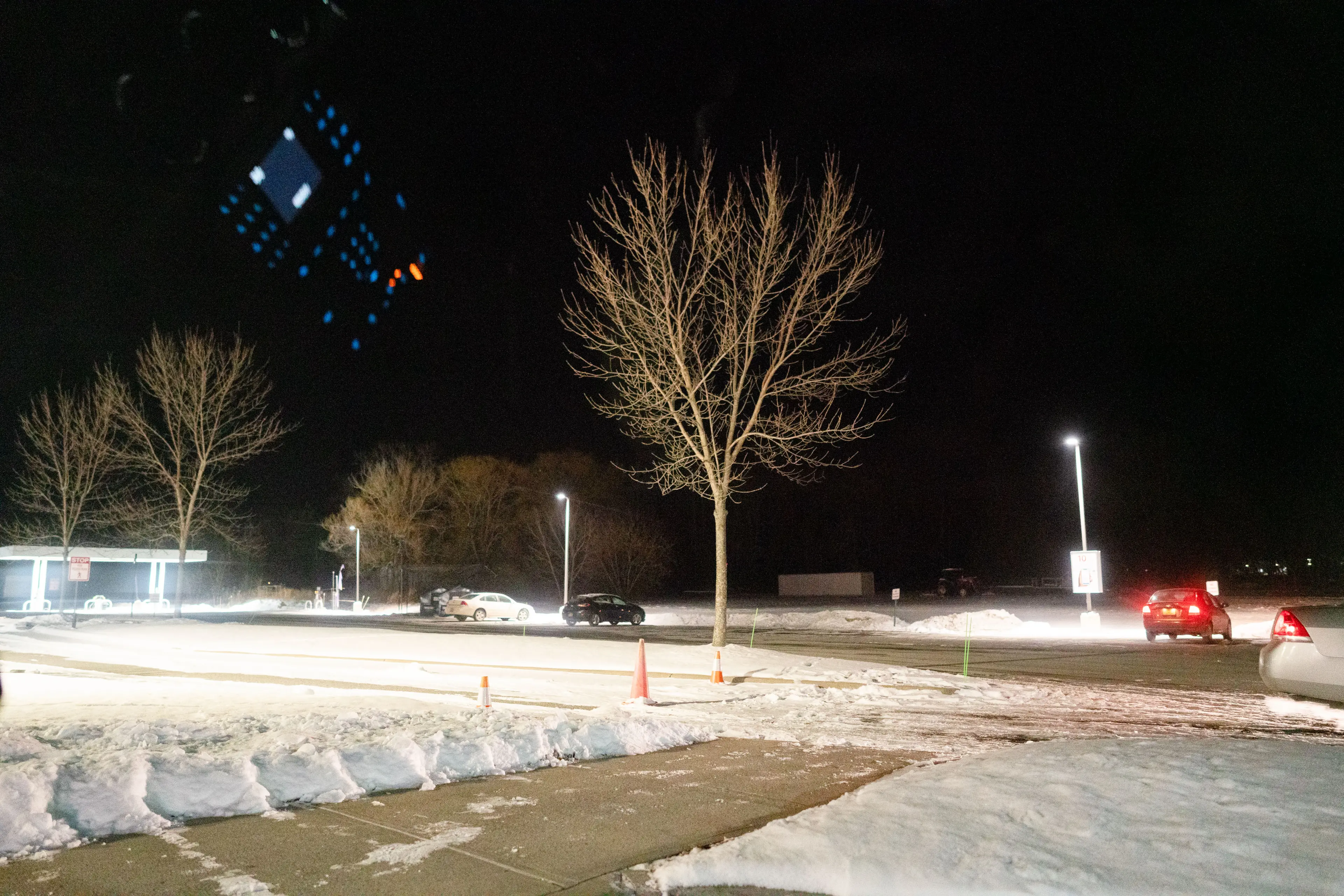
↑ Plattsburgh bus stop, 2019: “This was one of my earliest visits to Plattsburgh. Here, I’m sitting in a car with one of the few female drivers in the cab contingent. She smoked cigarettes and shared stories about her life—and pictures of her dog—as we waited for the buses to arrive.”
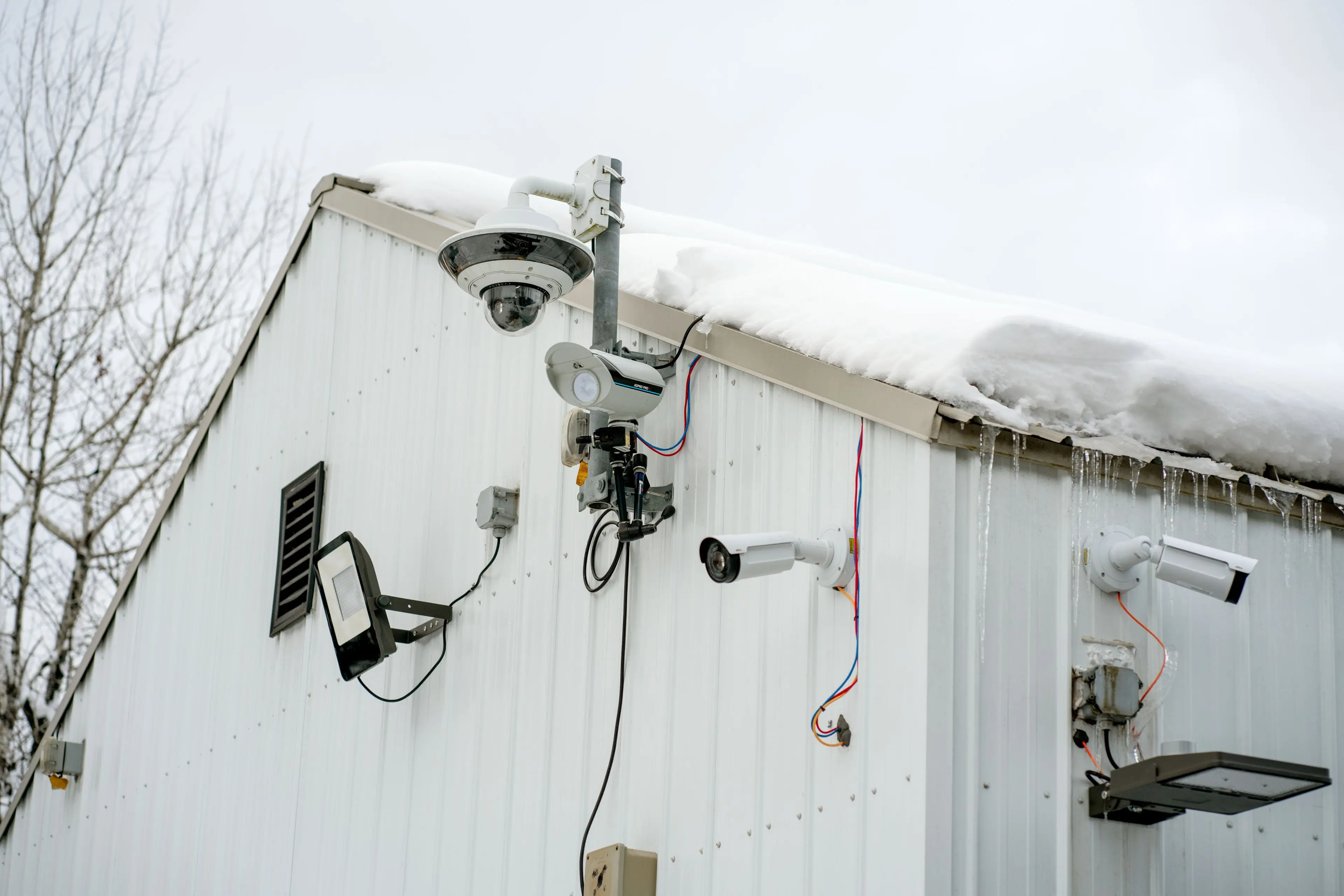
↑ Border office, U.S. side, 2022: “Around this time, the RCMP seemed to be expanding its presence at Roxham. New security tech—lights, cameras and sensors—appeared on the building, and they started leasing farmland near the border. But policy can change quickly: only a few months after I shot this equipment, the irregular-crossing loophole was eliminated and this building was demolished.”
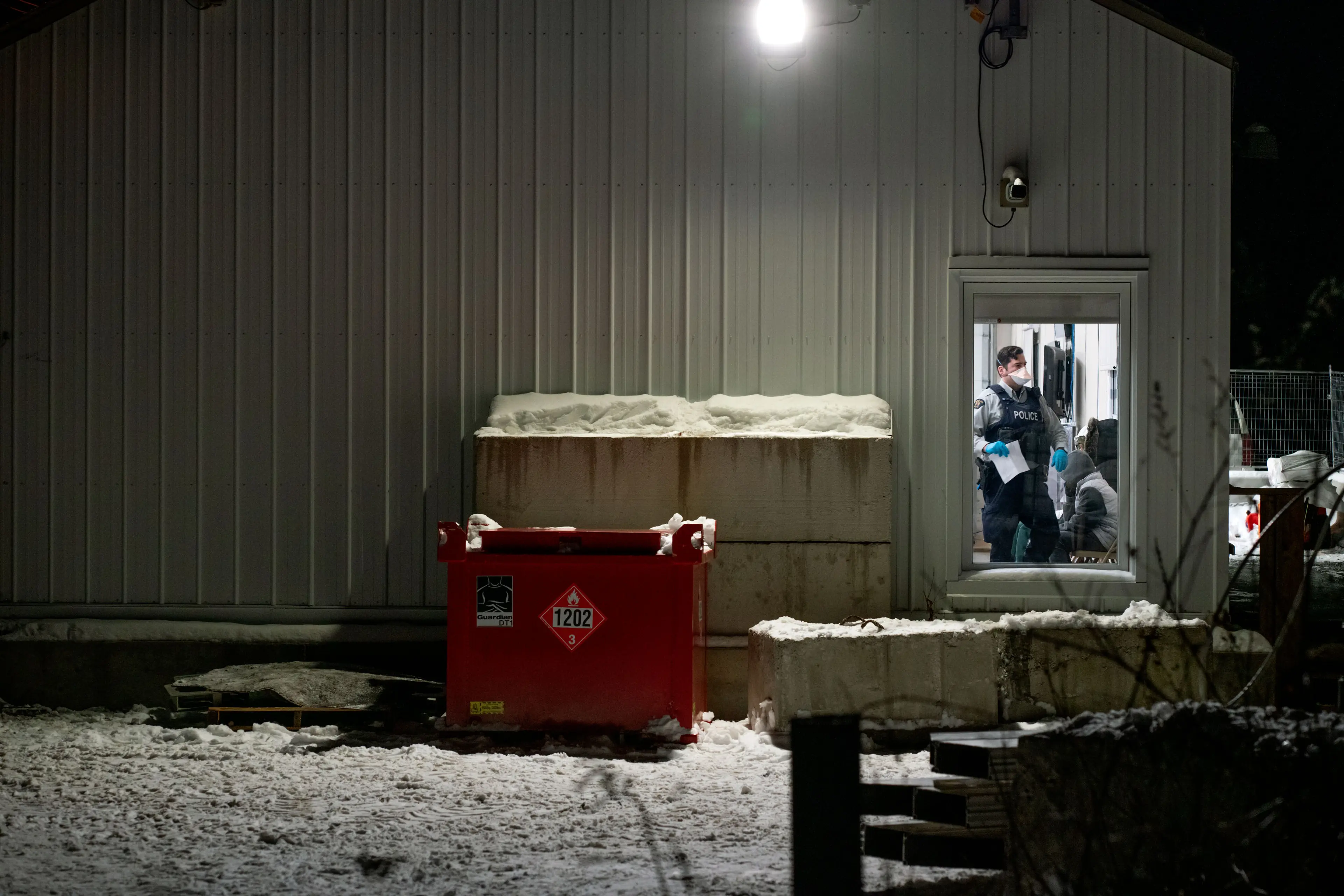
↑ Border office, U.S. side, 2021: “I put in a couple requests to enter the RCMP building, by both phone and email; they were shut down. But, by 2021, I noticed they’d installed a small window. Inside, I could see the waiting area where asylum seekers would crowd as they were processed.”
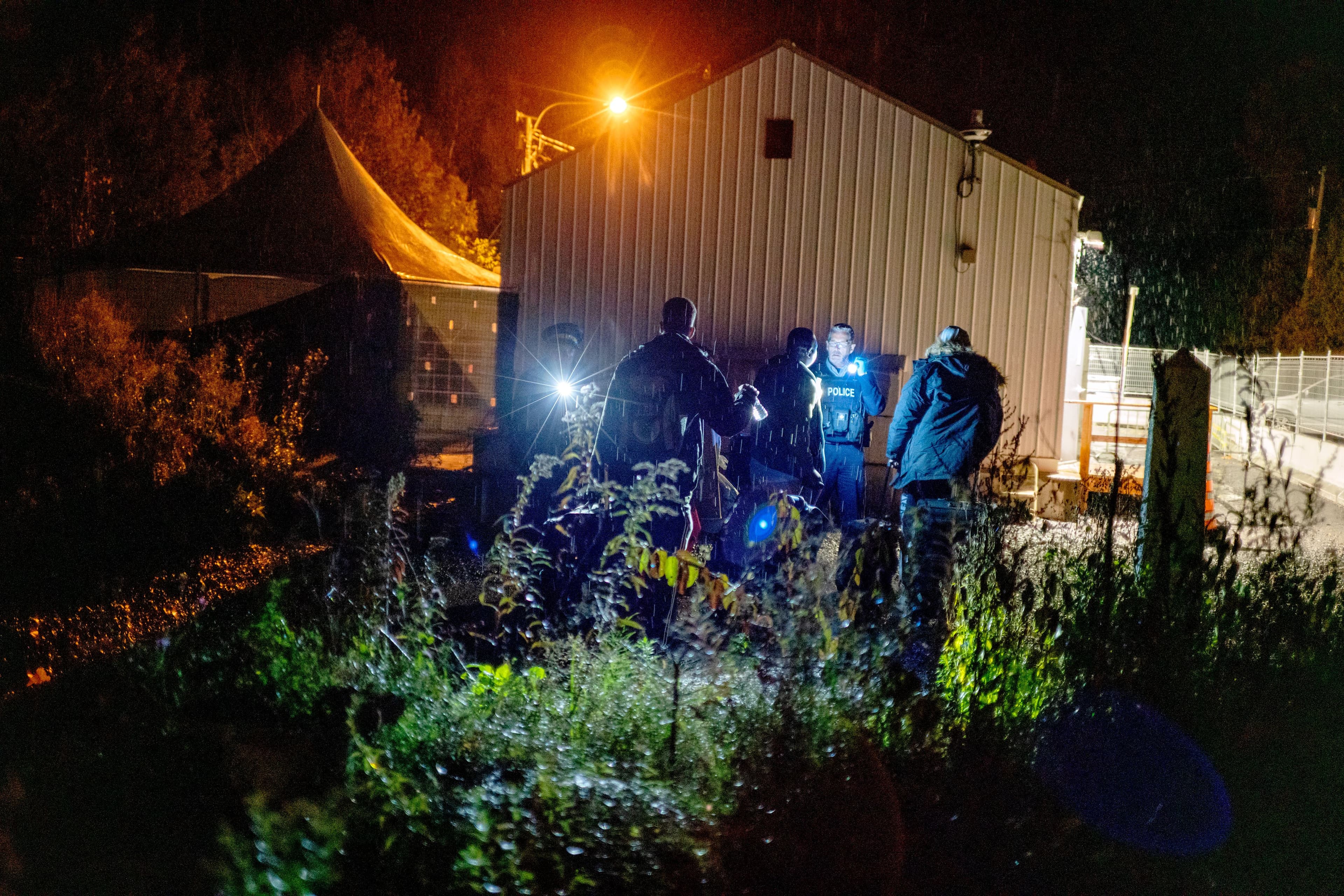
↑ Border office, U.S. side, 2019: “This summer night, it was raining hard, and the brush was high and wild. Many asylum seekers had shown up that evening, and the officers came outside with flashlights to greet them. They typically worked in pairs, and their demeanour was the same as any other border guards: strict and forceful. They didn’t like jokes.”
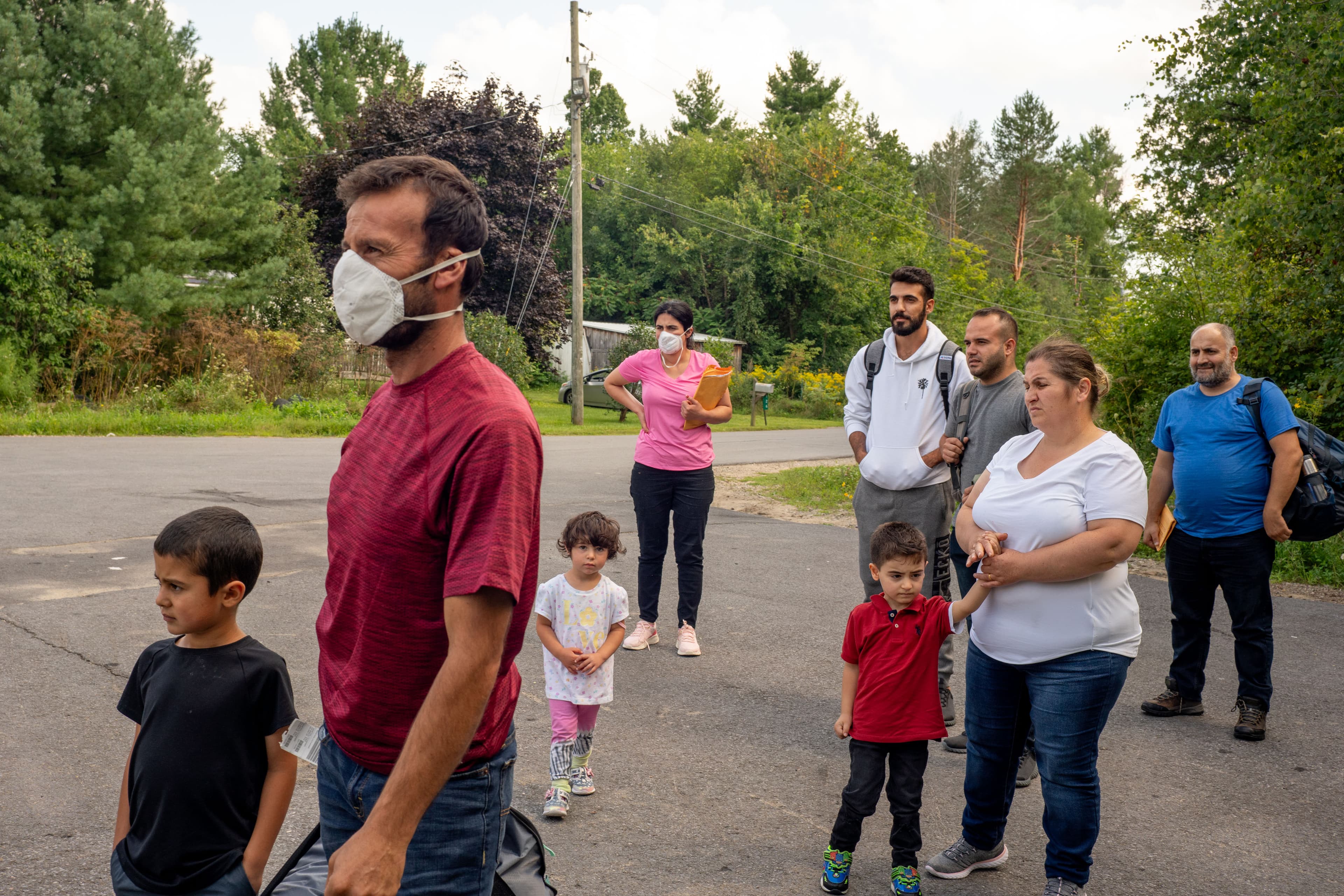
↑ Roxham Road, U.S. side, 2022: “These families are lining up, readying the documents necessary to cross. I loved the body language of the children. The girl is floating in the middle, but the little boy at the front has his hands in his pockets—a grown man’s stance. They’re watching as the people in front of them are addressed by the border guards.”
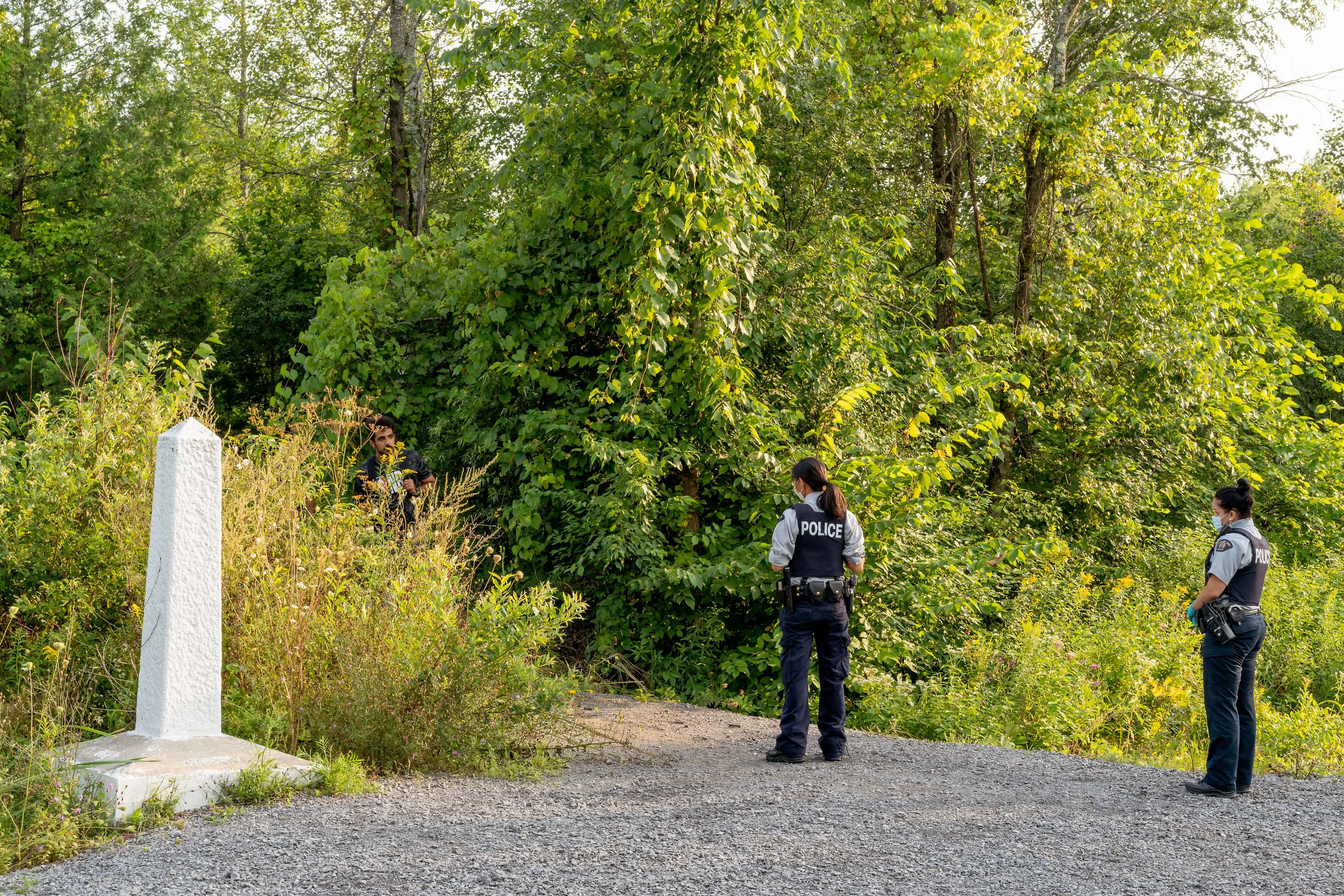
↑ Roxham Road, Canadian side, 2021: “Officers told two Yemeni men that they couldn’t cross at the irregular border; the international border was still closed due to COVID. After all the effort they put in to get to Roxham, they decided to try regardless.”
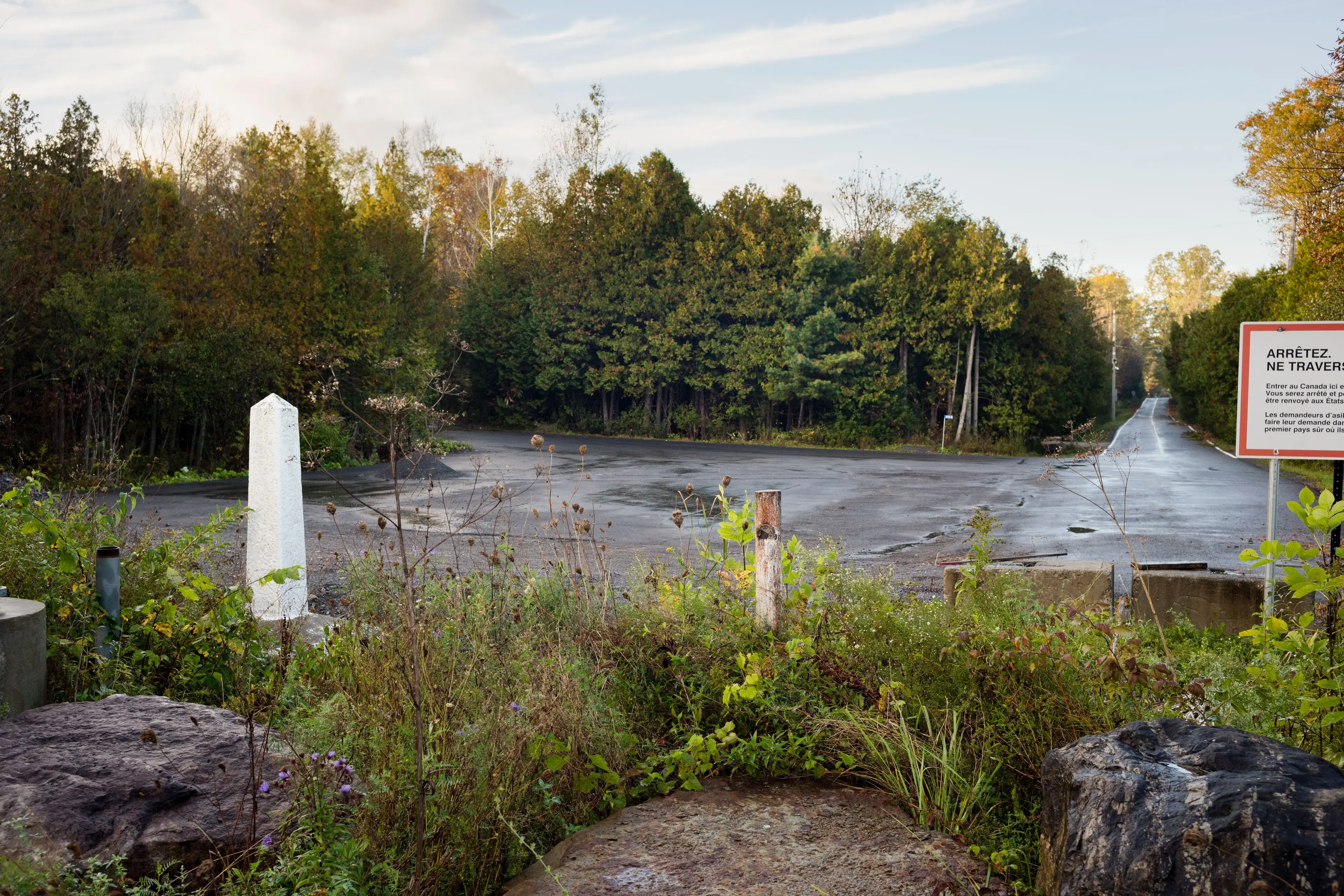
↑ Roxham Road, U.S. side, 2023: “I showed this body of work for the first time three years ago at the Plattsburgh State Art Museum. I visited Roxham on my way back to Canada from previewing the exhibition. The old markers were still there—the boulders, the trees and the obelisk—but the site felt strangely empty.”
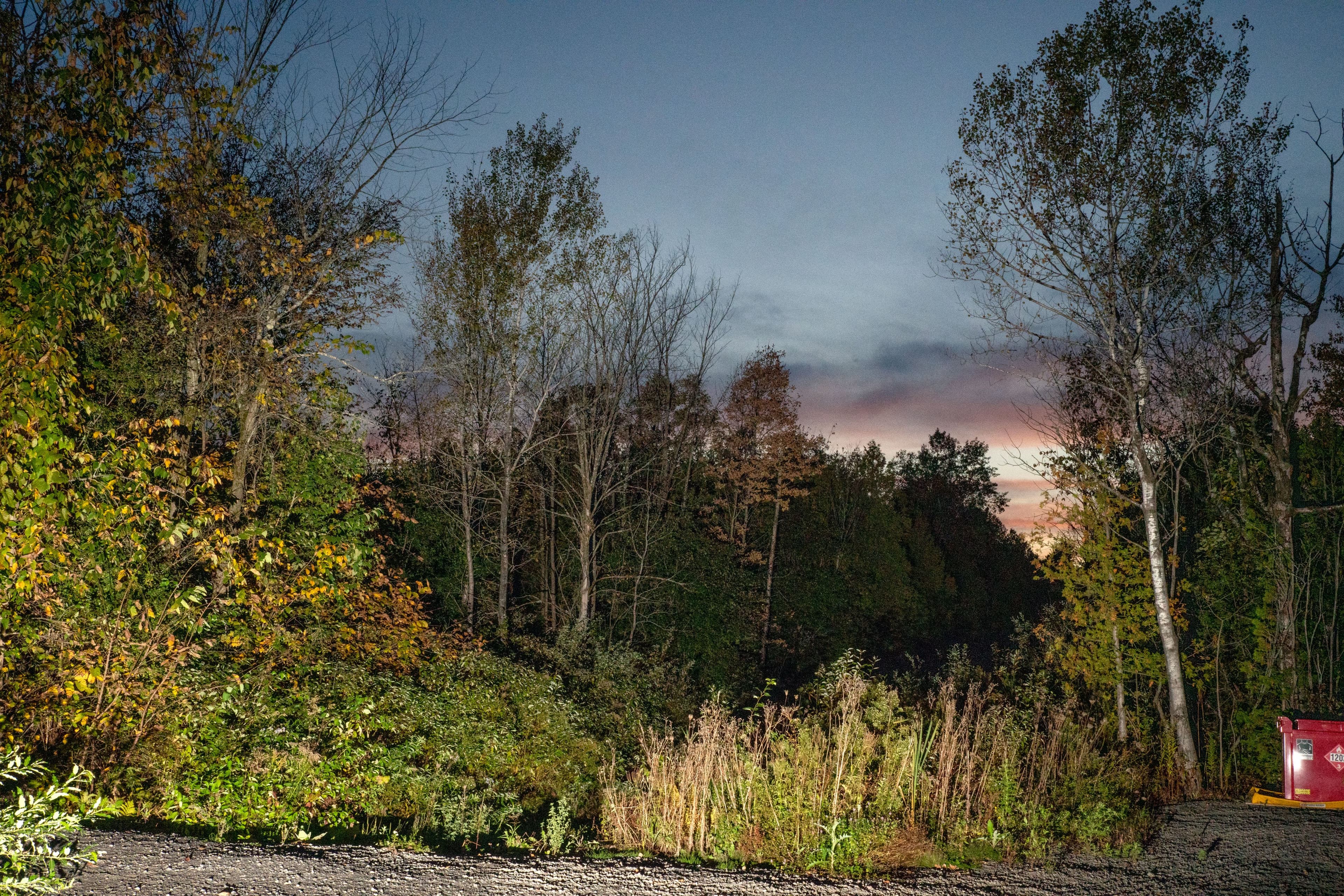
↑ Roxham Road, 2021: “I made audio recordings of birds, butterflies and short human interactions and shot more landscape images, sometimes with the help of an assistant. Here, we balanced a flash on a boulder at sunset, emphasizing the shadow that falls in the middle of this photo of the border. The U.S. takes up the left half of the frame almost exactly. Canada’s on the right.”
This story appears in the May 2026 issue of Maclean’s. You can buy the issue here, subscribe to the magazine here or send a gift subscription here.
What did you think of this story? Send a comment for publication to letters@macleans.ca, and supply your name and address. Comments should be fewer than 200 words, and may be edited for length and clarity.
Get the Best of Maclean’s straight to your inbox.
Sign up for news, commentary, analysis and promotions. Join 80,000+ Canadian readers.