
Mongolia chases the new and the old
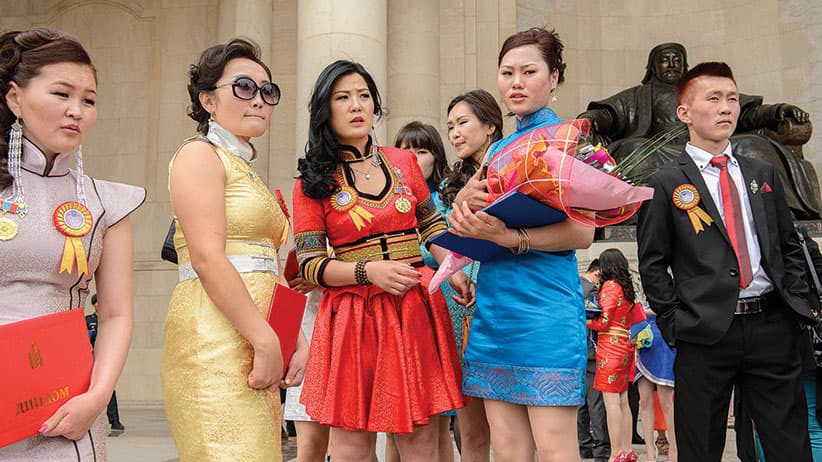


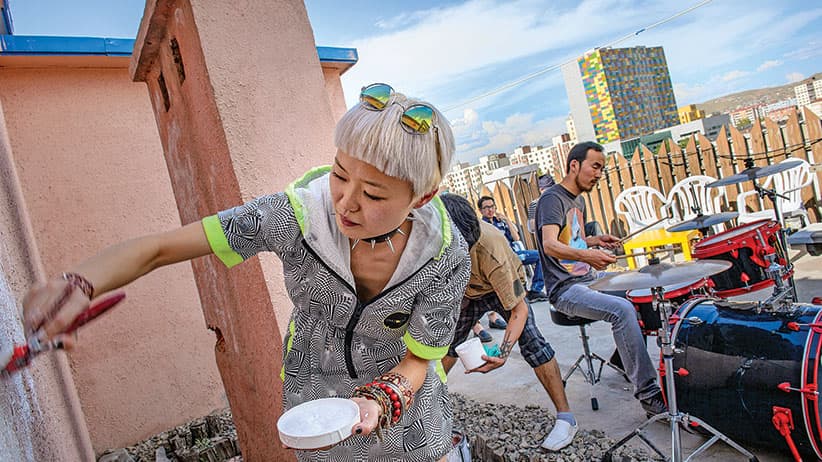
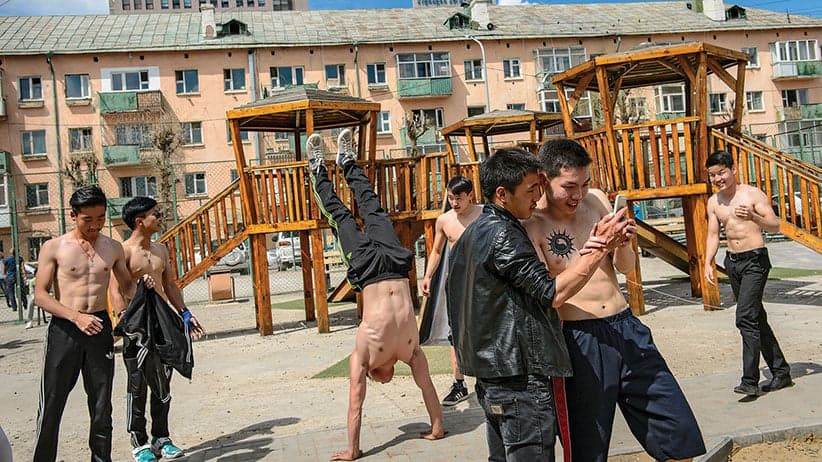

Soon after Mongolia’s Soviet-supported regime was toppled by a bloodless democratic revolution in 1990, financial giants like the International Monetary Fund and World Bank swooped in to take advantage of the new free market economy. Since then, investors and venture capitalists from around the world struck gold—literally—with the discovery of mines rich with gold, copper, coal and other minerals, garnering the nickname “Minegolia” among locals. While the boom has cooled off slightly, Mongolia is still one of the fastest-growing economies, which has given birth to a vibrant new middle class.
In the capital, Ulan Bator, the changes are palpable. The first thing Belgian photographer Marika Dee noticed when she arrived in Ulan Bator (or “UB,” as it’s referred to there) is the sea of construction cranes dominating the skyline. “Many people have an image of Mongolia as a country of nomads, but in the capital the reality is quite different,” she said.
What fascinates her most is the way the next generation of Mongolians (almost half of the population is under 30) attempts to balance this new world of technology and consumerism with their traditional heritage —much of which was repressed under the nearly 70 years of communist rule. Lenin and Marx, icons of their parents’ era, have been replaced by Genghis Khan, and Buddhism and shamanism, religions long forbidden, have been embraced once again. “They really want to be proud of their national identity,” said Dee. “This is something that is not unique to Mongolia, but is universal.”

While Rachel Browne has no religious beliefs of her own, she’s fascinated by those who do. Aside from religion, she writes on human trafficking and human rights. She has also written for the National Post, VICE, and the Thomson Reuters Foundation.
Related Posts

Can Canada Survive Trump’s Attack on Science?

Canada’s Aging Infrastructure Is a Ticking Time-Bomb
Canada Can Be a Refuge for America’s Grad Students

How to Stop the Gen Z Slowdown
Get the Best of Maclean’s straight to your inbox.
Sign up for news, commentary and analysis. Join 60,000+ Canadian readers.