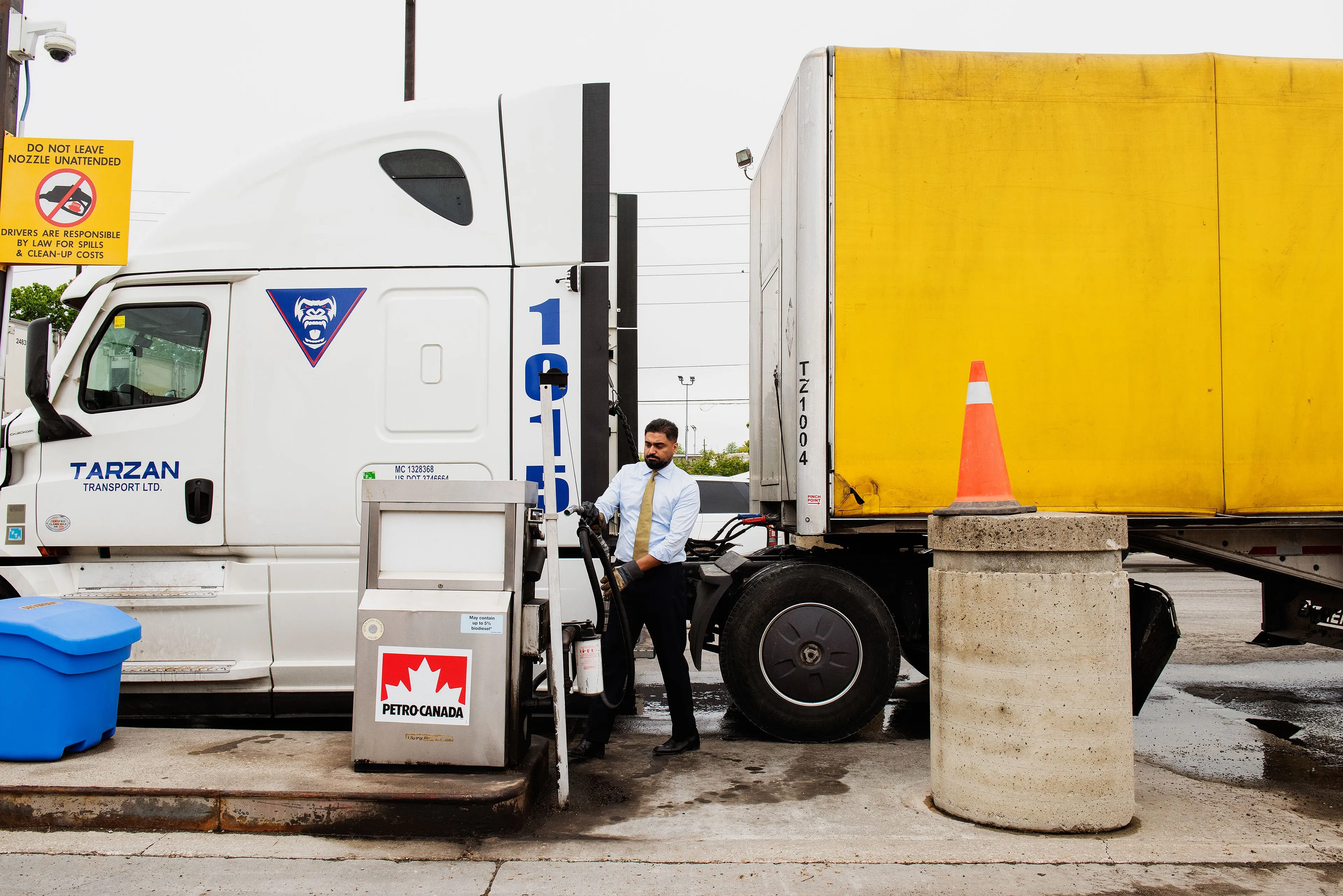
My Trucking Company May Not Survive the Iran War
I left India for Canada in 2015 in search of better job prospects. I arrived with a master’s in electrical engineering, with plans to start my own transportation company. To become a successful business owner, I knew I had to experience the industry at every level, so I started as a box truck driver. Then, I spent some time as a dispatcher before getting my licence to drive even larger vehicles and haul raw materials across the country. Later, I shifted into more behind-the-desk work, co-ordinating logistics.
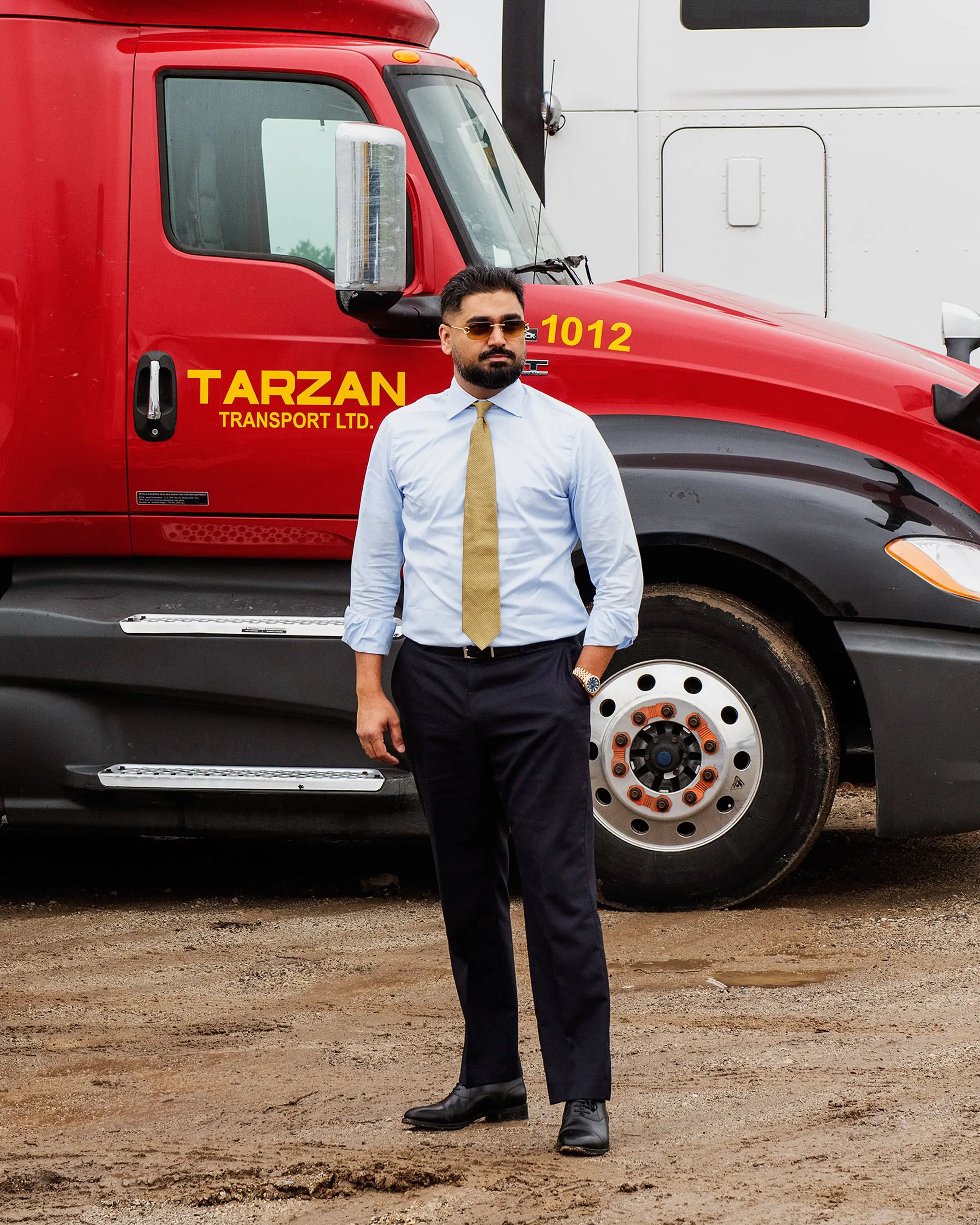
In 2021, I convinced some friends in the industry to leave their jobs and partner with me to launch Tarzan Transport, a small trucking company. We now operate 35 trucks and actively service 50 clients between the U.S. and Canada—mainly car-part providers and steel and aluminum manufacturers.
I’ll never forget the day our first shipment crossed the border; I delivered the first load myself, so I felt very proud. It was the height of the pandemic, when lots of businesses were feeling the pinch. But for us, it was a profitable period. Many drivers had stopped working out of fear of catching COVID, and supply chains were in disarray. This was a huge opportunity: our clients were willing to pay whatever rates we asked. They still needed materials moved, so we were doing back-and-forth U.S. runs and growing incrementally. It was gratifying to see my team come together and get through such a challenging period, especially as bigger operators were laying off staff.

For a while, business was decent. We even signed bigger clients like Magna, a billion-dollar auto-parts manufacturer. That was a big win for us and another proud moment for me. Then, in 2024, Donald Trump was elected for a second term. At first, I was optimistic that he would strengthen the relationship between Canada and the U.S. and boost the economy; he was a business magnate, after all. I hoped he would implement policies that encouraged spending. The more goods people buy, the more companies need to procure raw materials. And those materials move by truck, through transportation businesses like mine.
My optimism quickly faded when President Trump announced 25 per cent tariffs on steel and aluminum tariffs in March of last year. It was terrifying. My business partners and I wondered if he was making empty threats, but then he doubled down and raised the tariffs to 50 per cent a few months later. Before the tariffs were announced, we were hauling about 50 loads a day for several companies. After they came into effect, we were running only two or three trucks for those same clients.
Related: Trump’s Tariffs Are Destroying the Trucking Industry
Then, in late February, I woke up to the news that U.S. and Israeli forces had killed Iran’s supreme leader. In retaliation, Iran closed the Strait of Hormuz, a critical chokepoint for maritime fuel transport; roughly 20 per cent of the world’s oil supply is shipped through it. Within days, fuel prices shot up by 45 per cent. Subsequent U.S. and Israeli attacks on Iranian energy infrastructure, including South Pars, the world’s largest natural gas field, made matters worse.
Before March, our trucks were collectively filling up for around US$35,000 per week. Now we’re paying up to US$50,000. This month, the national average price for diesel is just 20 cents shy of the all-time high. We’ve built strong relationships with some of our customers over the years, and they don’t want to lose their carrier, so they’ve agreed to pay a 30-cent-per-mile fuel surcharge to keep us afloat. But oil prices fluctuate daily, and fuel accounts for around half of our expenses. The slightest variations have a huge impact, and we can’t call these clients up every day and ask them to constantly adjust the surcharge.
Trucking companies operate on very thin margins. And smaller operators are also at a disadvantage. A company with 200 trucks or more can usually negotiate better terms with banks, equipment suppliers and fuel-card providers because they buy and borrow at a larger scale. It’s like shopping at Costco: the more volume you bring, the less you tend to pay per unit.
When we started with five vehicles, we were paying 15 to 18 per cent interest on each truck. As we’ve grown, banks have become more willing to offer us equipment credit lines, and fuel providers have given us better bulk deals. But even with those improvements, our returns are still only about five per cent of total revenue. That means a sudden spike in fuel prices can wipe out our profits almost immediately.
We don’t want to cut our staff or decrease their pay. These are real people working real jobs to feed their families. But to service more contracts and get bigger clients, I have to buy new equipment and hire more people, which I can no longer afford.
Related: Could the Iran War Catalyze Canadian Oil and Gas?
In fact, just before the conflict, we scored a huge contract with a global steel company. But we had to turn it down, because the fuel crisis has made it impossible for us to fulfill it. The longer this drags on, the more other costs are rising—things like vehicle parts, like engine oil and tires. It’s also been difficult for us to pinpoint where to fuel up, because prices keep changing. Some U.S. states, like Texas, used to always offer cheaper gas, but many of these discounts have now disappeared entirely.
Other trucking operators are in the same boat. Data shows employment for transport drivers dropped by 23,600 jobs compared to April of last year, and just recently, Lion Force Transport, a big cross-border company, went into receivership.
We’re doing our best and preparing for the worst. I’m constantly talking to my team and telling them we’ll get through it. There are ways to cut costs, too. Every morning, we compile a list of fuel stations so our drivers know the best places to fill up. We’re also working on an in-house app that will allow them to input their destination and find the cheapest gas stations along the way.
I’m taking things day by day. But if our clients stop absorbing some of our fuel expenses, we could be shutting down within a month.
—As told to Ariel Tozman
What did you think of this story? Send a comment for publication to letters@macleans.ca, and supply your name and address. Comments should be fewer than 200 words, and may be edited for length and clarity.
Get the Best of Maclean’s straight to your inbox.
Sign up for news, commentary, analysis and promotions. Join 80,000+ Canadian readers.